Edgeley Lock & Key Co. · Vaughan
Vintage Mortise Lock Service: what the visit covers
Locksmith · Vaughan, Ontario
Keys are the part of the job people expect to be impossible, and they rarely are. A bit key, the skeleton key style used on older doors, is cut and filed on the bench to the wards and levers of your particular case, so a lost key can be replaced from the lock itself. A round cylinder on a later mortise lock is rekeyed like any modern cylinder, or exchanged for a new cylinder of matching thread and cam if it is worn out. Either way the service ends with keys in your hand that turn the original lock, and a spare made while the case is on the bench.
Reading the faceplate
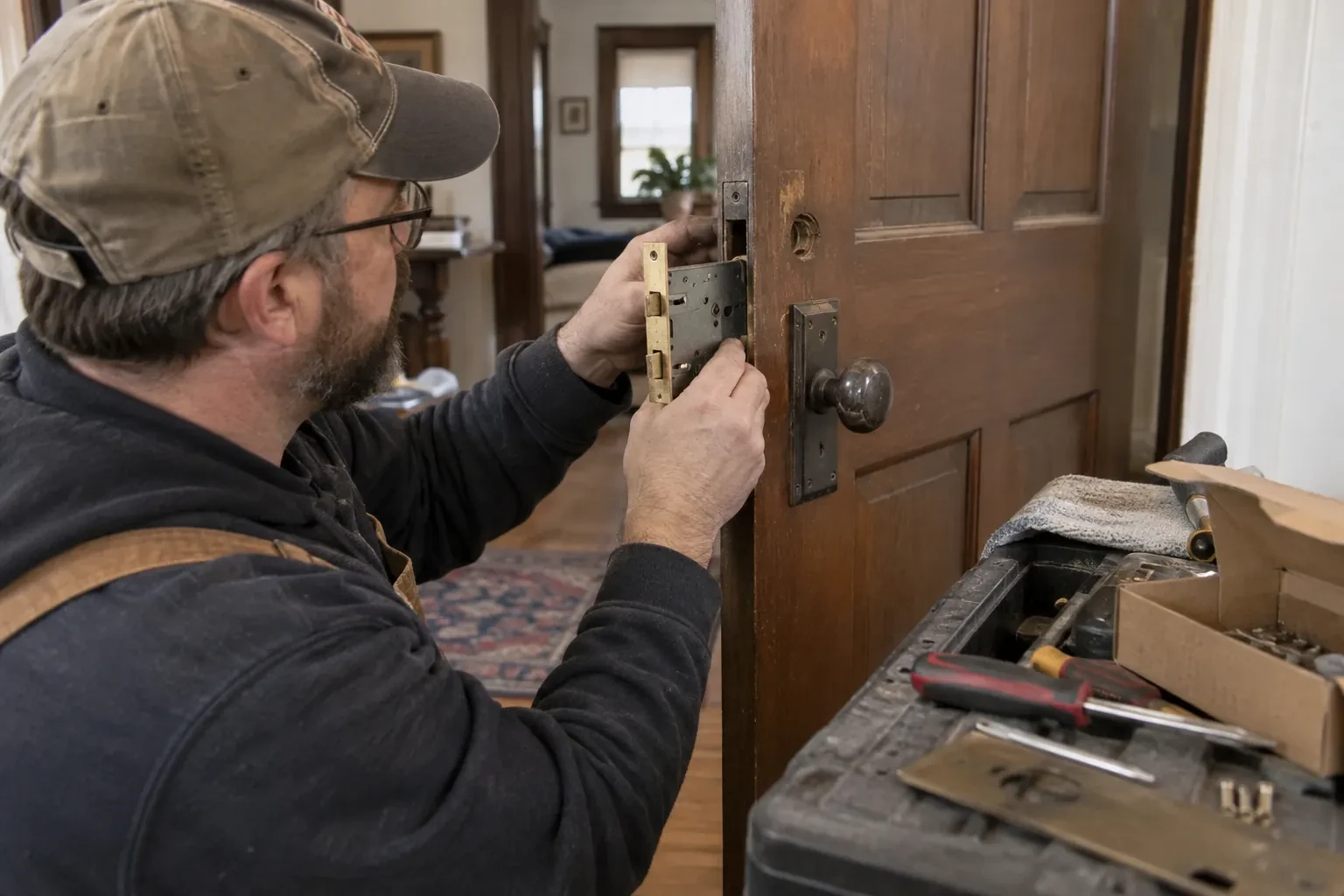
Standing at the open door, the locksmith looks at the narrow brass or steel plate in the door edge. Its height, the spacing of its screws, any maker's stamp, and whether it shows one bolt or two tell a good deal about what is inside: a latch-only case for an interior door, a latch and deadbolt case for an entry, or a privacy function with a turn button. The distance from the door edge to the centre of the knob, the backset, is measured, along with the spindle size. These figures decide which springs, followers and, if it comes to that, which replacement case will fit, so they are written down before the lock is disturbed.
Inside the case on the bench
With the cover screws out, the case opens like a book: the latch bolt with its spring, the hub the spindle passes through, the deadbolt with its lever or tumblers, and the springs holding each in place. The locksmith notes what is broken, worn or merely stuck, then cleans the case with solvent and a brass brush until the old grease and rust are gone; old paint on the hardware is treated as a possible lead hazard and cleared with contained, lead-safe methods rather than dry brushing. Parts are cleaned individually, burrs are dressed off the bolts, and the hub square is checked against a fresh spindle to see whether it has rounded.
How to lubricate it, and how not to
A serviced mortise case wants very little. Once a year, a single drop of light lock oil into the latch and the bolt from the door edge, with the faceplate screws briefly backed off if needed, keeps the levers gliding. If the lock has a pin-tumbler cylinder, that cylinder gets dry graphite or a PTFE lubricant in the keyway instead, because oil in a cylinder gathers grit and stiffens the pins. General-purpose spray lubricants belong nowhere on this hardware; they flush out the little oil that should stay and leave a film that dust settles into. The locksmith will show you where the drop goes so you are not guessing.