Lockouts · Vaughan
Seized & Jammed Lock Opening
The lock works, but only if you lean on the door with your hip while turning the key.
In plain words
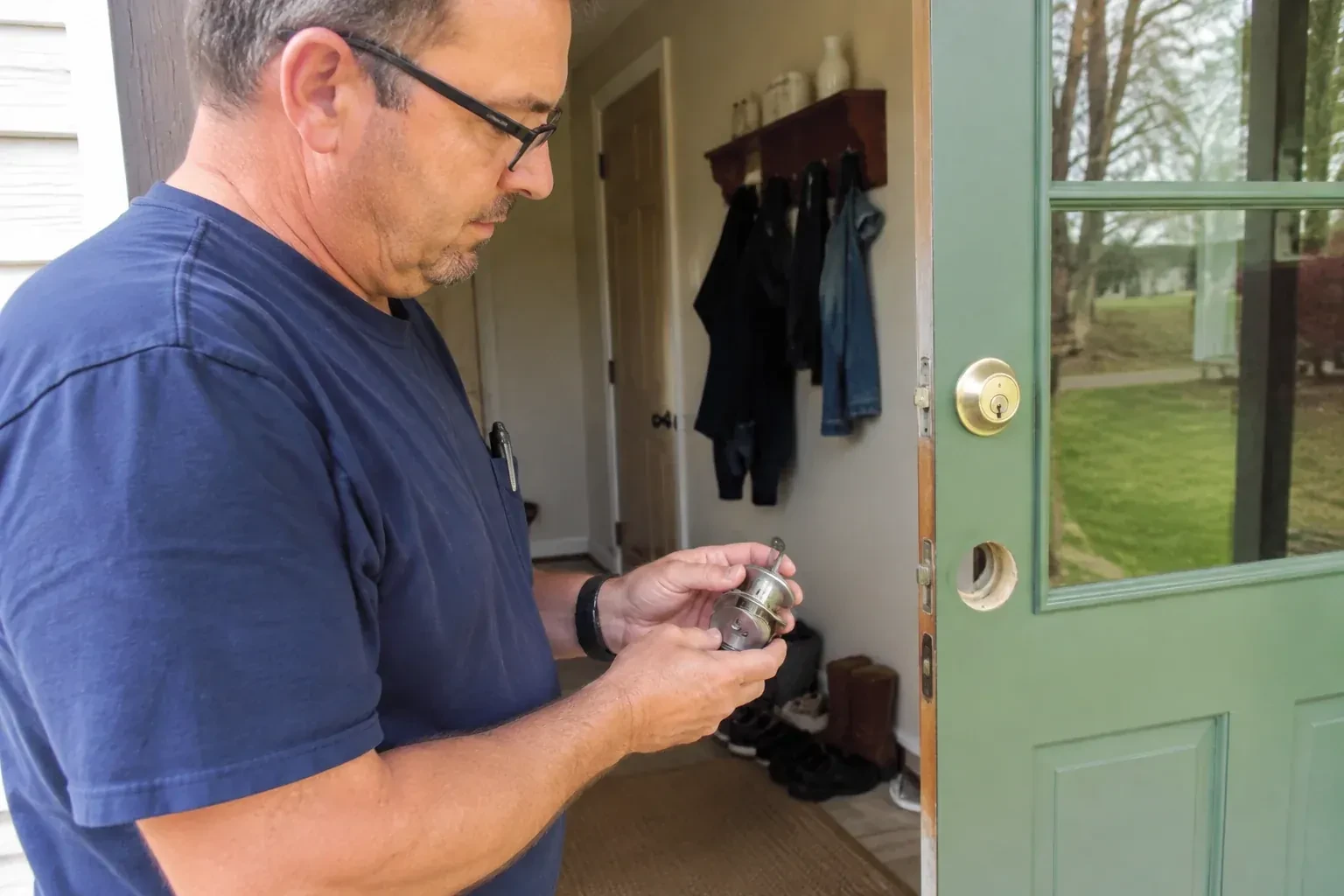
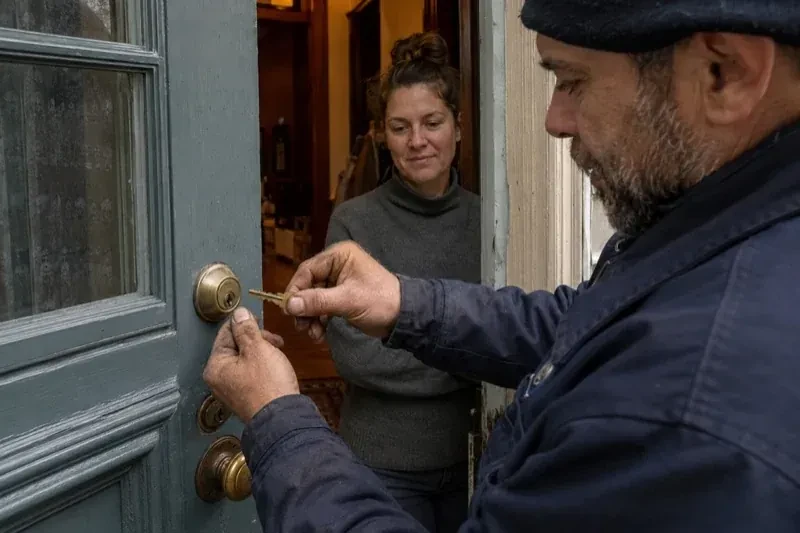
The visit runs in a set order. On the phone you describe what the key does: refuses to turn, spins freely, or works only when the door is pushed. That description tells the locksmith what to bring. At the door, identification and your connection to the property are confirmed. The key, keyway, door fit and strike are examined before anything is forced. The opening uses the least disruptive method the condition allows. Then the failed part is serviced or replaced, the door is adjusted if it caused the jam, and the lock is tested open and closed with every key before the locksmith leaves.
How the visit goesYou are inside, the deadbolt is thrown, and the thumb-turn will not budge. It moved a little last week with some effort. Now the door you walk through every day is a wall, and you need it open.
Seized & Jammed Lock Opening
How the visit goes
What the weather and the house have been doing
The last questions are about recent history. Has there been a thaw followed by a hard frost, or a stretch of humid days? Is this door on the shaded or windward side, or near a salted driveway? Was the door painted, re-hung, fitted with new weatherstripping or a storm door lately? Has anyone sprayed something into the keyway? Each answer changes the likely cause, and together they tell the locksmith whether this is a one-off, such as a freak freeze, or a lock that is going to keep doing this until the door or the lubrication habit is changed. The answers also shape the advice you leave with.
Opening when the tailpiece has failed
A key that spins freely means the cylinder is fine and the bar behind it, the tailpiece or cam, has broken, slipped or twisted out of engagement. The bolt is then retracted directly through the mechanism rather than through the cylinder, or the cylinder is withdrawn so the locksmith can reach the bolt drive. Once the door is open the old tailpiece is removed and a replacement of the correct length and profile is fitted, since one that is too short repeats the fault and one that is too long binds. The cylinder goes back, the retaining screws are checked, and the bolt is thrown and retracted with the key until it moves cleanly through its full travel.
What was done, in writing, with the old parts
You are told plainly which family the jam belonged to and what was done: cylinder cleaned and rebuilt, tailpiece replaced, strike moved, hinges shimmed, mortise spring fitted, or cylinder replaced and keyed to your existing key. Replaced parts are handed over so you can see the wear or the break for yourself. For a rental, tenants and landlords both benefit from that note, since it records that the lock was serviced rather than changed. For an owner it goes in the home file beside the keyway and key code, which makes the next key cut or the next service a shorter conversation.
Seized & Jammed Lock Opening
In the van
Dry PTFE or graphite lock lubricant
Long hinge screws
Strike plate and hinge shims
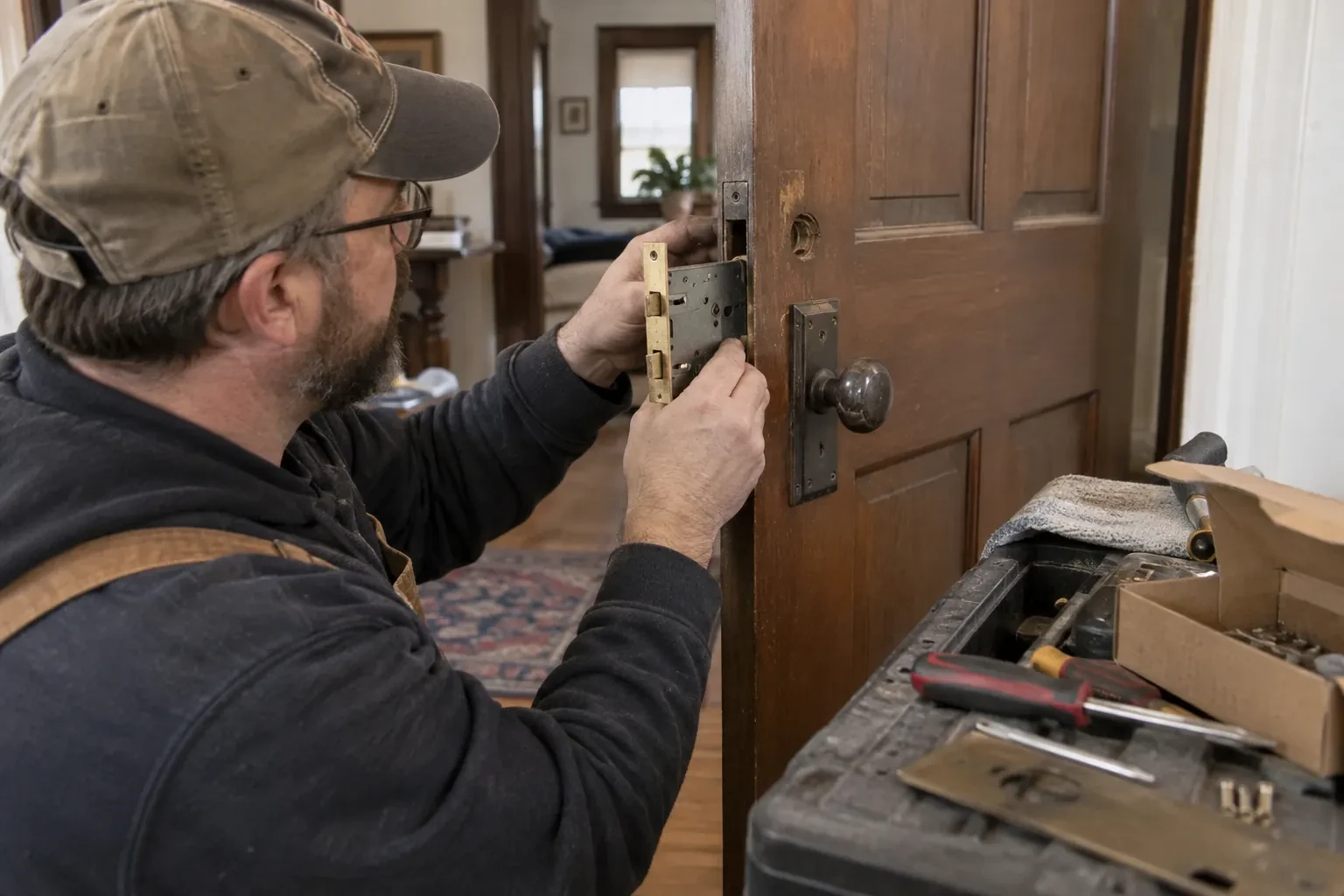
Mortise case spring and hub
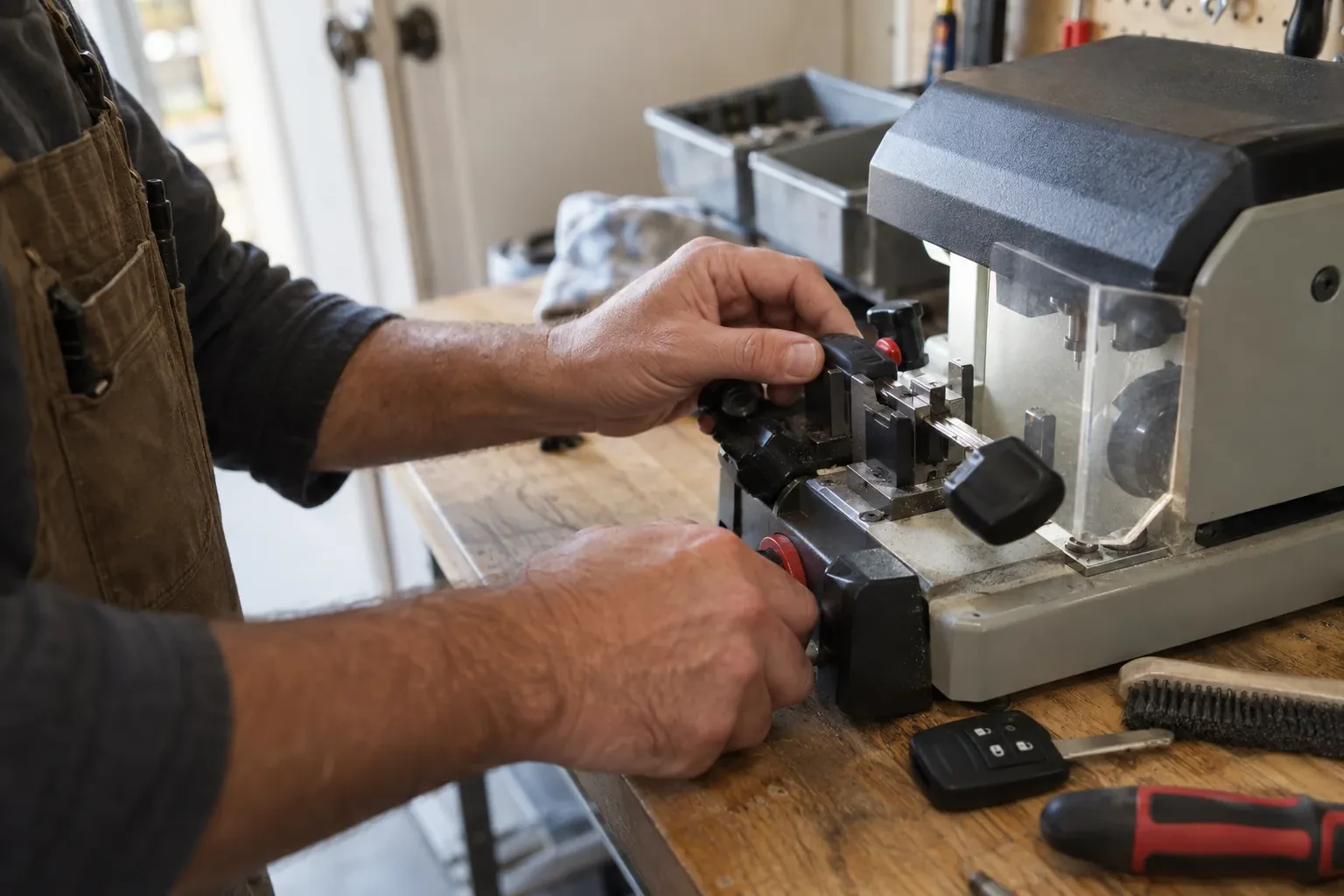
Key blanks and code cutter
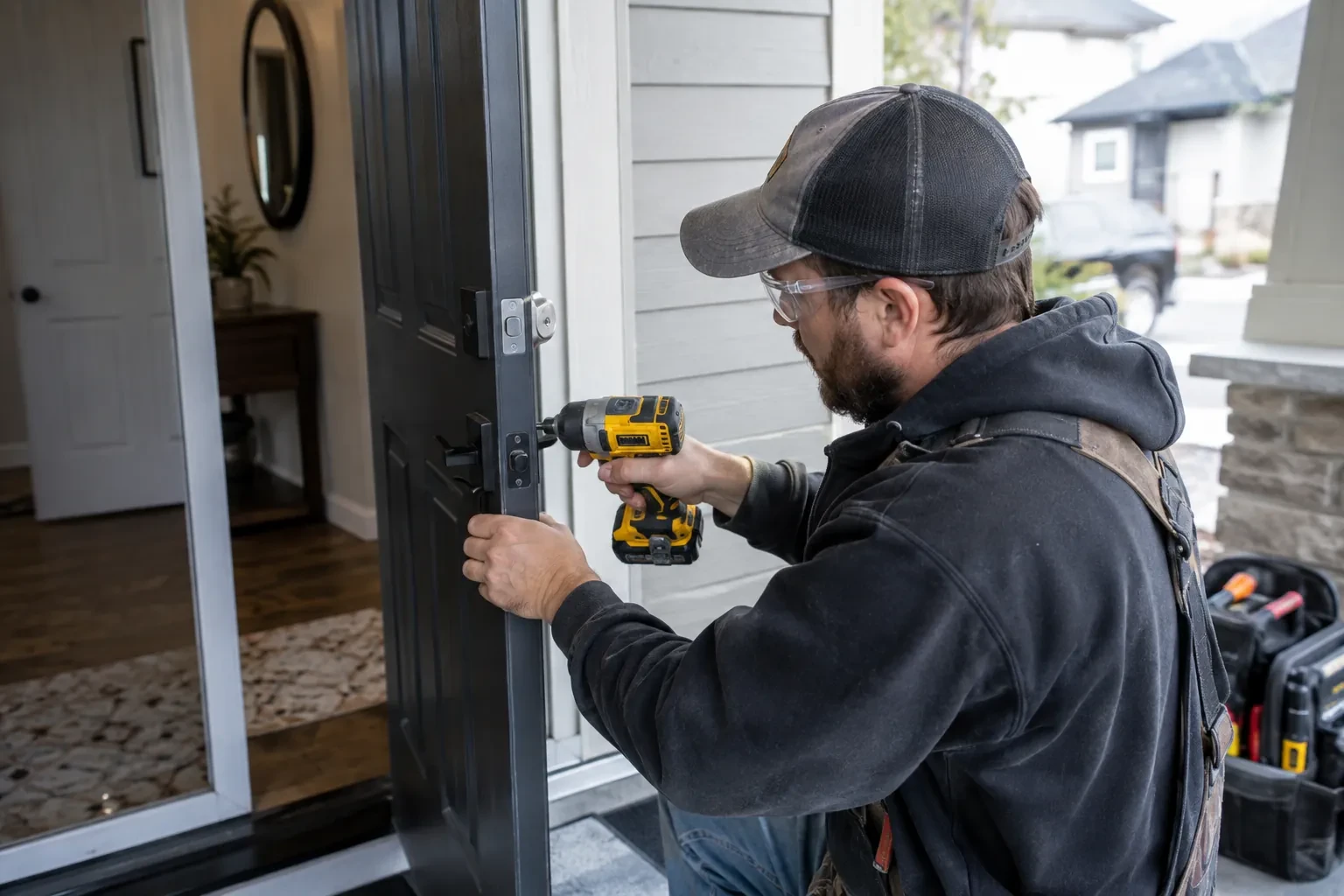
Seized & Jammed Lock Opening
What affects the quote
Type of lock on the door
A residential deadbolt, a knob latch, a lever set, a mortise case in an older house and a high-security cylinder each take different tools and time to open and to service.
Matching finish and keyway
A replacement that has to match an unusual finish or a restricted keyway takes a specific part rather than a stock one, and the quote reflects the part.
When the call comes in
An evening, weekend or holiday call for a jammed lock costs the same amount as a weekday one. The locksmith looks at what is actually jammed once on site, and the exact figure follows from that, not from the clock.
What to have ready
- Which side of the building does the door face, and is it near a salted driveway?
- Does the key go fully in and refuse to turn, or turn without moving the bolt?
- Has anyone sprayed oil or another product into the keyway?
Seized & Jammed Lock Opening: questions
QuestionsShould I spray something into the keyway while I wait?
Better not, unless it is a proper dry lock lubricant. Household oils, general penetrating sprays and hinge silicone thicken inside the cylinder and attract grit, so they buy a day and cost a service later. If the lock is frozen, a lock de-icer is fine; boiling water is not, since it refreezes deeper in. The most useful thing to do while waiting is to stop turning the key, so it does not bend or snap.
Why is it always the shaded side of the building that seizes?
The face of a building that never sees direct sun stays colder and damper, so ice in a keyway lasts days longer there and condensation sits in the cylinder rather than drying off. Wind-driven rain and snow tend to hit the same face. Those doors deserve a keyhole cover, a storm door where one fits, and a lubricant check before the season turns, and they are often the first lock a locksmith asks about.
Could a jammed lock mean someone tampered with it?
Occasionally, but wear and weather are far more common. Signs that point to tampering are fresh scratches around the keyway, a plug that sits crooked, or debris such as glue or a broken tool tip inside, none of which appear from ordinary use. The locksmith looks for these during the inspection and says plainly what was found. If the cylinder has been damaged that way, it is replaced and, if you wish, the other doors are rekeyed.
Related services
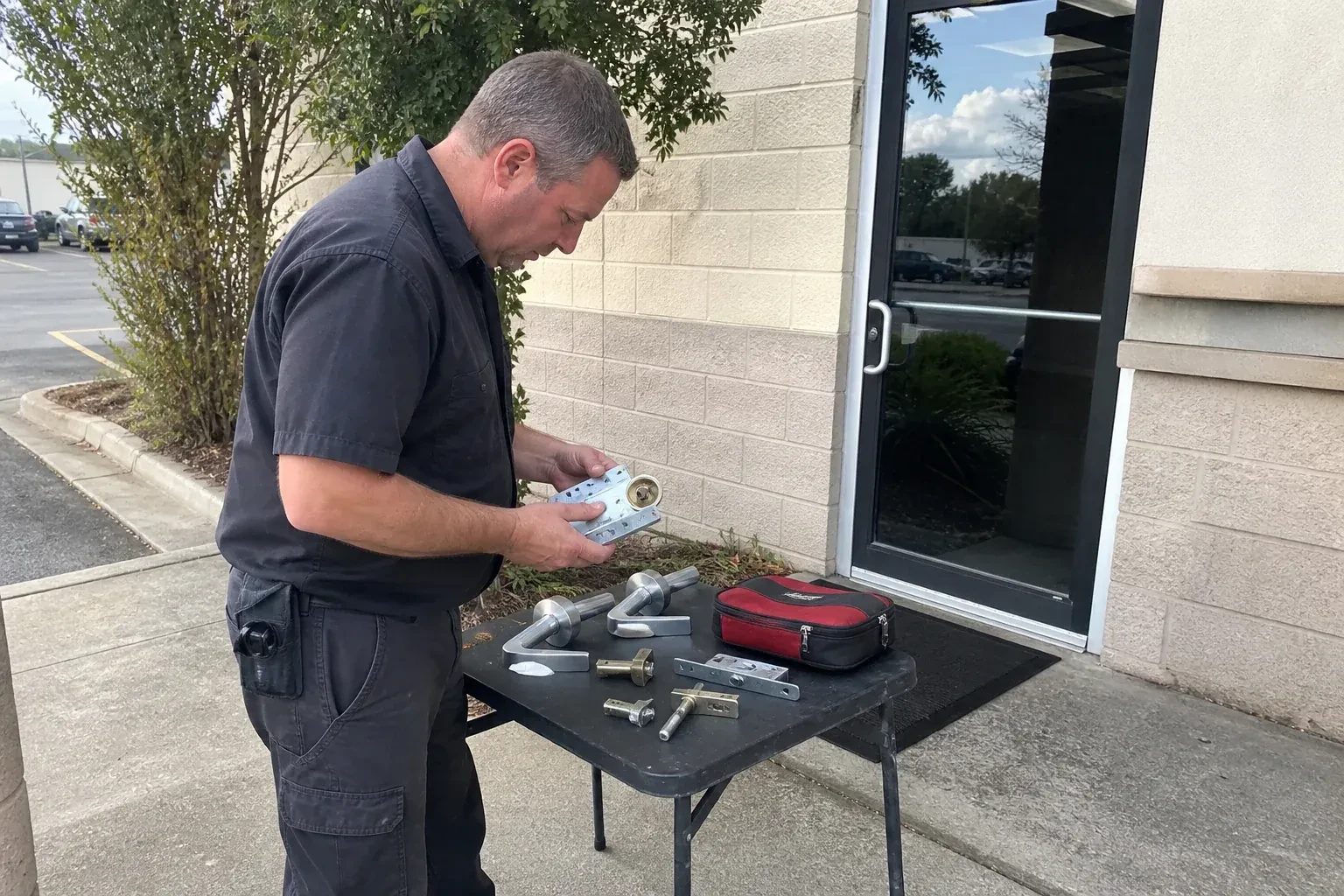
- Business Lockout ServiceAfter last night's power flicker the card reader beside the clinic door shows nothing.
- Broken Key ExtractionThe padlock on the shed has been stiff all summer.
- Break-In Damage Lock RepairPolice have come and gone, the occurrence number is on a sticky note, and you are standing in a cold hallway looking at a splintered frame, wondering how the house gets locked before everyone tries to sleep.