Change or rekey · Vaughan
Lock Rekeying
Three months of renovation are finally done.
In plain words
For landlords and tenants, rekeying is the tidy way to handle a change of occupancy. A departing tenant may have copied a key or simply forgotten to return one, and a fresh pinning means the incoming tenant is the only person holding a working key. Tenancy rules in this province expect a landlord who changes locks to give the tenant a replacement key and a tenant to have the landlord's consent before changing them, so a locksmith asks who is requesting the work and makes sure both sides end up with a key. A small record of the doors and key count keeps everyone clear.
How the visit goesOne key for the front door, another for the back, a third for the side door into the garage, and a fourth for the shed. You stand on the step every evening flipping through them in the dark, trying each one until something turns.
Inside the lock
What a rekey changes

01
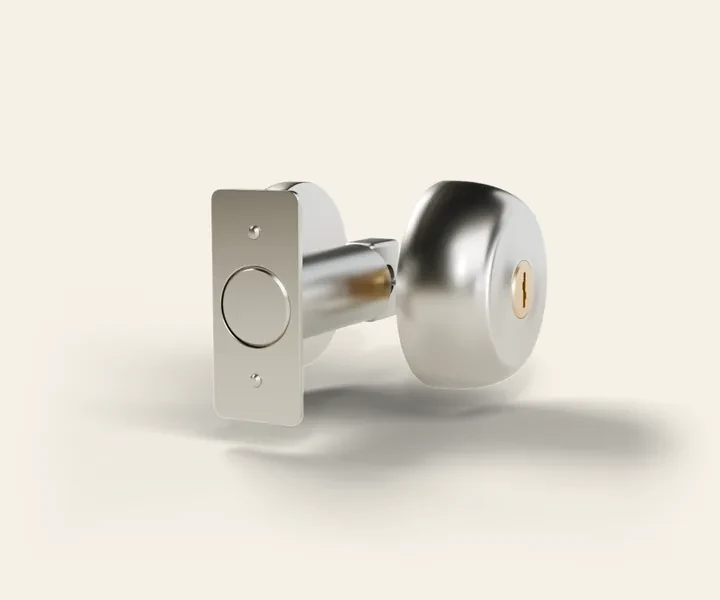
The lock you already have

02
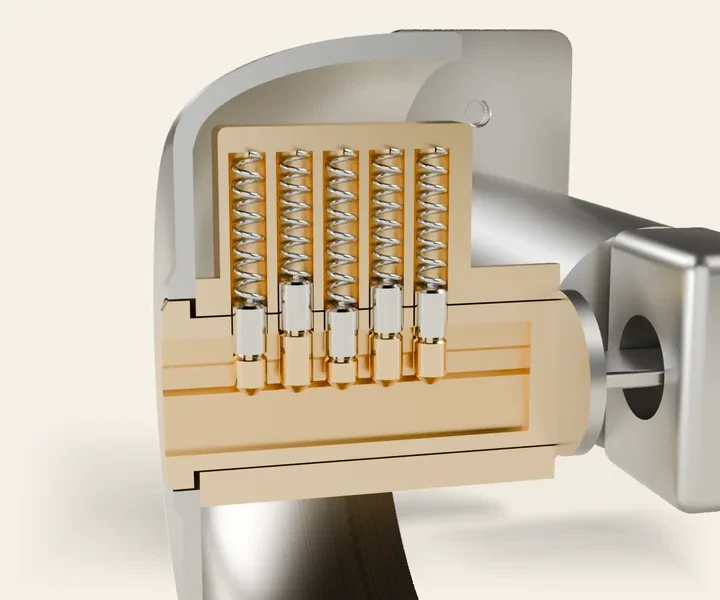
Inside the cylinder
03
Pins, springs and the shear line

04
A new key, new pins
Lock Rekeying
How the visit goes
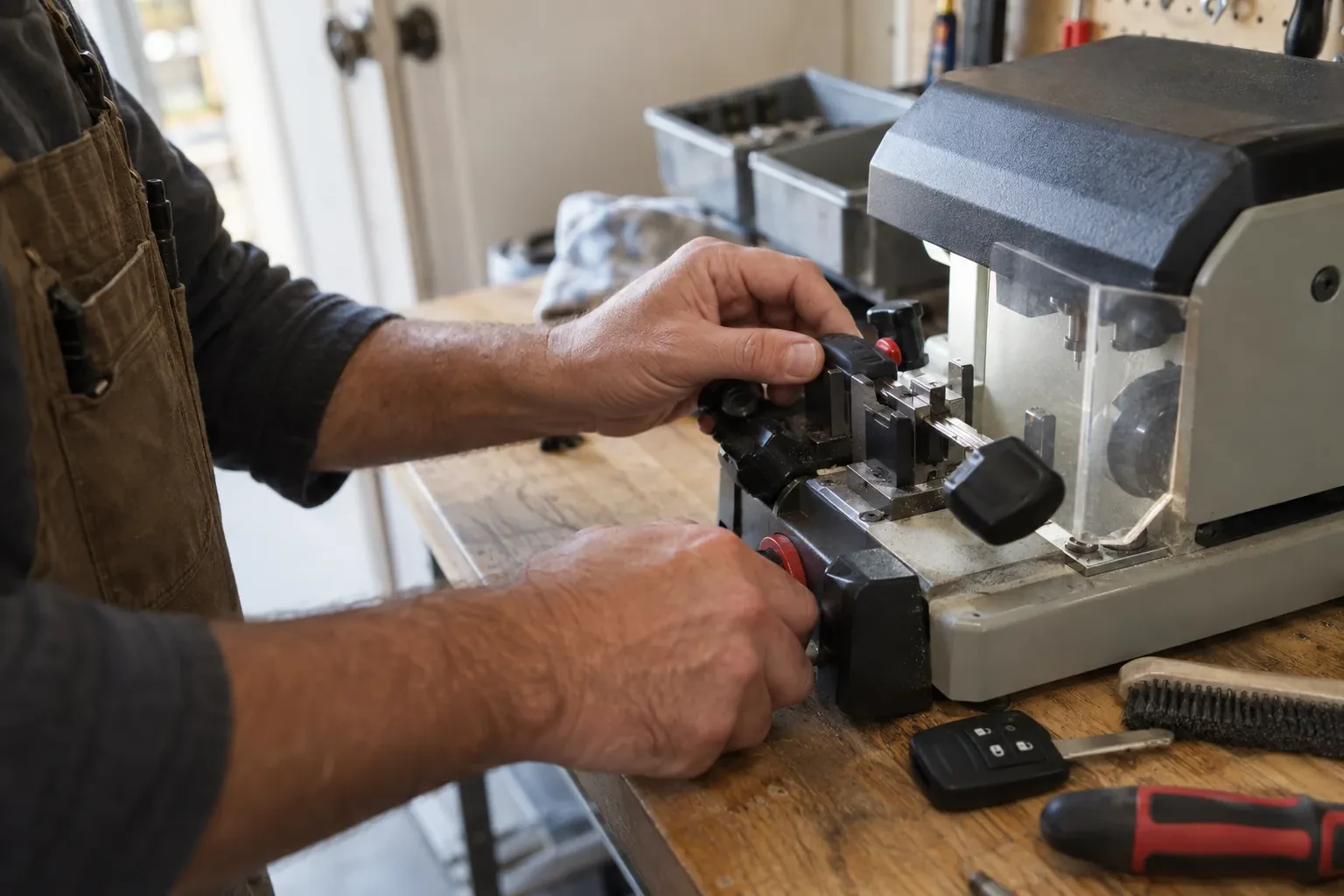
Counting the keys that are already out there
Part of planning a rekey is understanding why it is happening. The locksmith asks how many keys exist as far as you know, who has held one, and whether any went missing with something identifying the address. The answers do not change the pinning, but they shape the advice: whether a padlock or mailbox shares the same risk, whether a garage keypad code should change on the same visit, and how many new keys make sense to cut. It also helps to know whether any key is a restricted or patented type, since those are cut from a record rather than duplicated and may involve the original supplier.
Taking the cylinder out of the lock
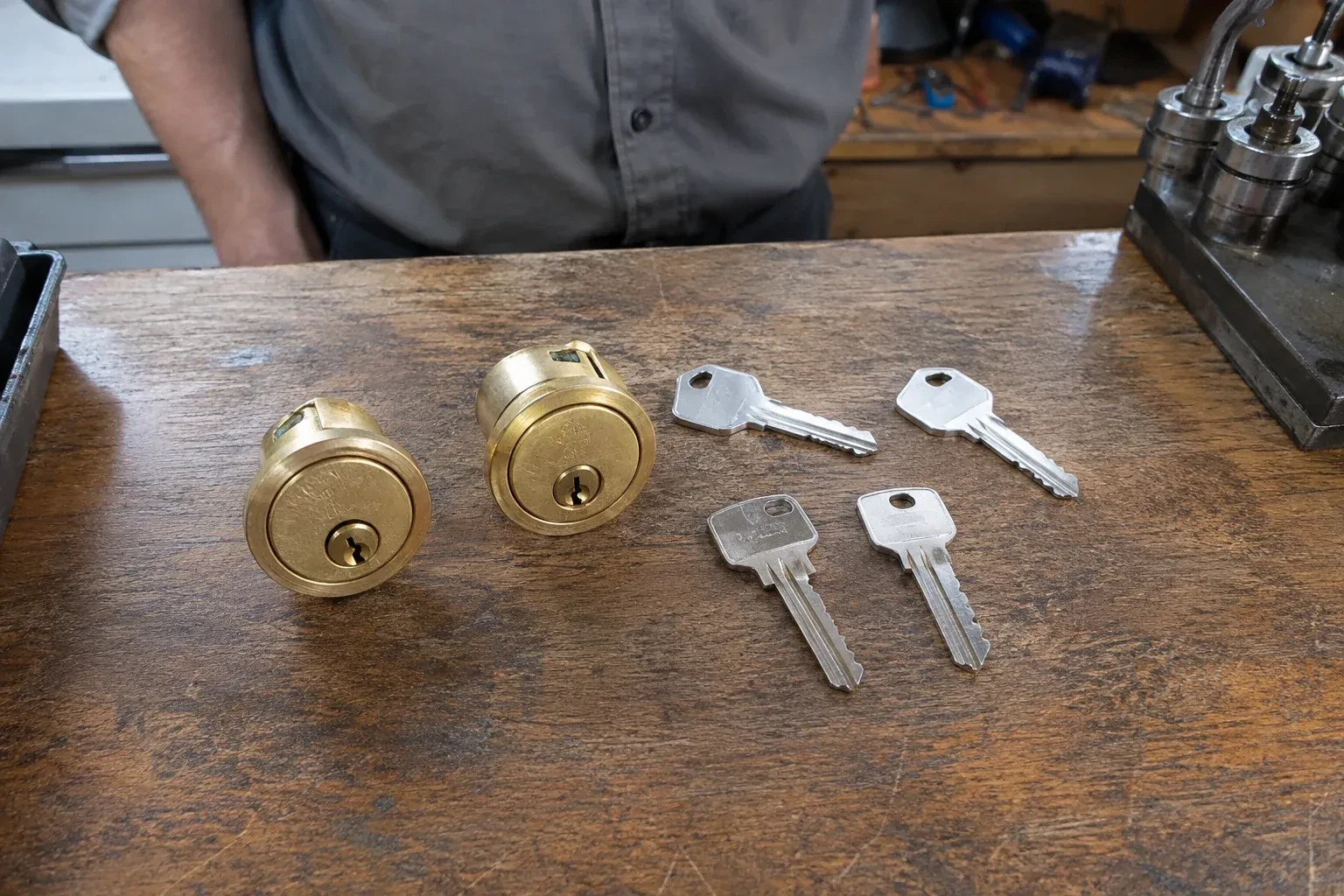
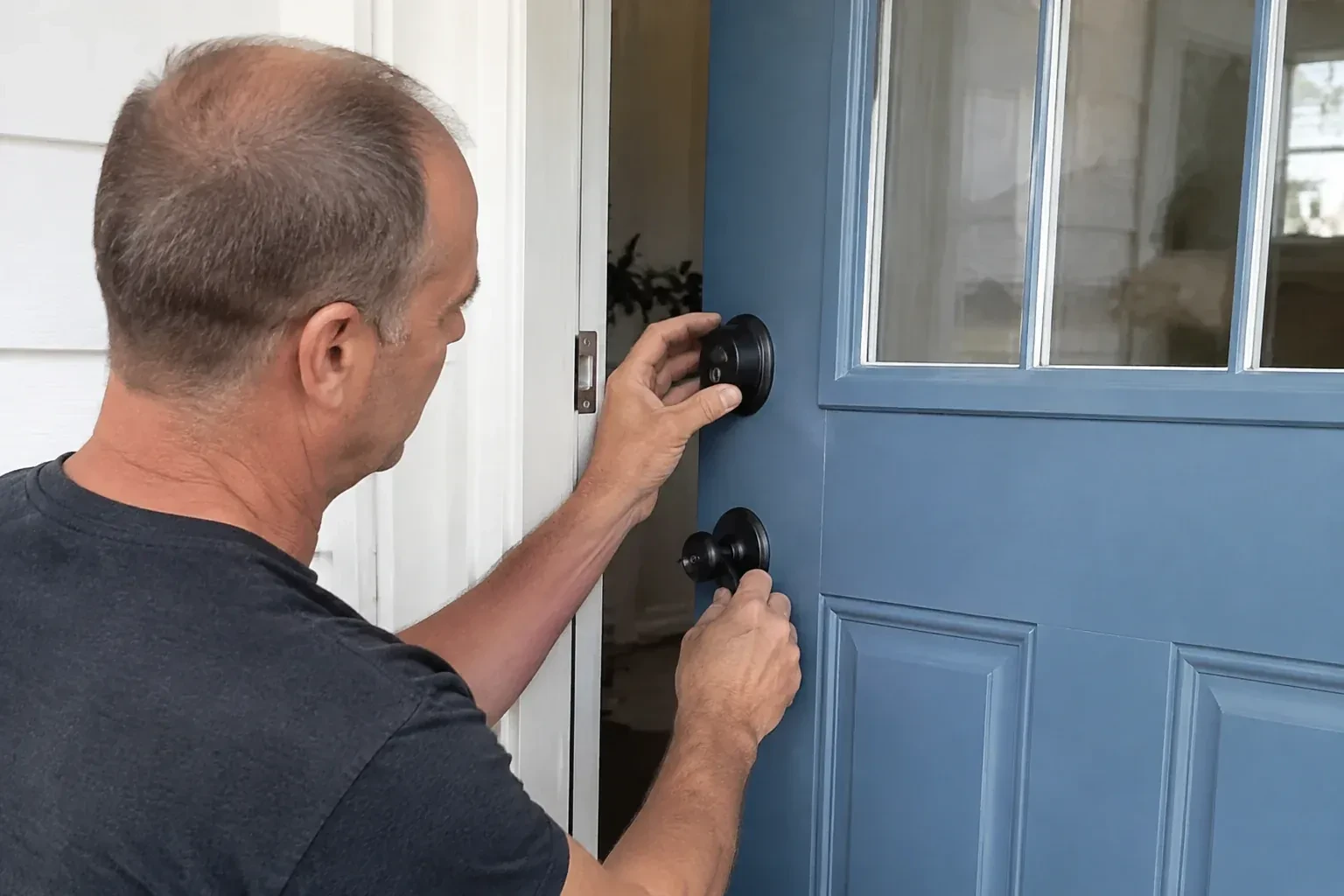
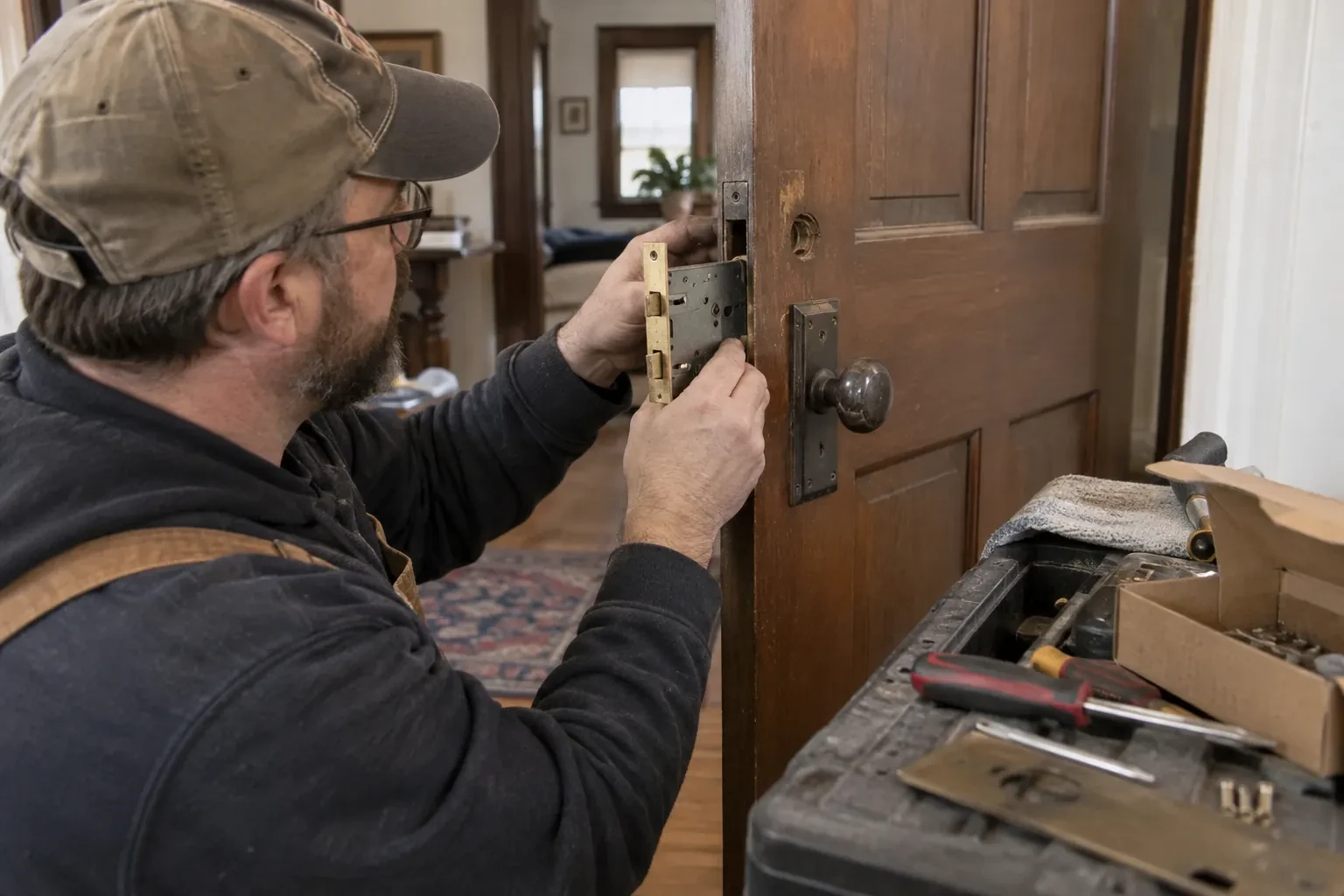
Each type of lock releases its cylinder in its own way, and the locksmith works door by door, finishing one before opening the next, so every entry stays lockable throughout. On a knob or lever set, the handle comes off after a retaining clip or set screw is released, and the cylinder slides out of the handle. On a deadbolt, the interior thumb-turn and housing are removed and the cylinder is withdrawn from the outside body. On an older mortise lock, a small set screw on the door edge is backed out and the cylinder unthreads from the case. Nothing is pried or forced; the door and trim stay untouched throughout.
The old keys are just metal now
Whatever was out in the world before today, the copy the contractor kept, the key the former roommate never returned, the ring that went missing on the bus, none of it turns a lock on your property any more. That is the whole point of the visit, and it is worth saying plainly because people sometimes keep worrying afterwards. If you still hold old keys, they can go in the metal recycling. There is no need to change the door hardware or your routine, but any keypad code known to someone whose access is ending should be deleted or changed separately, since rekeying the mechanical cylinder does not touch those codes.
Lock Rekeying
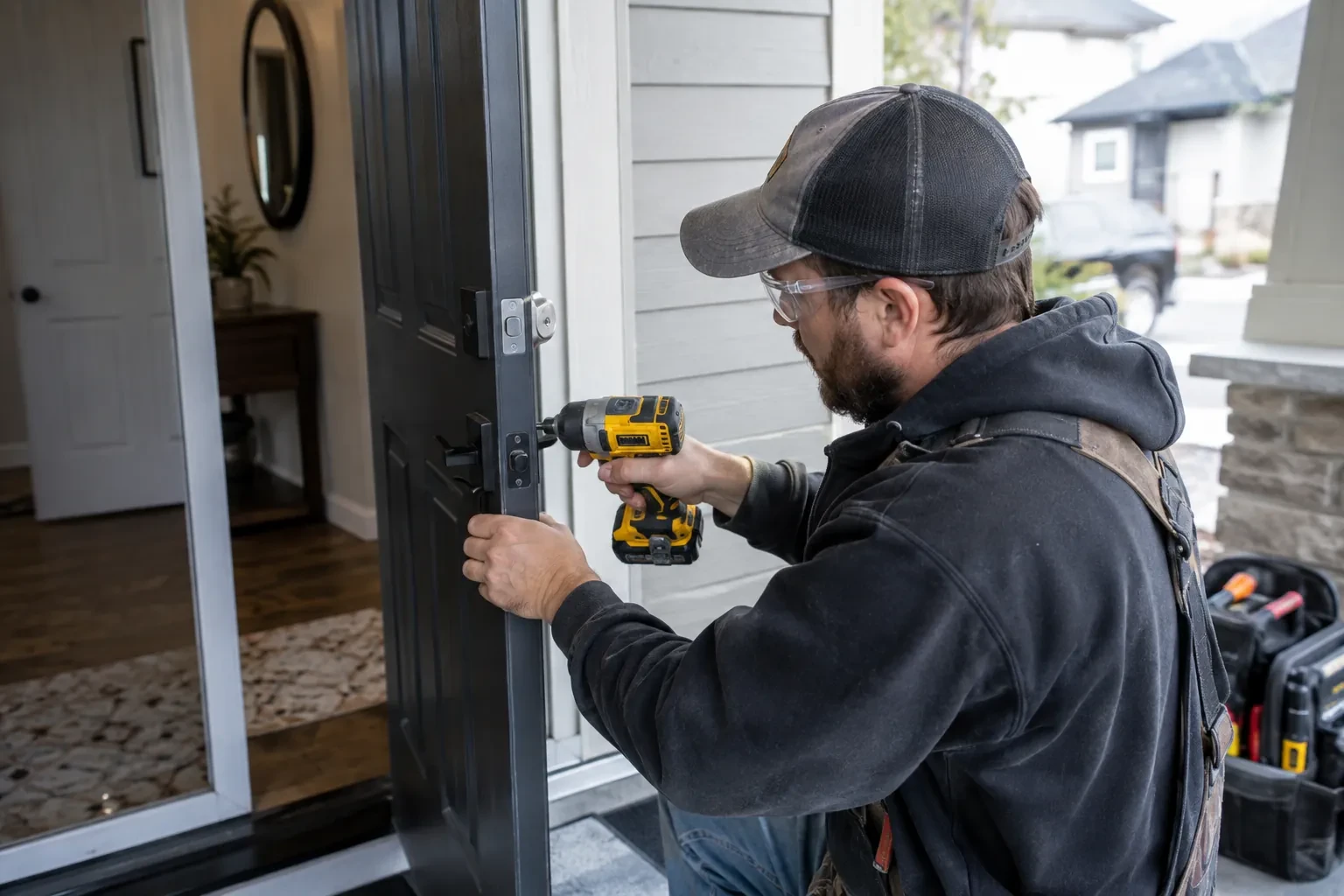
In the van
Key gauge
Retaining clip tool
Plug follower
Cylinder shim
Key tags and keying record
Lock Rekeying
What affects the quote
Upgrades chosen during the visit
Some people take the opportunity to replace a double-cylinder deadbolt with a thumb-turn model, add a reinforced strike or move to a heavier deadbolt. None of it is needed to rekey; each is a separate line.
Interior doors added to the plan
Bedroom, office or storage-room locks brought onto a key are lighter work than exterior deadbolts, but each is still a cylinder to pin and test, and the count includes them.
Records, tags and labelled key sets
A homeowner needs a short note. A property manager may want a keying chart, tagged sets for each suite and a key-issuance log, which is more office work and is quoted as such.
What to have ready
- Would you like every door on one key, or should some doors stay separate?
- How many new keys will your household or your tenants need?
- Are any of the locks keypad or smart locks with a backup key?
Lock Rekeying: questions
QuestionsWill my door hardware look any different afterwards?
No. The work happens inside the cylinder, so the bolt, handle, finish and strike plate stay exactly as they are, and nothing new is cut into the door. The only visible change is the key in your hand. If a cylinder does have to be replaced, because its keyway is incompatible with the others or it has worn out, the locksmith picks one in a matching finish so the door keeps a consistent look.
How often should locks be rekeyed?
There is no calendar for it. What matters is who holds a key, not how many years have passed. Think about it when occupancy changes hands, when someone who had a key no longer needs one, or when a ring goes missing along with something that shows where you live. Between those moments a well-kept cylinder may need no scheduled care, and when it does, use whatever that cylinder's maker specifies. With the doors already on one recorded system, any repeat is a short piece of work.
Should I rekey when I move into a new home?
It is the single most common reason to rekey, and a sensible one. A resale home has typically passed through owners, agents, inspectors, cleaners and trades, any of whom may have had a key cut. A newly built home has been opened by construction crews using a builder's key. Rekeying on move-in means the only working keys are yours, and the same visit can bring every exterior door onto a single key, retiring the assorted keys you inherited.
Related services
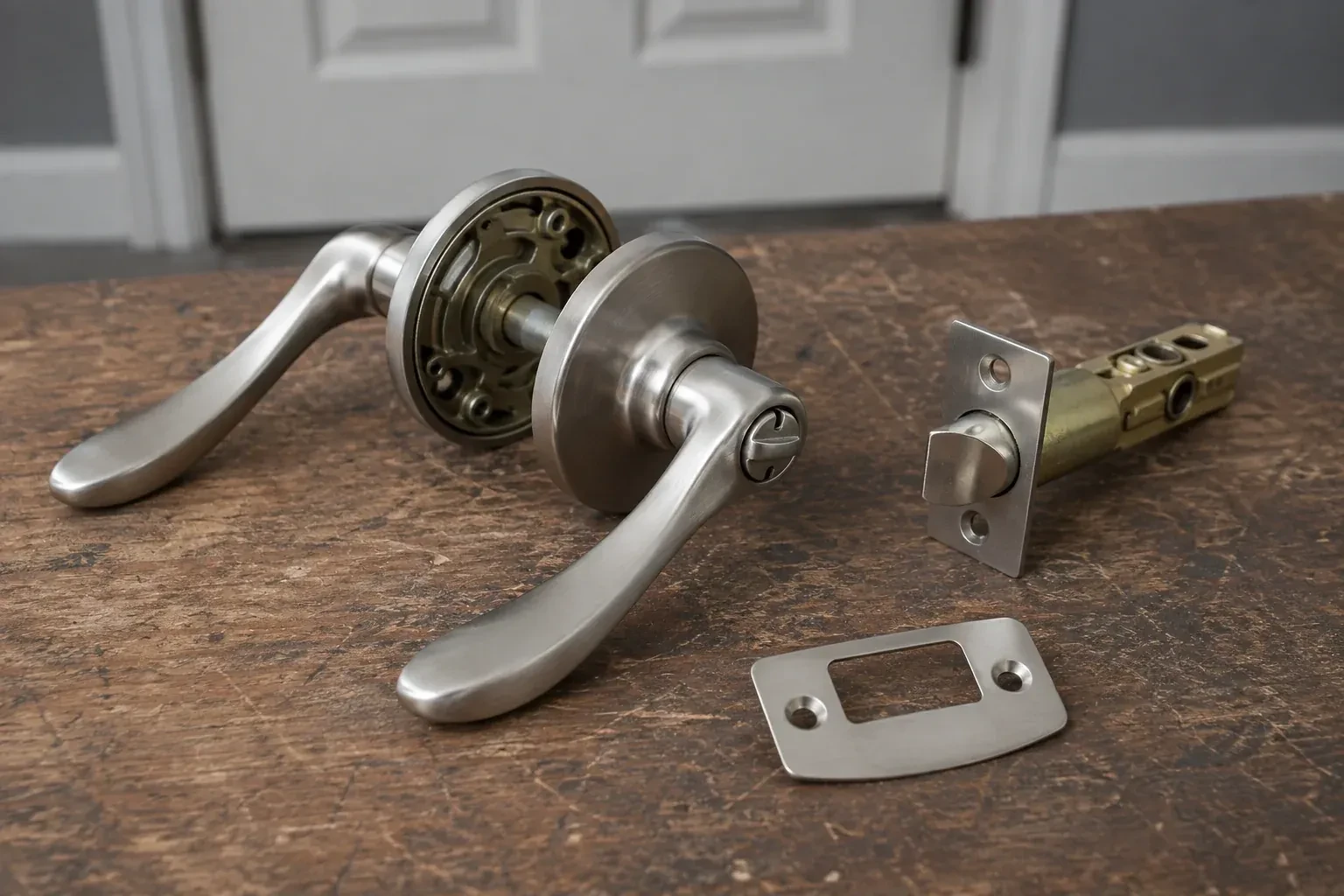
- Lock Replacement & UpgradeThe house is fifteen years old and every exterior door still wears the light hardware the builder fitted: a short bolt, a thin strike held by two small screws, and a knob lock that never suited a street entrance.
- Vintage Mortise Lock ServiceThe knob flops loose on its spindle and never springs back to level.
- Smart Lock InstallationArthritis has made the small house key hard to grip and turn, especially with gloves on in January.