

Commercial · Vaughan
Master Key System Design
A self-storage operator wants the office, the tenant gate and the equipment shed on three different levels of access for staff, but every lock on the property currently answers to the same handful of interchangeable keys handed out over the years.
In plain words
The process behind a master key system runs from conversation to chart. First comes a walk-through of every door and a conversation about who needs to open what, now and as the business grows. Next comes the design itself: grouping doors into change-key sets, deciding where sub-masters belong, and reserving a top-level master for a short list of people. Then the cylinders are pinned, cut and tested individually before any key is handed over. What the owner receives at the end is not just keys but a working hierarchy matched to compatible hardware and documented in a chart they control.
How the visit goesThe new wing was built with its own brand of cylinder, so the two-year-old keys from the original building do not open a single door in the addition. Staff are now carrying two separate key rings just to move around one workplace.
Master Key System Design
How the visit goes

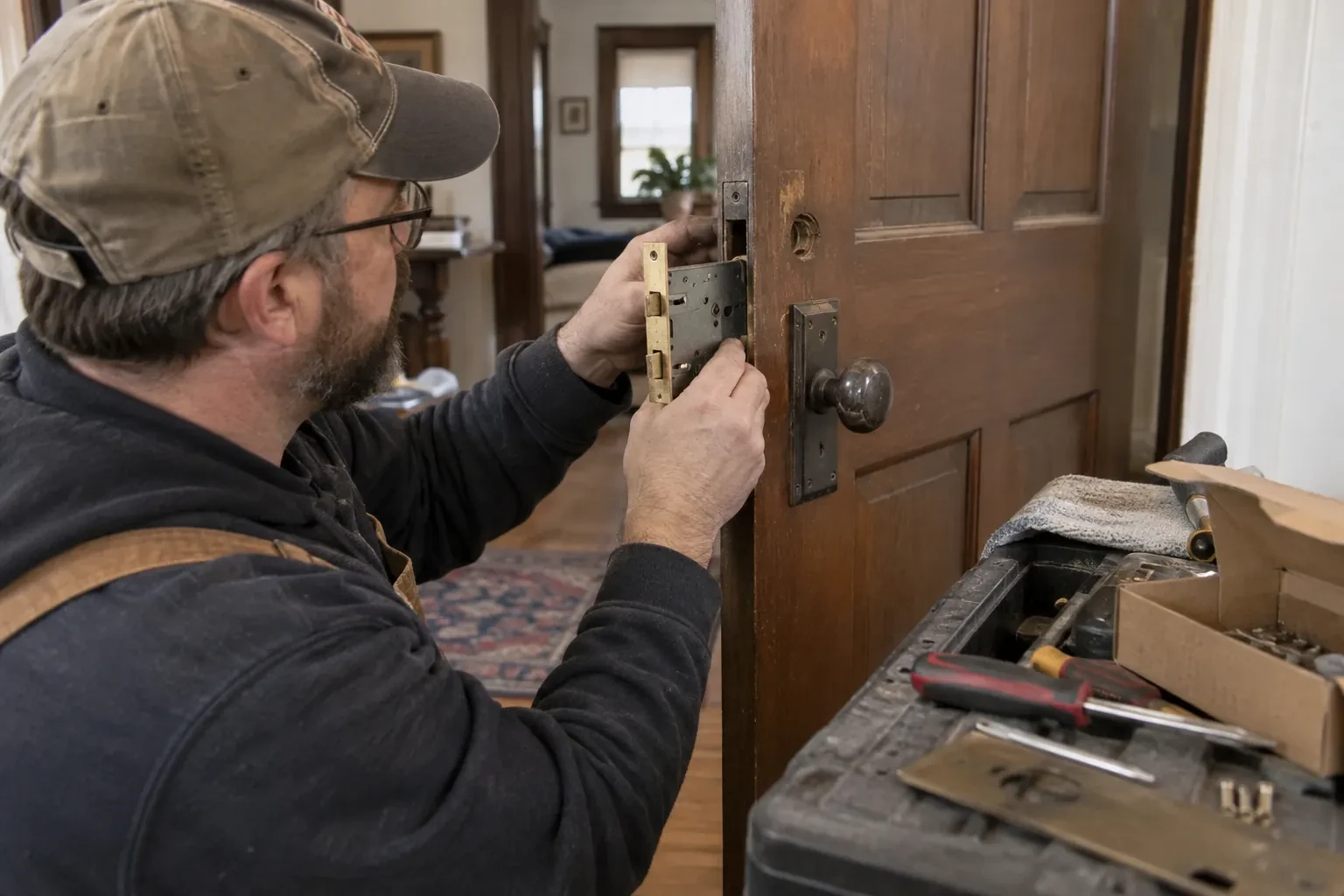
What is already on the doors
Every door on the property is walked and logged: the cylinder brand or keyway, whether it is a knob, lever, deadbolt or mortise case, its condition, and which doors currently share a key by accident rather than by design. This inventory decides how much of the existing hardware can join a new hierarchy without modification and how much needs replacing to fit cleanly into the planned levels. Skipping this step is how master key projects end up half-finished, with some doors on the new system and others quietly left on whatever key they always had.
Testing every level before it is trusted
Each cylinder is tested on the bench with its assigned keys before it goes back on the door, then tested again once installed: the change key on its own door, the relevant sub-master across its whole group, and the top-level master across the entire property. Any lock that opens with a key it should not respond to is pulled and corrected on the spot rather than noted for later, since a hierarchy that has not been proven lock by lock is only a plan, not a working system.
Room already built in for what comes next
Because spare capacity was planned into the keying platform from the start, a realistic new door, tenant or hire usually fits into the existing chart without disturbing levels that are already in use. This is the practical payoff of building the system with growth in mind rather than filling every available combination on the first day: expansion becomes an addition to the record, not a reopening of it.
Master Key System Design
In the van
Cylinder pinning kit
Cylinder decoders
Locking chart storage cabinet
Restricted or standard key blanks
Master pin kits

Master Key System Design
What affects the quote
Whether hardware needs replacing for accessibility
Doors on a barrier-free path of travel need lever or paddle-style hardware rather than round knobs, so a property with several such doors that currently have incompatible hardware has more replacement work folded into the project than one already fitted with compliant hardware.
Electronic locks alongside mechanical keys
Where keypad or card doors need to line up with the mechanical hierarchy, the quote includes the extra coordination of matching access levels across both systems and pinning any mechanical override cylinders into the same chart as the rest of the property.
Keyway chosen: standard or restricted
A restricted or patented keyway costs more in blanks and administration than a standard keyway, since duplication is controlled through the manufacturer's authorized record rather than cut anywhere. Higher-risk doors, such as records or cash rooms, often justify that additional control; lower-risk doors may not.
What to have ready
- Which roles or departments need genuinely different levels of access?
- Are any doors part of a shared or condominium-controlled building system?
- Is there an existing chart, or is this starting from scratch?
Master Key System Design: questions
QuestionsCan cleaners or contractors get limited access without a master key?
Yes. A change key or a narrow sub-master covering only the areas they service is the usual approach, rather than handing over a level that reaches further than the job requires. Where the property uses keypad or card access alongside mechanical keys, a time-limited or role-specific electronic credential can serve the same purpose without a physical key changing hands at all.
How is the key chart kept private?
The chart is handed to a named administrator rather than left as loose paperwork, and it is stored somewhere only that person can reach, separate from day-to-day office records. It is not published, circulated widely or kept alongside general building documents. When the administrator role changes hands, custody of the chart moves with a signed acknowledgement rather than being passed along informally.
What happens to the old keys once a new system is cut?
Once the new pinning is tested and confirmed working, the old keys no longer operate the cylinders they used to, whether or not they are physically collected back. Collecting them anyway is good practice, since it closes the loop on how many old copies were in circulation and lets the business retire them rather than wonder where they ended up.
Related services
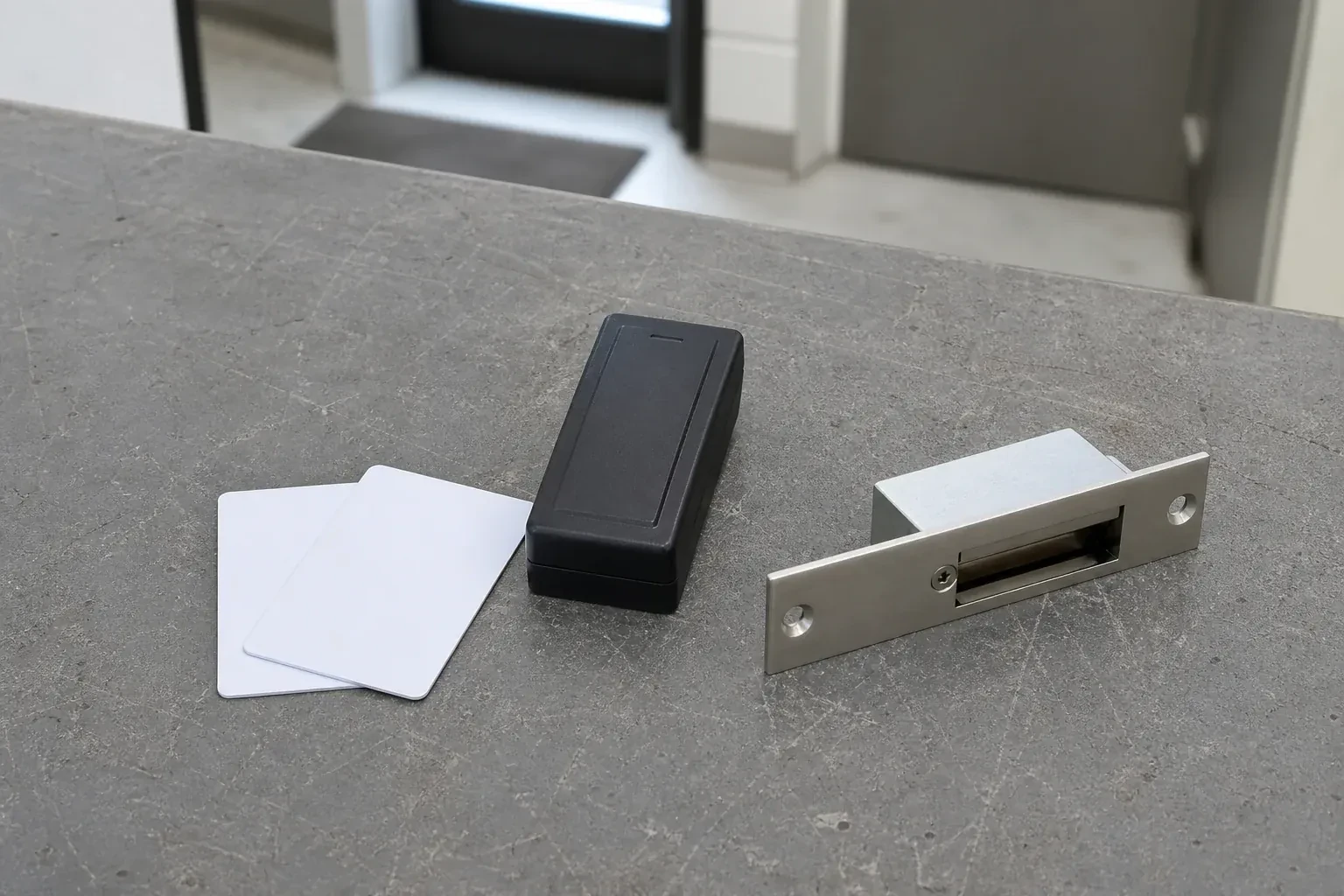
- Access Control InstallationThe team has grown past the point where one shared key still makes sense.
- Panic & Exit HardwareThe new access-control reader at the staff entrance works fine going in, but nobody has sorted out the door's exit side, and right now a card reader and a pushbar exist as two separate ideas.
- Commercial-Grade Lock ReplacementAt closing time the hookbolt on the storefront door catches the keeper only on the second or third try, and one employee has started giving the door a shoulder to force it home.