Change or rekey · Vaughan
Lock Replacement & Upgrade
The house is fifteen years old and every exterior door still wears the light hardware the builder fitted: a short bolt, a thin strike held by two small screws, and a knob lock that never suited a street entrance.
In plain words
Sometimes the reason is simply that the hardware looks wrong or has weathered badly. Road salt, freeze-thaw and humid summers are hard on finishes, and a brass handleset can go blotchy while a lacquered knob peels. The locksmith helps you pick a finish that suits the exposure, whether matte black, satin nickel or a PVD brass that resists tarnish, and matches the deadbolt, handleset and interior levers so the entrance reads as one design. Function and grade are chosen alongside looks, so a door refreshed for appearance also comes out better protected.
How the visit goesThe brass handleset has gone blotchy and green where the winter salt reaches it, and the coating on the deadbolt is lifting in flakes. It still locks, but it looks tired beside the fresh paint on the door.
Lock Replacement & Upgrade
How the visit goes
Who is asking for the change
The first check is about the person, not the door. An owner can change any lock on their home. A tenant who wants new hardware on the unit door needs the landlord's agreement, and a landlord who changes a lock while a tenant lives there hands over new keys. The locksmith asks which situation applies and, where paperwork helps, looks at identification, a deed, a lease or a property-management note. It takes a minute and it means the new lock goes on with everyone who has a stake in the door knowing about it, which is exactly how a lock should start its working life.
Taking the old hardware off without harm
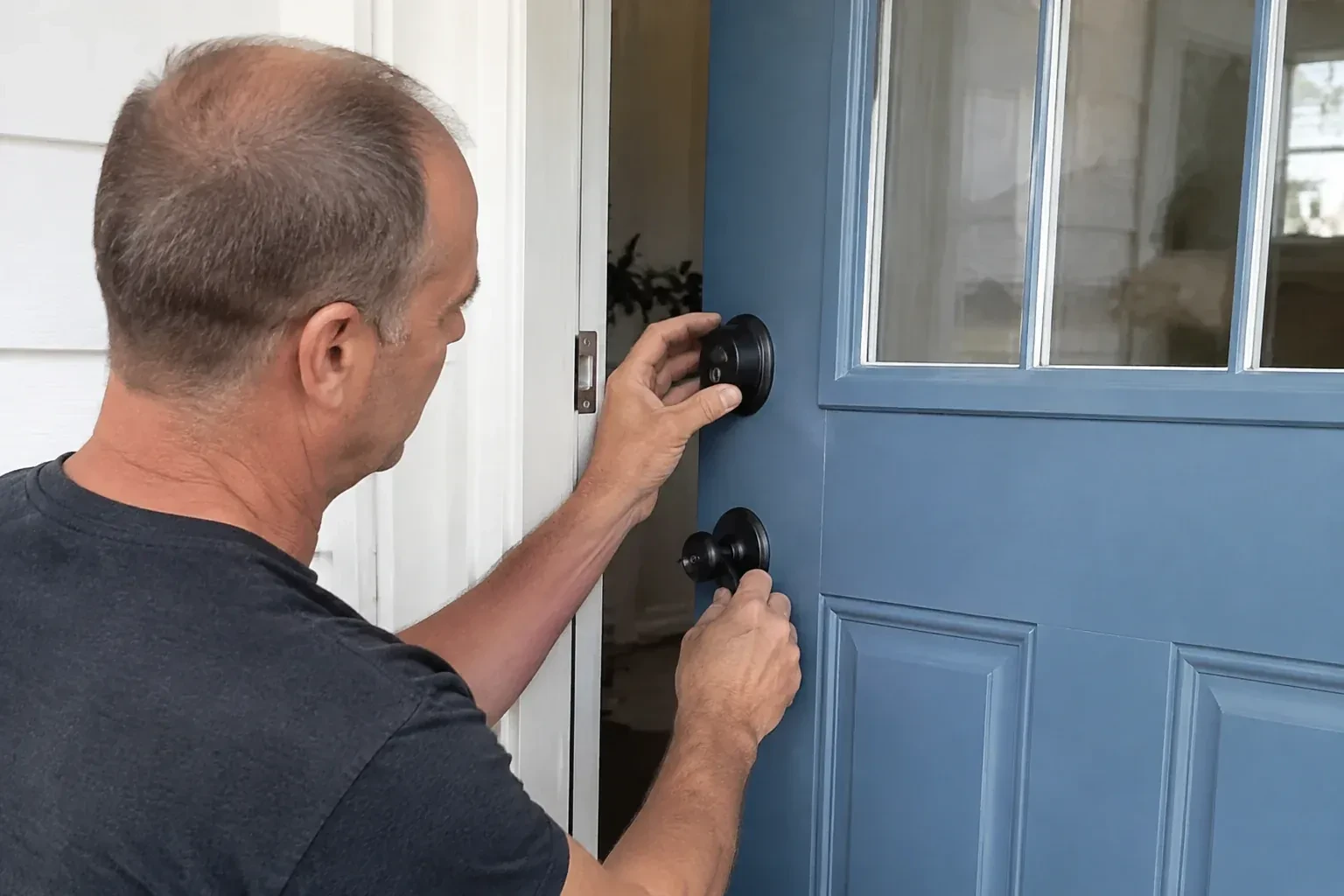
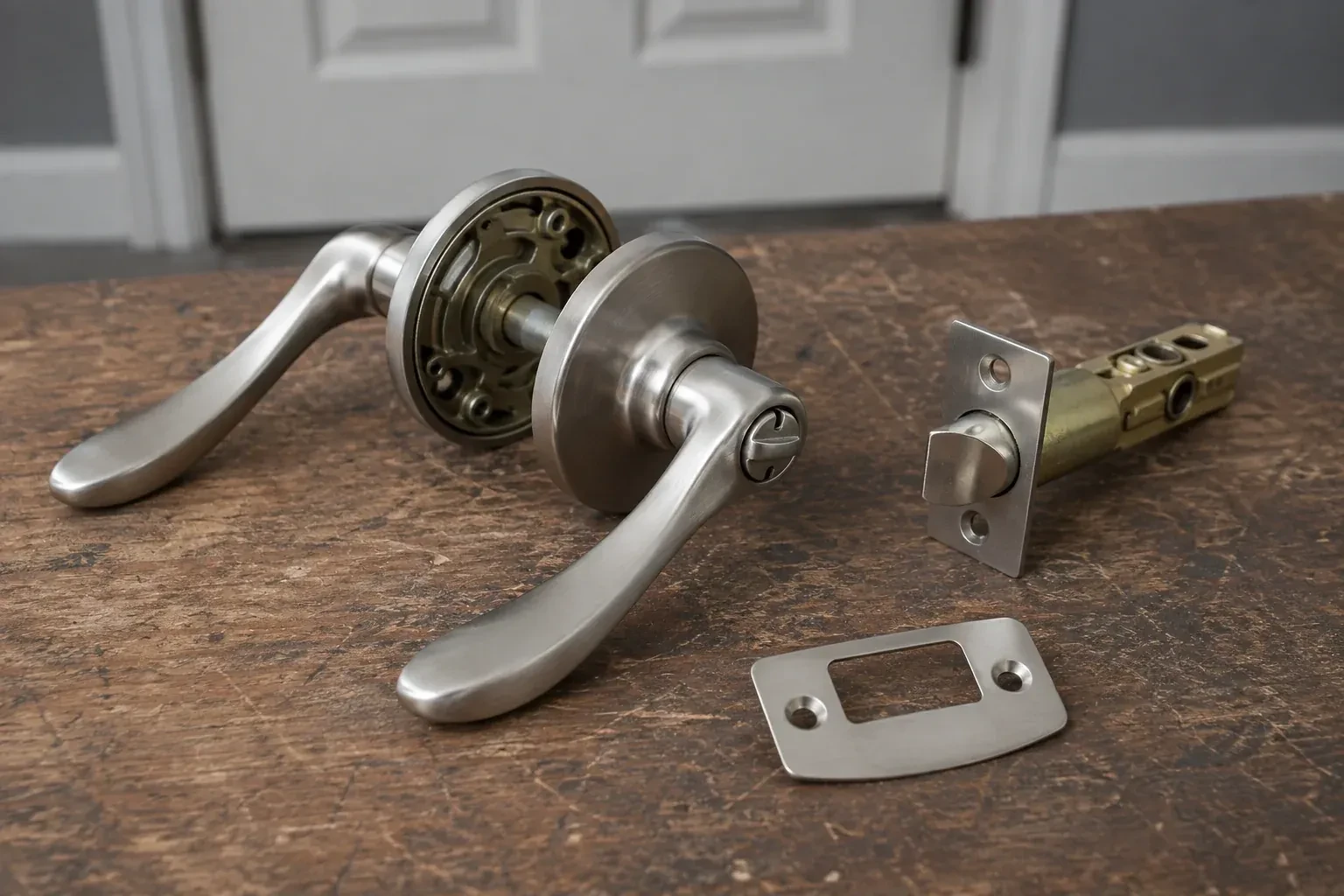
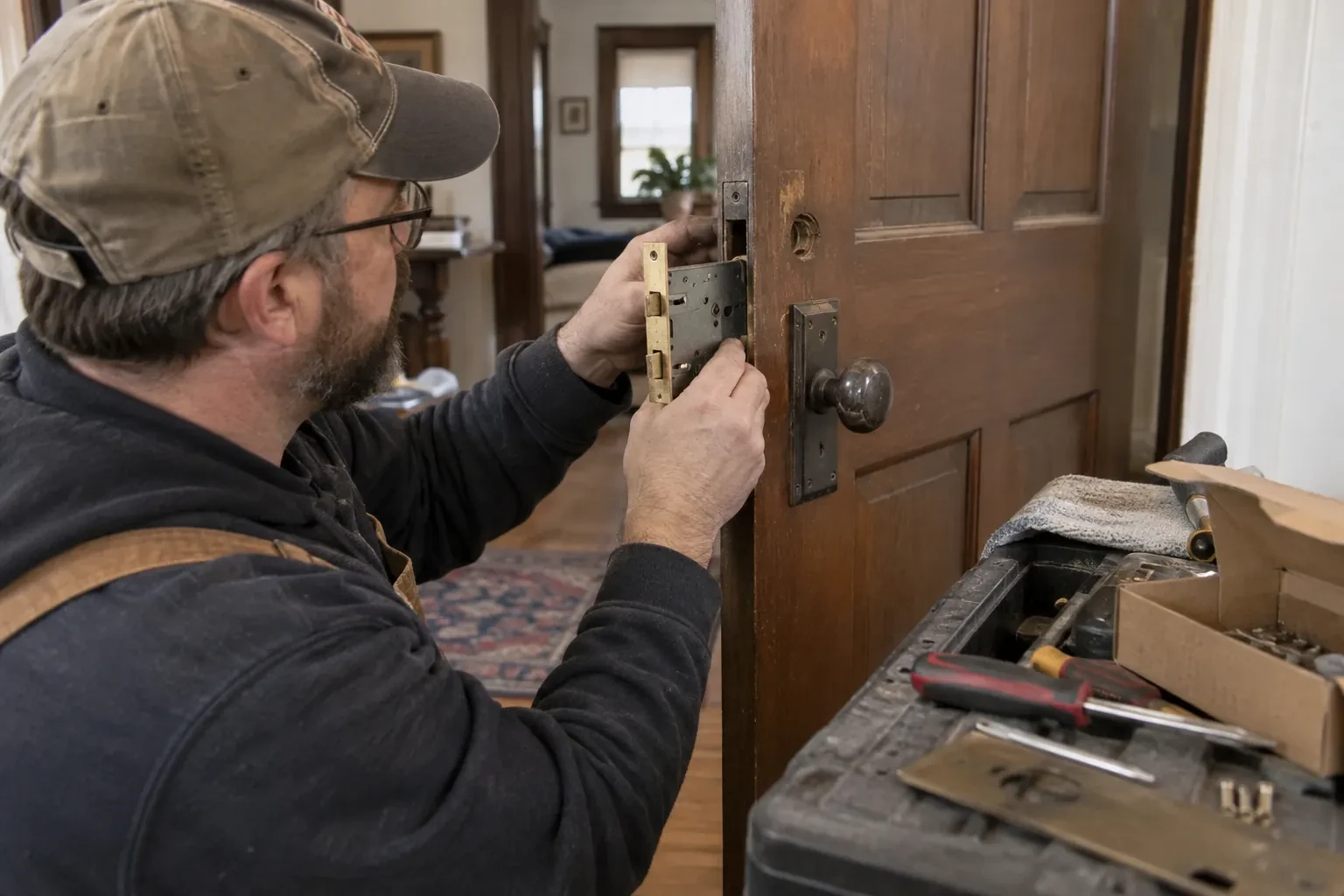
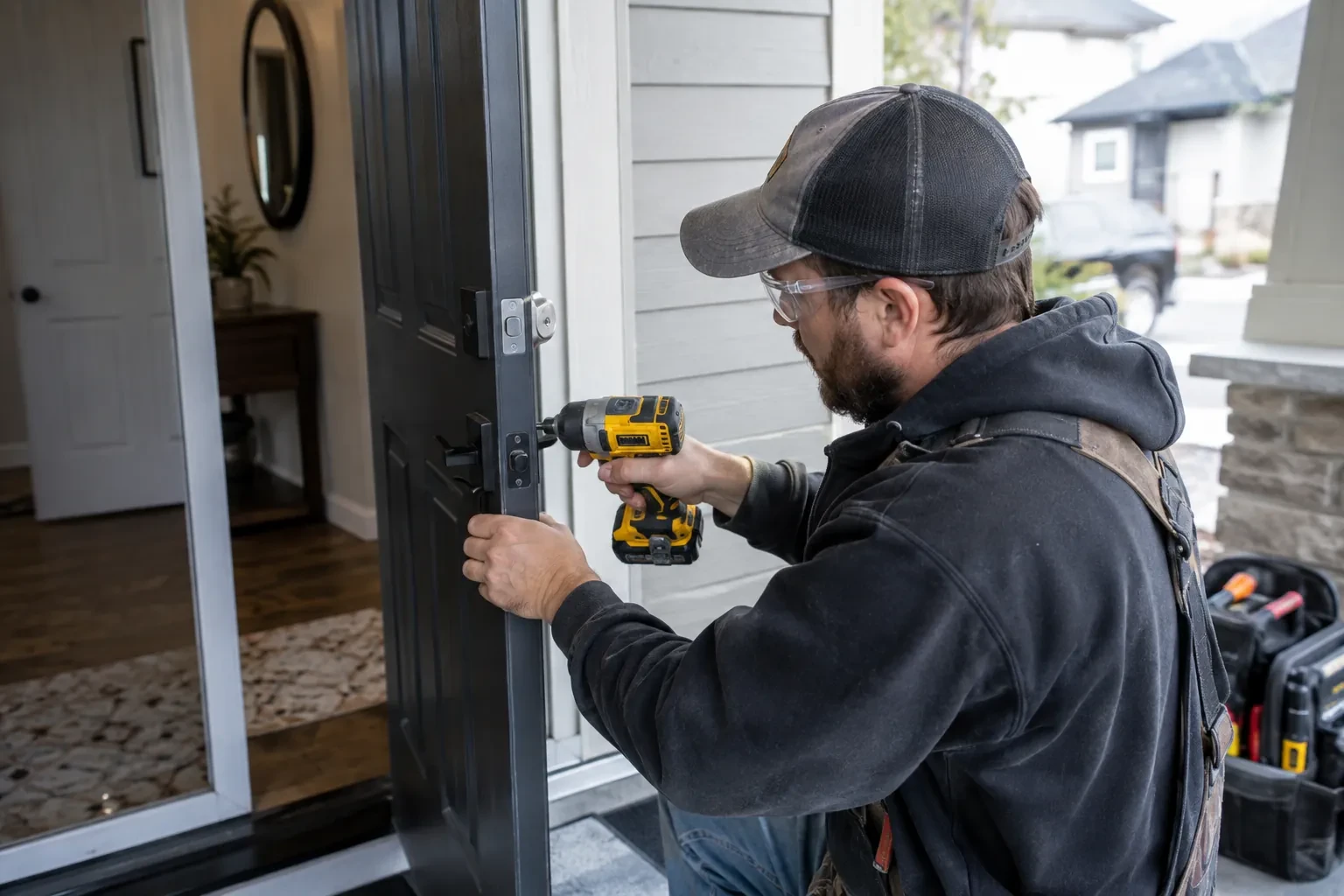
Removal is done with the same care as fitting. Interior trim screws come out first, then the interior rose or thumb-turn, and the exterior housing lifts away with its tailpiece. The latch or bolt slides out of the edge bore once its two faceplate screws are released, and the old strike comes off the jamb. Painted-over screws are scored free rather than forced, seized screws are eased with a hand driver of the right size, and a stripped head is drilled out only as a last step. The bore and edge mortise are then cleaned of paint build-up and debris so the new parts seat properly.
A clear plan for the remaining doors
Most households do not replace every lock in one visit, and you leave with a short list of what is left, in order of importance. Typically the front door and the garage-to-house door come first, then the back and side doors, then the patio slider and interior sets. Because the key plan has been settled, any lock added later can be pinned to the same key, so the house stays on one key as the work continues. Finishes and styles are recorded so future hardware matches. The first visit sets the standard; the rest of the house can follow when it suits you.
Lock Replacement & Upgrade
In the van
Graded deadbolt
Handleset with matching deadbolt
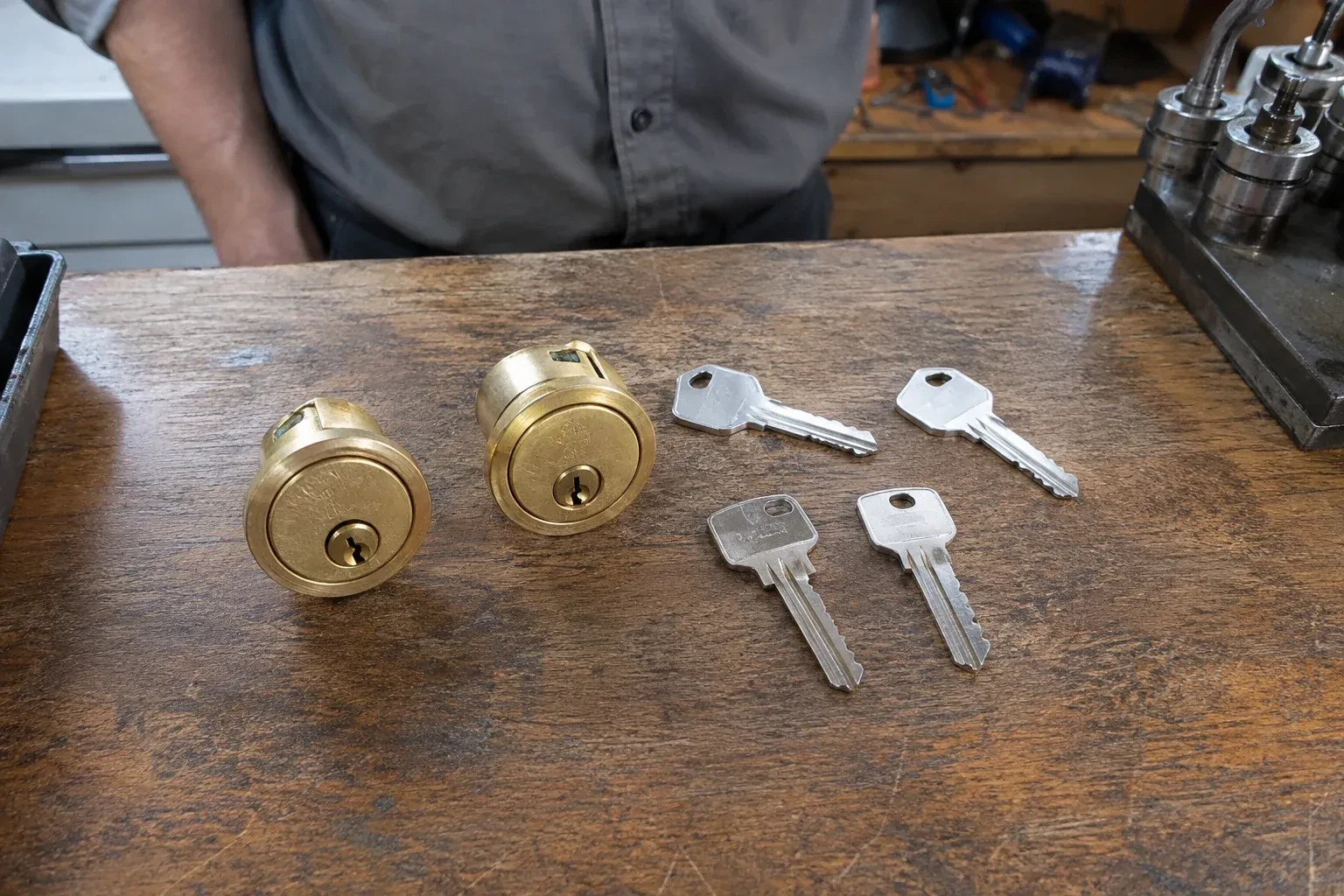
Cylinders, plug follower and pinning kit
Manufacturer-approved cylinder lubricant
Adjustable latch or bolt
Lock Replacement & Upgrade
What affects the quote
Older and mortise hardware
Servicing an original mortise case, sourcing a compatible cylinder or fitting a conversion plate on a century door involves more assessment and fitting time than a standard cylindrical replacement.
Condition of the old hardware
Hardware that comes off cleanly is one thing; painted-over trim, seized or stripped screws and a cylinder that has to be drilled out add time before the new lock can go on.
Door material and thickness
Wood, steel and fibreglass doors are drilled and fitted differently, and a door thicker than the standard 45 millimetres needs extension parts, so the door itself shapes part of the quote.
What to have ready
- How many keys does the household need, and should copying be restricted?
- Is the problem wear, damage, looks, a change of function or too many keys?
- Are you interested in a keypad or smart lock on any door?
Lock Replacement & Upgrade: questions
QuestionsCan you replace the lock on a sliding patio door or French doors?
Yes. Sliding doors take a replacement mortise hook lock sized to the rail, often with a keyed exterior, and benefit from a secondary foot bolt or a pin through the frames. French doors are secured by treating the inactive leaf properly with flush bolts into the head and sill, then fitting a deadbolt to the active leaf with a strike into that reinforced edge. Both are routine parts of a residential upgrade.
What happens to the old lock?
It is yours. Some people keep a sound old cylinder as a spare or move a decent deadbolt to a shed or garage door, and the locksmith can rekey it to the house key for that purpose. Worn or damaged hardware is taken away for recycling if you prefer. Either way, the old keys should be gathered up and discarded so nobody confuses them with the new set.
Should I rekey my locks or replace them?
Rekey when the hardware is sound and the problem is the key: a lost copy, a move, or too many keys for one house. Replace when the mechanism itself is worn, the housing or bolt is damaged, the grade was never suitable for the entrance, or you want a different function, finish or a keypad. Many visits do both, keeping good locks and rekeying them while replacing the tired ones, all to one key.