Commercial · Vaughan
Access Control Installation
The team has grown past the point where one shared key still makes sense.
In plain words
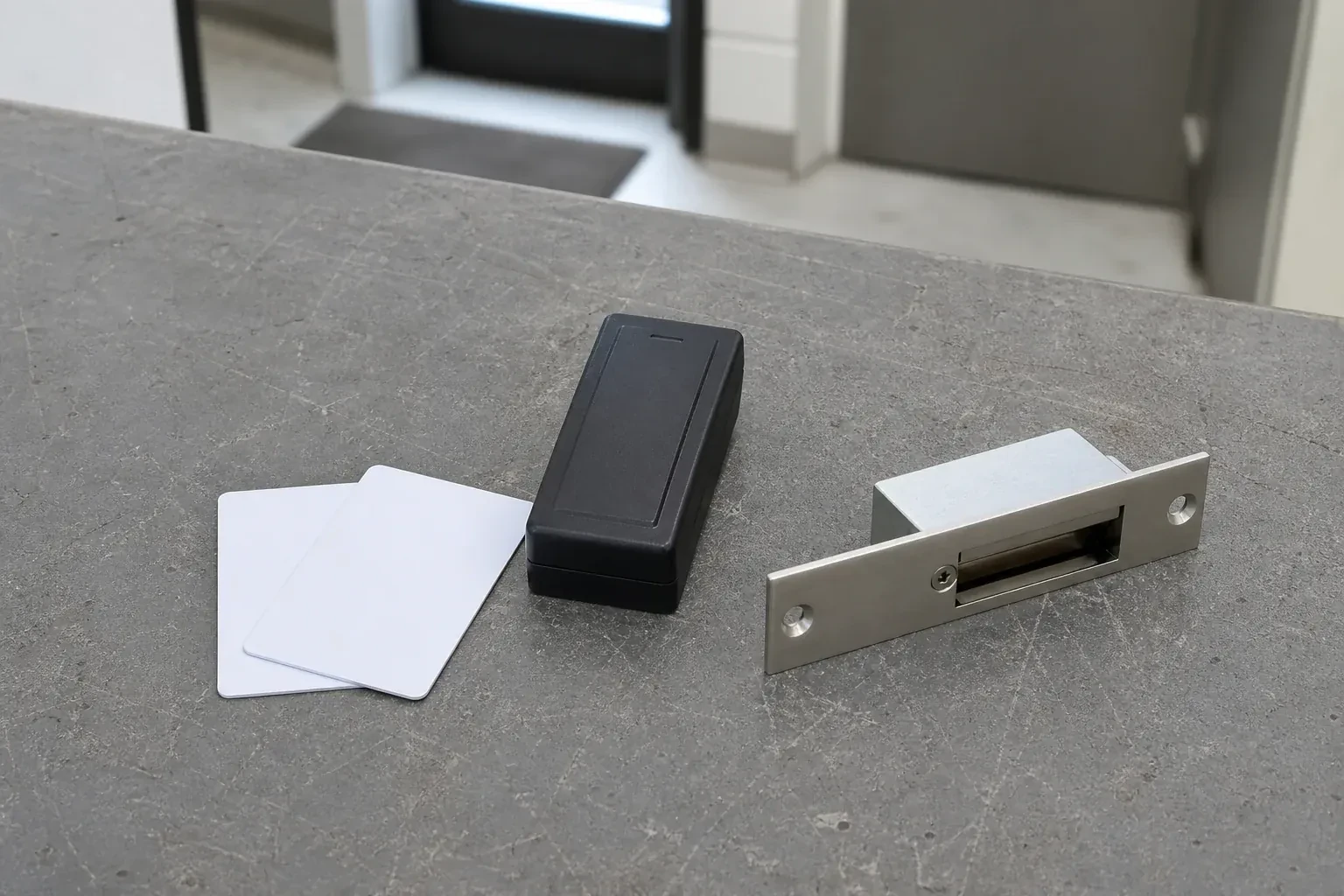
Access control installation swaps a shared metal key for an electronic one: a card, a fob, a code, or a phone tap that a controller checks against a list the business manages. When someone leaves the company, their credential is switched off in seconds instead of triggering a rekey of every door they could open. The reader and locking hardware go in at each entrance that needs it, wired to a controller that holds the schedule, and the whole system is handed to the business to run once it has been tested and confirmed working.
How the visit goesThe team has grown past the point where one shared key still makes sense. New hires need a way in before a manager arrives, and the current setup cannot tell one person's entry from another's.
Access Control Installation
How the visit goes
Reading the door and the frame
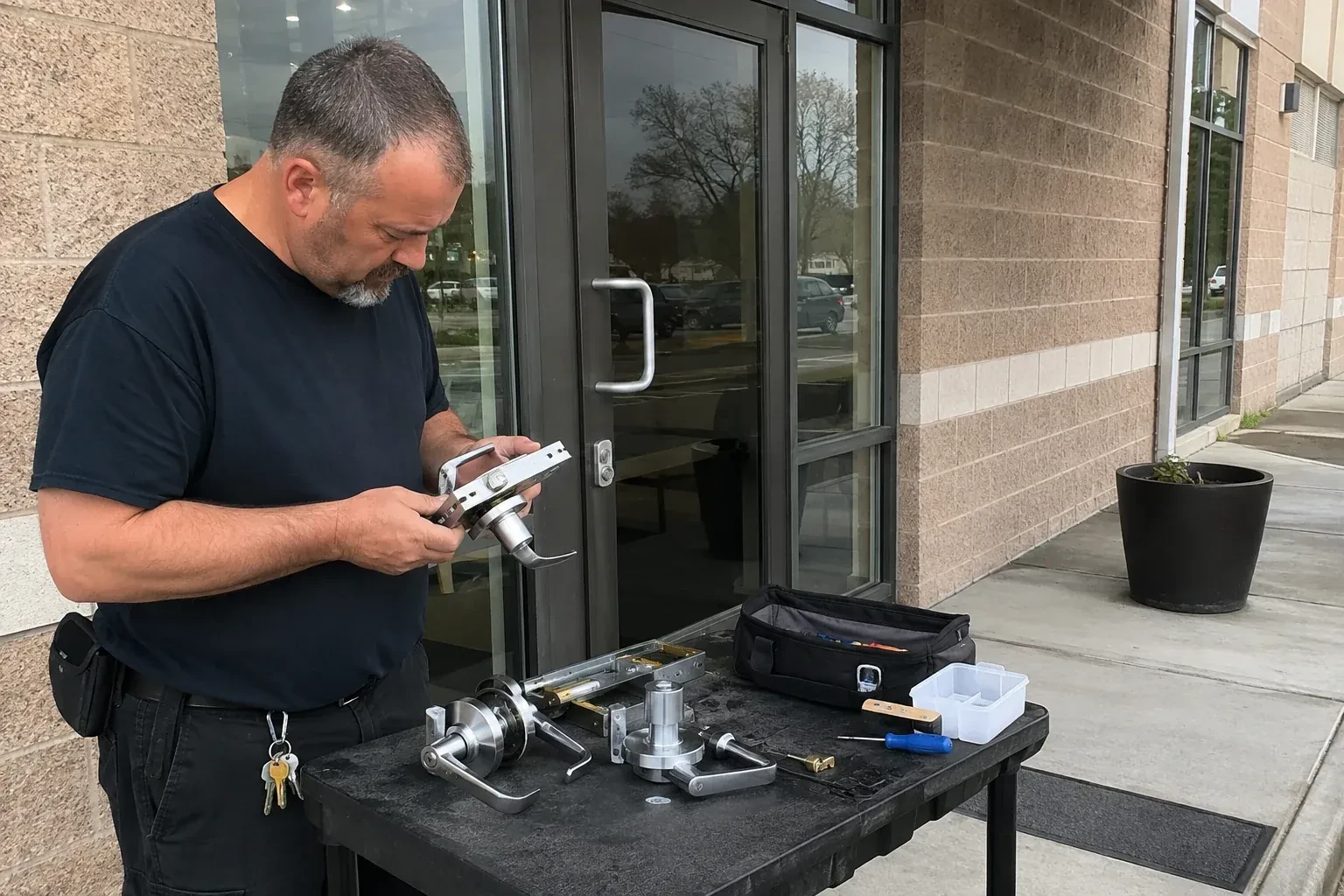
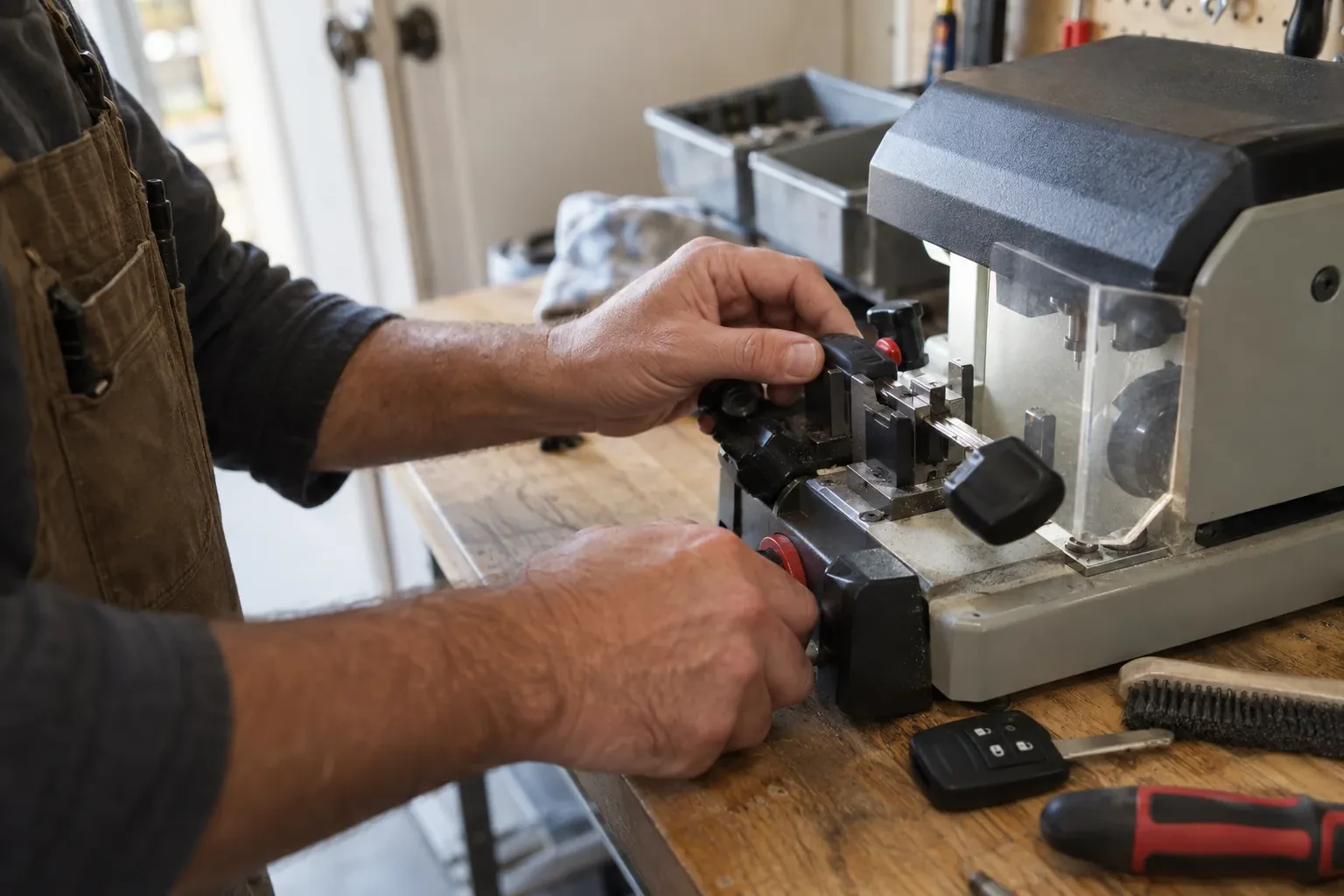
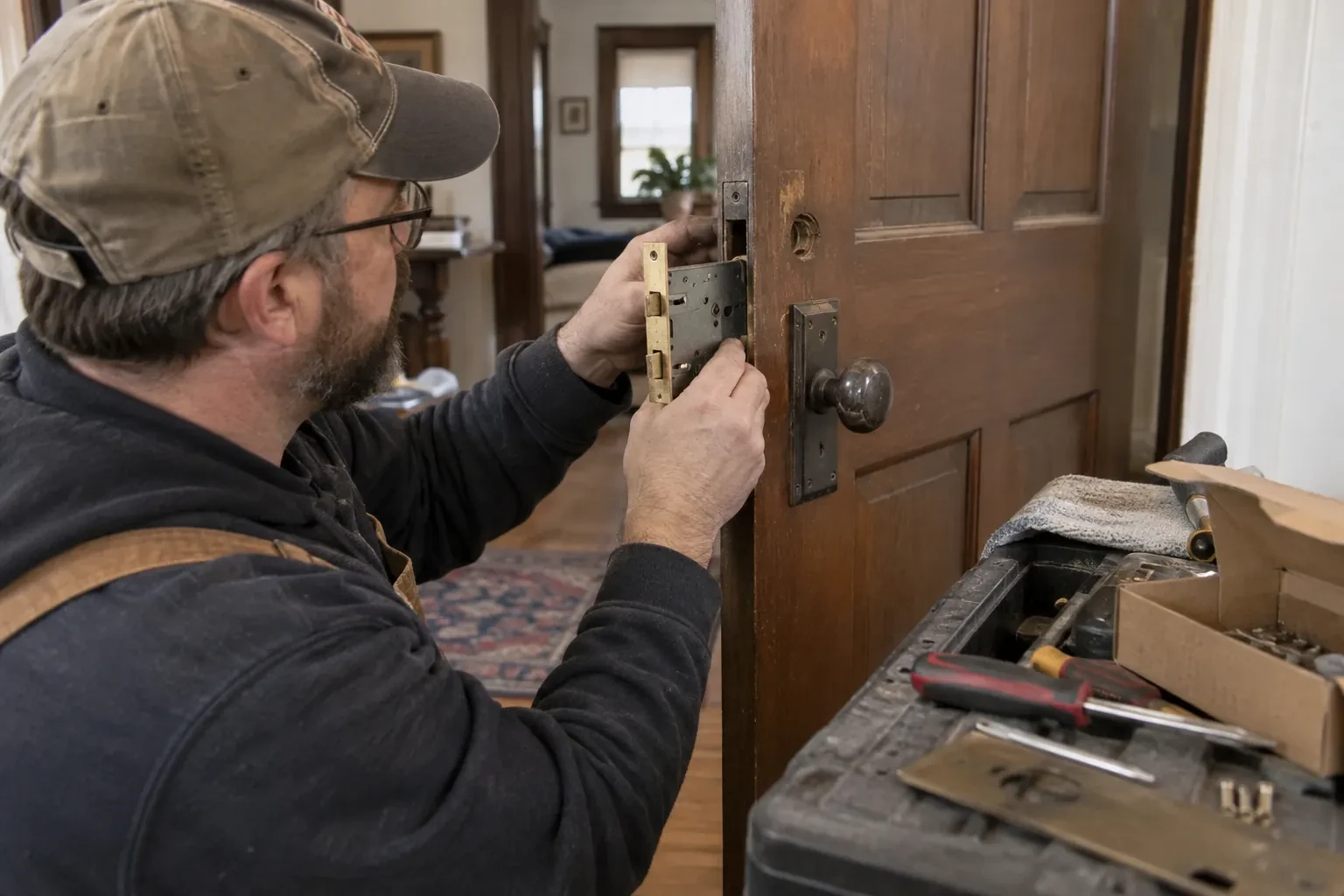
Every opening gets a physical look before it gets any wiring. The locksmith checks what the door and frame are made of, which way the door swings, whether an electric strike will seat cleanly in the existing frame, and whether the door sits on a fire separation, which changes what can be added to it. A hollow metal frame, a wood door, and an aluminum storefront door each take different hardware, and a door that already sits loosely in its frame is noted before an electric strike or a magnetic lock is chosen for it, since alignment decides how reliably the lock releases.
Wiring the openings back to a controller
Each controlled opening can send and receive several signals: a reader reporting a presented credential, a lock output that releases the hardware, and, where the configuration calls for them, a door position switch reporting open or closed and a request-to-exit input. The locksmith runs the wiring from each opening back to wherever the controller is mounted — as a home run, along a shared bus, or over the network on an IP or PoE device — labels each conductor at both ends, and terminates them into the controller's input and output boards. A building with several openings may share one power supply and battery backup sized to the combined load, or split the load across more than one supply.
Keeping the battery backup and hardware ready
A controlled door depends on power reaching the controller, the lock, and the reader, so battery backup is worth specifying and sizing for that opening rather than assumed to come standard, so a short outage does not leave anyone locked out or, on a fire-alarm-tied opening, locked in. That backup, where fitted, is worth checking periodically, along with the request-to-exit device on any magnetic lock, since both need attention between visits; a fail-secure lock can stay locked from the secure side once power is gone even where people can still leave freely. A short test, a few times a year, catches a fading battery early.
Access Control Installation
In the van
Mechanical override cylinders
Credential cards and fobs
Power supply with battery backup
Magnetic locks
Door position switches
Access Control Installation
What affects the quote
What cabling already exists
Exposed ceilings, accessible risers or existing conduit make running new low-voltage cable straightforward; finished walls and long runs between openings and the controller location add time and materials to the same job.
How much door and frame preparation is needed
A frame that already suits an electric strike needs less preparation than one that must be mortised, reinforced, or matched with a different strike body, and an older or non-standard door can add its own preparation.
Condition of the existing hardware
A working mechanical lock that can stay in place as the override is a simpler starting point than an old, failing keypad system that has to be removed before new hardware goes on in its place.
What to have ready
- What are the doors and frames made of, as far as you know?
- Roughly how many people will need a credential to enter?
- Is there an existing keypad or card system on any door now?
Access Control Installation: questions
QuestionsDoes a door still need a mechanical key at all once it's on the system?
Not always — it depends on the hardware chosen for that door. Where a mechanical override cylinder is fitted and keyed in, it can still be opened by key regardless of what happens to the electronics, the network, or the power supply, and it is meant as a backup rather than a daily habit, since using it routinely bypasses the entry record the system is there to keep.
How long does an installation usually take?
A single standalone door is usually finished within a day, including testing and training. A building with several networked openings, cabling to run and a controller to program takes longer, and is often planned across more than one visit so cabling, hardware, and software configuration each get proper attention rather than being rushed through in one pass.
Is a keypad code as secure as a card or fob?
A keypad code needs no card to lose, but a code shared among several people is effectively no longer individual, and a forgotten code left active is a common weak point. A card or fob tied to one named person avoids that particular issue, since it is switched off individually rather than reset for everyone at once. Many businesses use a code for general areas and a card wherever entry needs to be traceable to one person.
Related services

- Master Key System DesignA self-storage operator wants the office, the tenant gate and the equipment shed on three different levels of access for staff, but every lock on the property currently answers to the same handful of interchangeable keys handed out over the years.
- Panic & Exit HardwareThe new access-control reader at the staff entrance works fine going in, but nobody has sorted out the door's exit side, and right now a card reader and a pushbar exist as two separate ideas.
- Commercial-Grade Lock ReplacementAt closing time the hookbolt on the storefront door catches the keeper only on the second or third try, and one employee has started giving the door a shoulder to force it home.