High security · Vaughan
Safe Opening & Combination Change
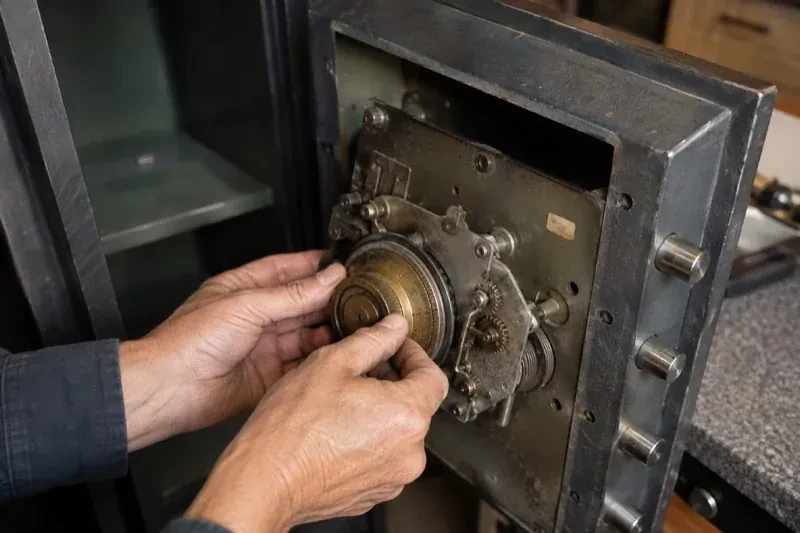
Decades of daily use have left the law firm's old dial safe drifting: the numbers line up close to where they should, never quite enough to drop the bolt.
In plain words
Once a safe is open, the visit is only half finished. The lock is inspected for wear, corrosion or damage that caused the original problem, repaired or replaced if it is no longer reliable, and then set to a new combination chosen on the spot. That combination is cycled several times with the door both open and closed so everyone leaves confident it will work again on the next ordinary morning, not just once under supervision.
How the visit goesThe bookkeeper who set the office safe's code retired in a hurry, and the float cash for tomorrow's registers is sitting behind a keypad nobody else in the building can operate.
Safe Opening & Combination Change
How the visit goes
Reading the safe before touching it
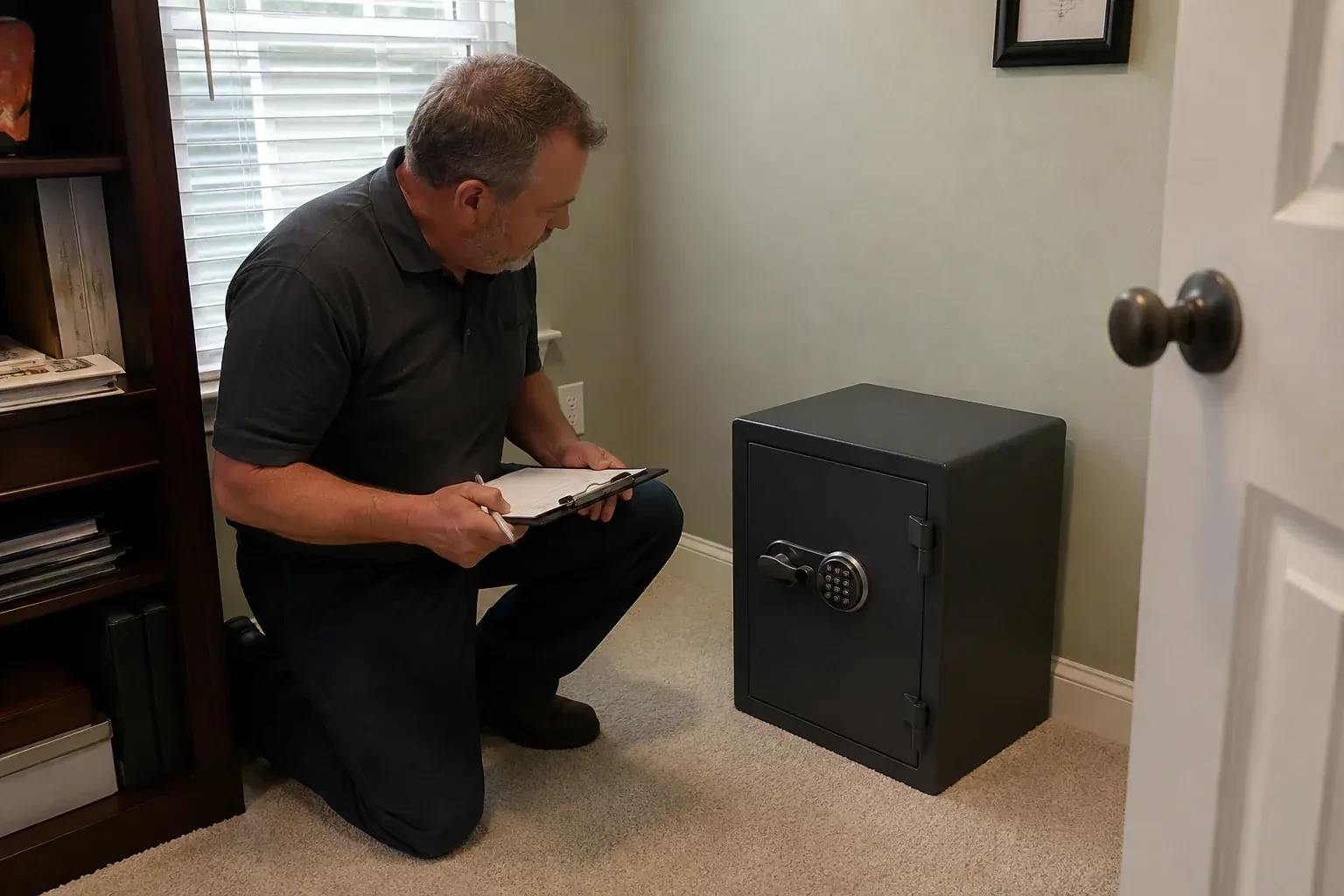
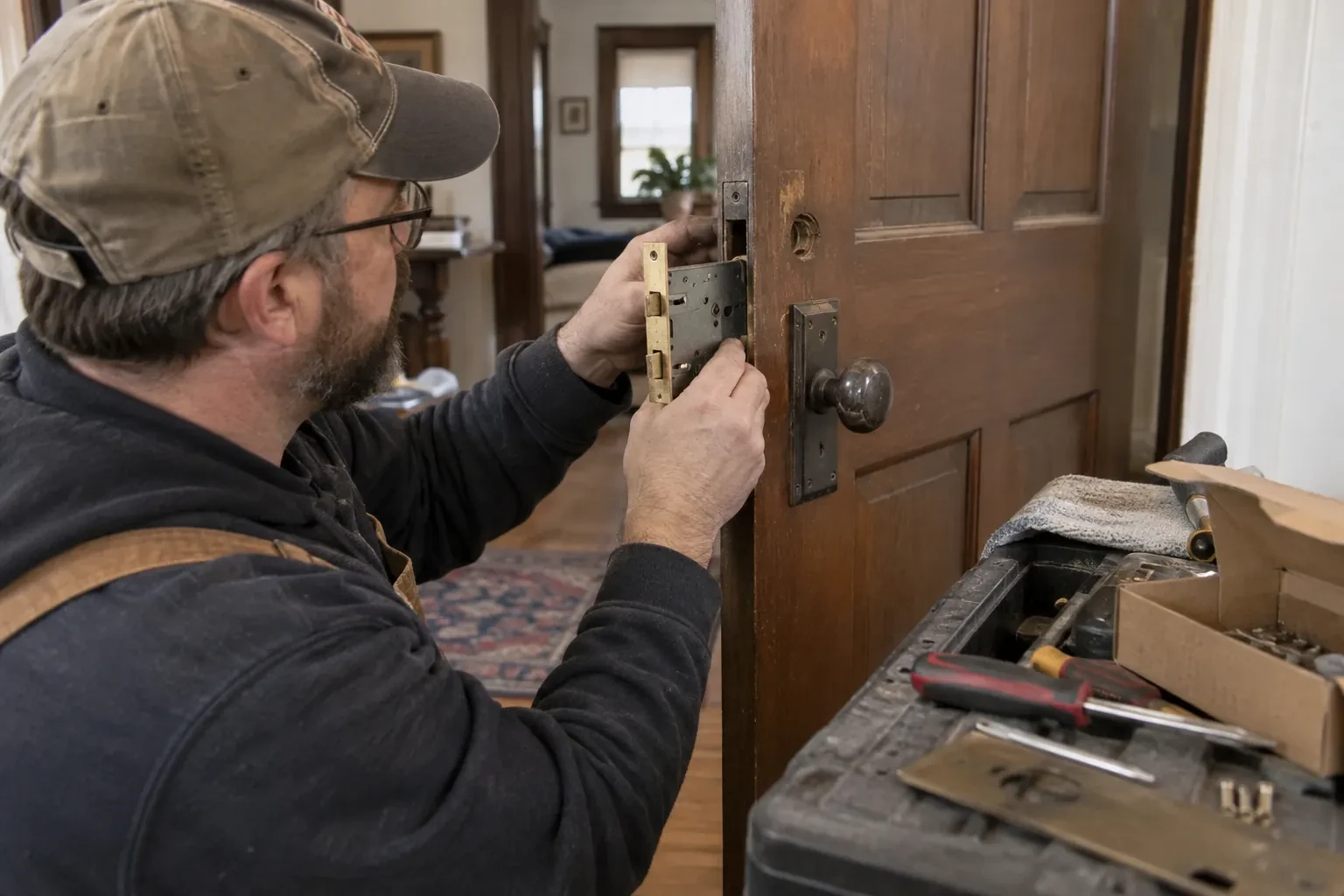
Every safe carries clues about what is inside its lock. A manufacturer's data plate, usually on the door or inside the frame, often names the brand, model and sometimes the lock's own security rating. The dial style, the keypad's shape and buttons, and whether a key cylinder sits alongside the combination lock all narrow down the lock family before a single tool is used. Older safes without a legible plate are identified from the case shape, the handle style and the dial ring instead. Getting this identification right decides which manipulation technique, which reset procedure or which manufacturer tool applies, and it is the difference between a clean opening and a guess.
Setting and testing the new combination
With the safe open and the lock confirmed sound, a new combination or code is set, with the current owner choosing the numbers themselves within whatever range and spacing that lock's rules allow, rather than being handed a default. For a mechanical lock this means using a change key to reset the wheel pack to the new sequence; for an electronic lock it means entering the new code through the keypad or a connected programming tool. The new combination is then dialed or keyed in several times, with the door open and then closed, before the visit is considered finished, so any mistake surfaces on the spot rather than the next morning.
A safe that opens the same way every time
The visit finishes with the door cycled several times under the new combination, both open and closed, so the result is proven rather than assumed. The handle is checked for smooth, even movement, and the bolt work is watched to confirm it retracts and extends fully on each attempt. Anything noticed along the way, a stiff dial, a keypad that needs a firmer press, or a hinge that could use attention, is pointed out plainly so nothing is left as a surprise. You are shown the working combination yourself before the locksmith leaves, rather than simply being told that it works.
Safe Opening & Combination Change
In the van
Spindle and drive cam
Replacement wheel pack
Manipulation and tension tools
Drill rig and carbide bits
Borescope for internal viewing
Safe Opening & Combination Change
What affects the quote
Whether drilling turns out to be necessary
Manipulation, decoding and manufacturer reset paths are tried first; drilling, a repair plug and any replacement lock only enter the picture once those routes are exhausted.
Lock type: mechanical dial, electronic keypad or key
Each lock family calls for different tools and a different amount of time on site, and a safe with more than one lock, such as a keypad backed by a mechanical dial, involves assessing both.
Any upgrade chosen during the same visit
Moving to a higher-rated lock, adding a second user code, or fitting an anti-relock plate is optional and priced as its own line whenever an owner chooses it.
What to have ready
- Does the keypad light up or make sounds when pressed?
- Is the safe bolted down, built in, or freestanding?
- Do you own the safe, or manage it for someone else?
Safe Opening & Combination Change: questions
QuestionsCan several employees each get their own code once the safe is open?
Many electronic locks support more than one user code, so a manager and one or more backup employees can each be set up separately during the same visit rather than sharing a single combination. A mechanical dial only holds one combination at a time, so multiple access there means agreeing who holds it and how that changes when staff do.
Can a safe be repaired instead of replaced after drilling?
Often, yes, particularly for a mechanical lock, where a worn wheel pack, drive cam or spindle can be replaced individually within the existing lock body. An electronic lock's circuit board and keypad are less often repairable in place and are more commonly swapped for a comparable or higher-rated replacement unit that fits the same cutout.
How is a new combination actually chosen and set?
You choose the numbers yourself, within whatever range and spacing that lock's rules allow, rather than being handed a default sequence. On a mechanical lock the locksmith uses a manufacturer change key to reset the wheel pack to your chosen combination; on an electronic lock the new code is entered directly through the keypad or a connected programming tool. Either way it is tested several times, door open and then closed, before the visit is considered complete.