Lockouts · Sherwood
Seized & Jammed Lock Opening in Sherwood
The lock works, but only if you lean on the door with your hip while turning the key.
In plain words
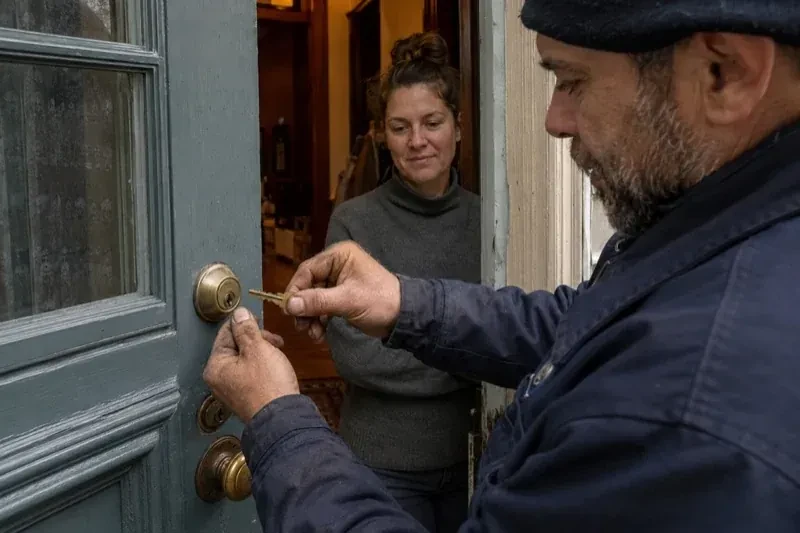
A jammed lock looks like one problem from outside and is usually one of three inside. The cylinder itself may have seized, packed with grit, corrosion or old grease. The link between cylinder and bolt, the tailpiece or cam, may have broken, which is why a key can spin without doing anything. Or the lock may be healthy and the bolt simply pinned against the strike by a door that has moved. Seized and jammed lock opening starts by telling those apart, because the right answer for one would damage the hardware in another. Once the culprit is known, the door is opened and the cause is repaired.
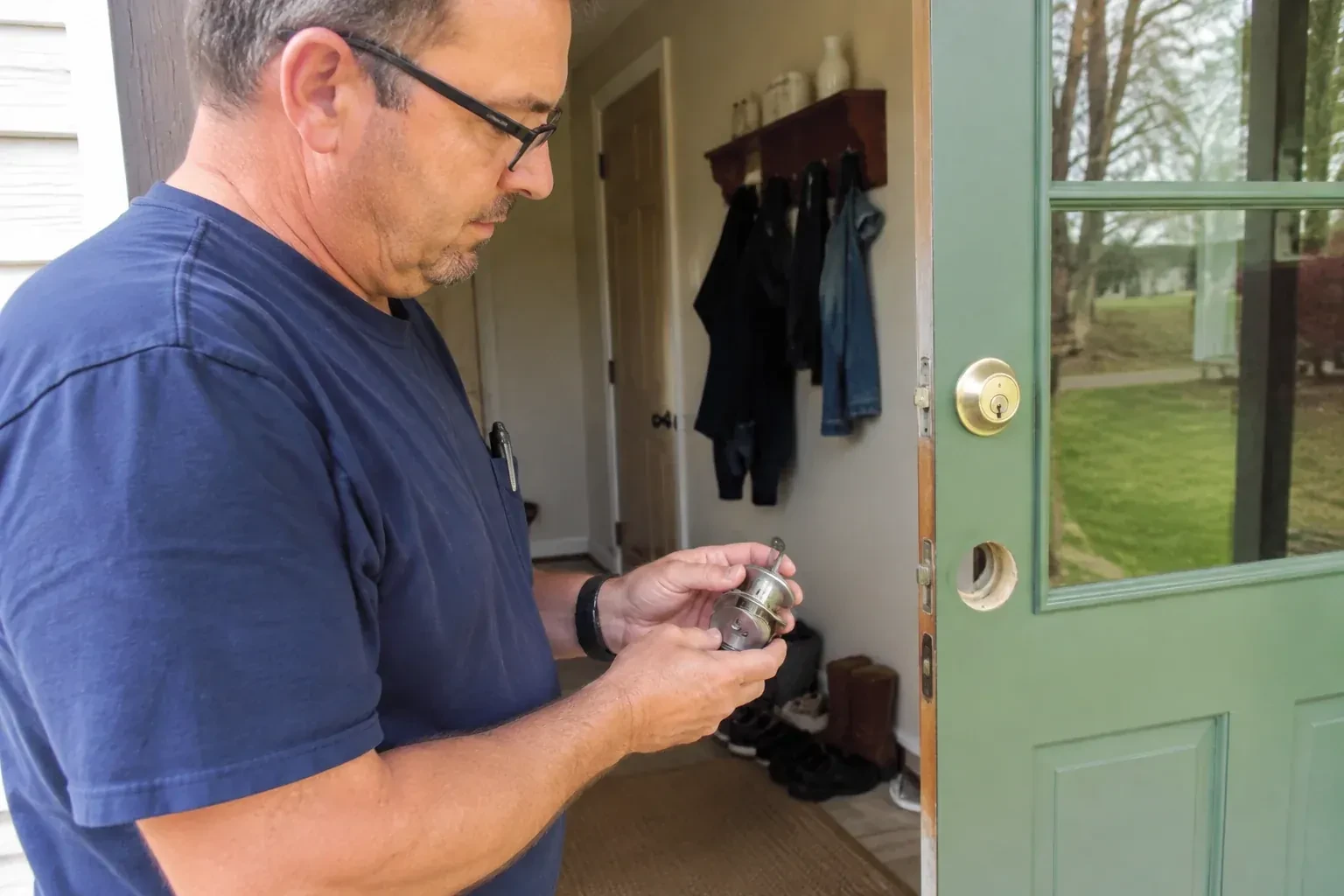
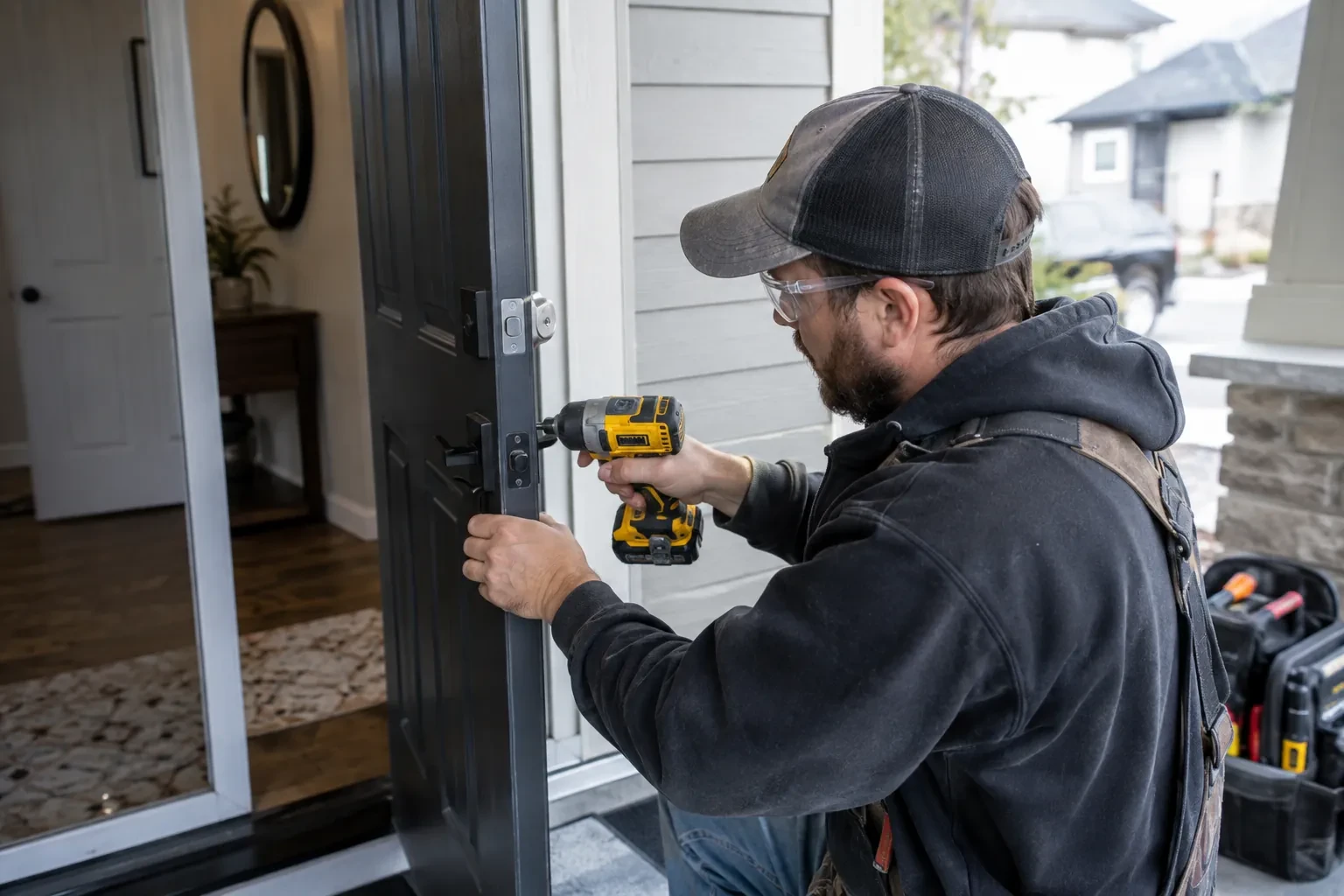
How the visit goesThe lock works, but only if you lean on the door with your hip while turning the key. After a week of humid weather the bolt is jammed against the strike plate, and without that push the key stops halfway.
Seized & Jammed Lock Opening
How the visit goes
Strike plate, bolt pocket and seal
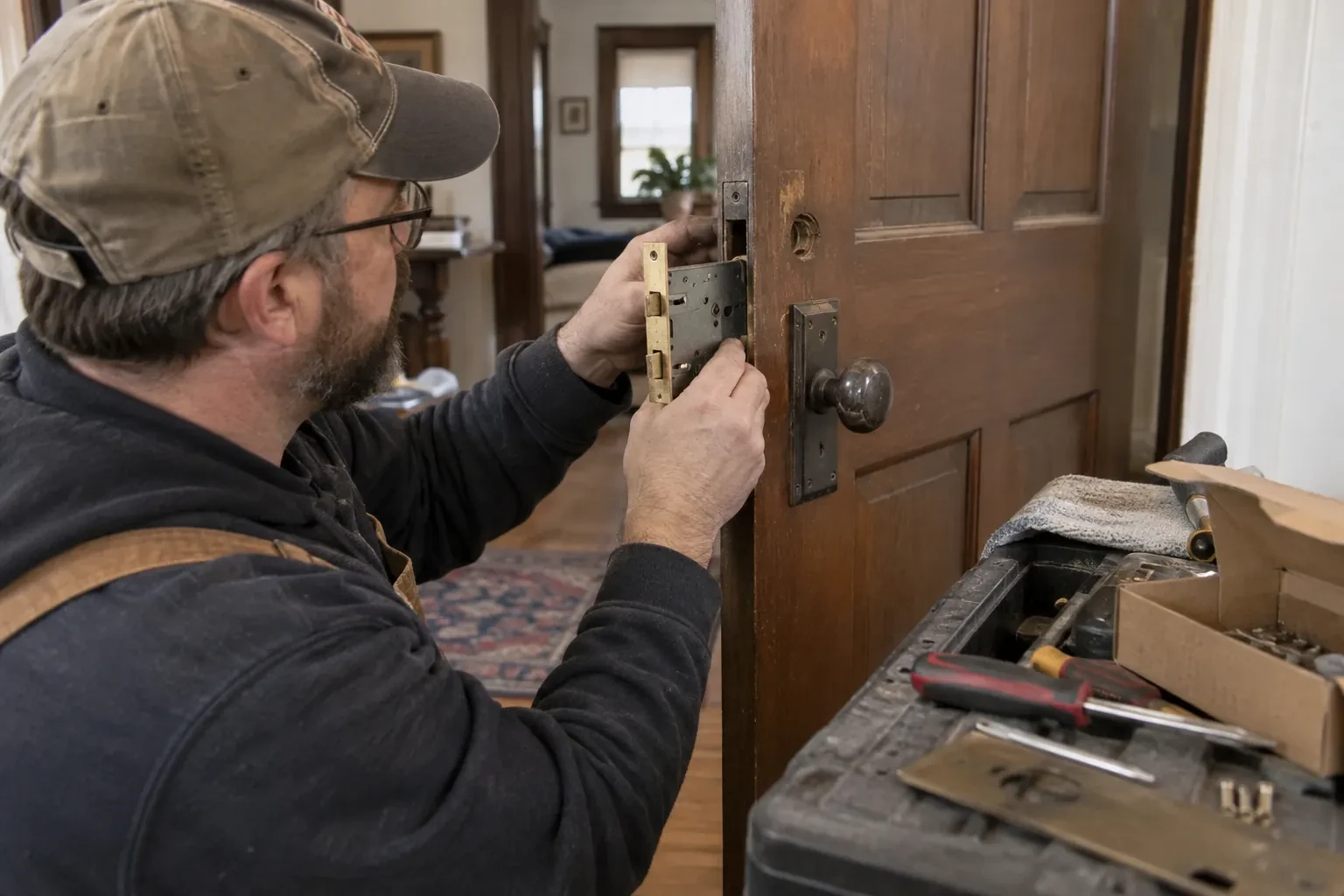
The frame side gets as much attention as the door side. The locksmith looks at where the bolt meets the strike plate: scuff marks on the plate's edge, a bolt pocket shallower than the roughly twenty-five millimetres a deadbolt needs, paint or filler that has crept into the pocket, and weatherstripping thick enough to hold the door proud of the frame. A dab of chalk on the bolt end shows exactly where it lands. These findings explain a lock that works with the door open and jams when it is shut, and they point to a chisel, a screwdriver and a strike adjustment rather than to anything inside the cylinder.
Proving it with the door open and shut
The job is finished with testing rather than with the last screw. The bolt is thrown and drawn back with the door open to prove the lock itself, then with the door closed to prove the door and strike, then from the inside with the thumb-turn or lever. Every key you hold is tried, including the spare from the drawer. If the door is a main exit, the locksmith confirms it opens from inside with one motion and no key. Any hardware that was adjusted is cycled a dozen times to make sure it stays put, and the finish is wiped clean of cleaner and lubricant.
Keys that match the lock again
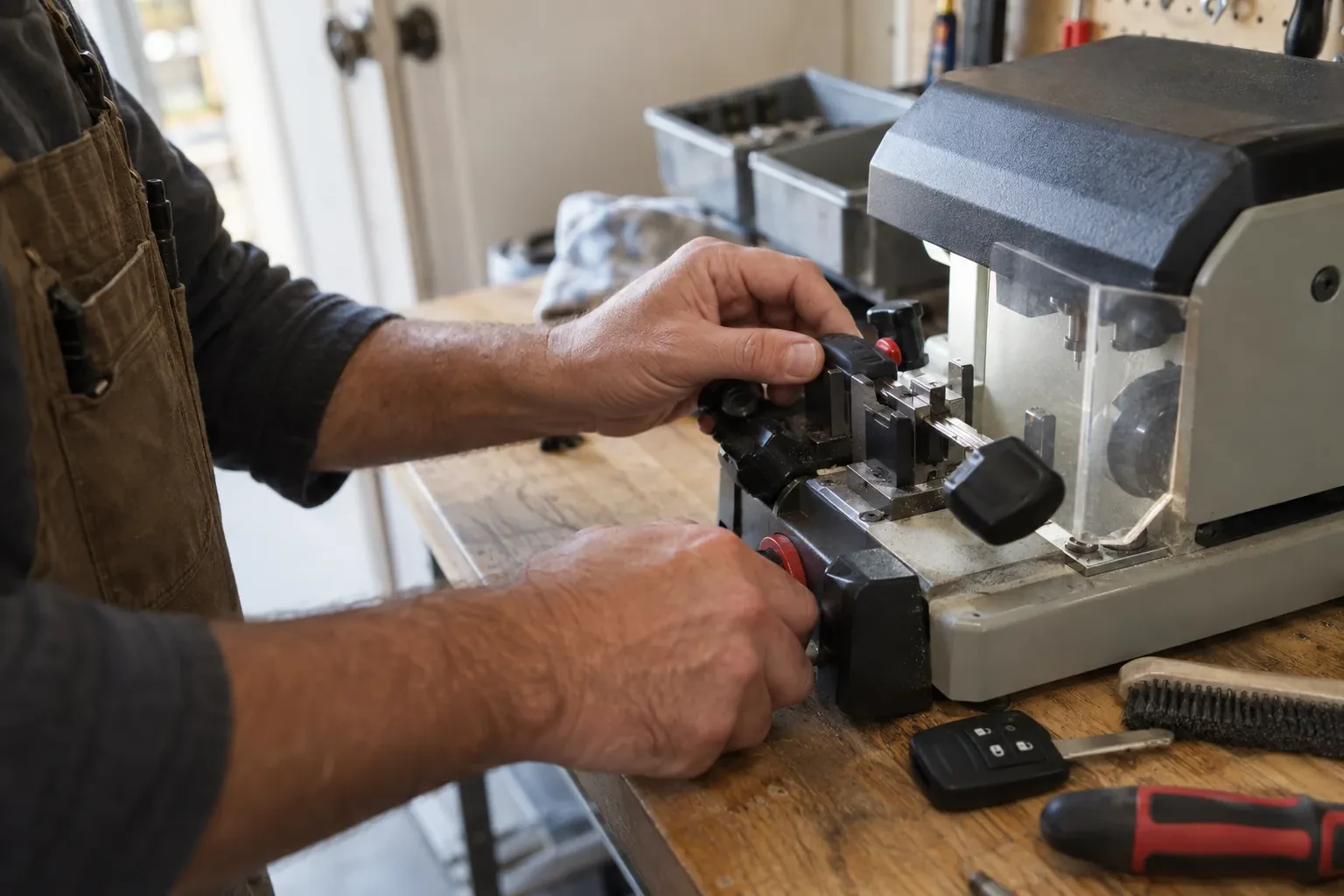
Where a worn or drifted key was part of the jam, you now hold a key cut from the code or from a fresh master, and every spare has been tried in the lock. Retire copies that needed force, and cut future spares from the good key rather than from each other, since each generation of copying adds error. Label the keys if several locks are involved. If the cylinder was replaced and pinned to your existing key, the whole house is still on one key. Keeping a written note of the keyway and, where it exists, the key code makes any future key a simple cut.
Seized & Jammed Lock Opening
In the van
Dry PTFE or graphite lock lubricant
Long hinge screws
Strike plate and hinge shims
Mortise case spring and hub
Key blanks and code cutter
Seized & Jammed Lock Opening
What affects the quote
Service or replace the cylinder
A cylinder that can be stripped, cleaned and rebuilt is quoted as labour with a few small parts; one corroded through is quoted with a replacement cylinder matched to your finish and keyway.
Door and hinge adjustment
When the door caused the jam, hinge screws, shims, a strike move or a deepened bolt pocket are quoted as their own line beside the opening.
When the call comes in
An evening, weekend or holiday call for a jammed lock costs the same amount as a weekday one. The locksmith looks at what is actually jammed once on site, and the exact figure follows from that, not from the clock.
What to have ready
- Is anyone inside, and can the door be opened from that side?
- What kind of lock is it: deadbolt, knob, lever, mortise or keypad?
- Has anyone sprayed oil or another product into the keyway?
Seized & Jammed Lock Opening: questions
QuestionsShould I spray something into the keyway while I wait?
Better not, unless it is a proper dry lock lubricant. Household oils, general penetrating sprays and hinge silicone thicken inside the cylinder and attract grit, so they buy a day and cost a service later. If the lock is frozen, a lock de-icer is fine; boiling water is not, since it refreezes deeper in. The most useful thing to do while waiting is to stop turning the key, so it does not bend or snap.
Why is it always the shaded side of the building that seizes?
The face of a building that never sees direct sun stays colder and damper, so ice in a keyway lasts days longer there and condensation sits in the cylinder rather than drying off. Wind-driven rain and snow tend to hit the same face. Those doors deserve a keyhole cover, a storm door where one fits, and a lubricant check before the season turns, and they are often the first lock a locksmith asks about.
Could a jammed lock mean someone tampered with it?
Occasionally, but wear and weather are far more common. Signs that point to tampering are fresh scratches around the keyway, a plug that sits crooked, or debris such as glue or a broken tool tip inside, none of which appear from ordinary use. The locksmith looks for these during the inspection and says plainly what was found. If the cylinder has been damaged that way, it is replaced and, if you wish, the other doors are rekeyed.
Related services
- Business Lockout ServiceAfter last night's power flicker the card reader beside the clinic door shows nothing.
- Broken Key ExtractionThe padlock on the shed has been stiff all summer.
- Break-In Damage Lock RepairPolice have come and gone, the occurrence number is on a sticky note, and you are standing in a cold hallway looking at a splintered frame, wondering how the house gets locked before everyone tries to sleep.