High security · Vaughan
Safe Installation & Servicing in Vaughan
A community group counts the weekend's raffle and bake-sale cash on a kitchen table, then carries it home in a tote bag until the bank opens Monday, because there has never been anywhere safer to leave it.
In plain words
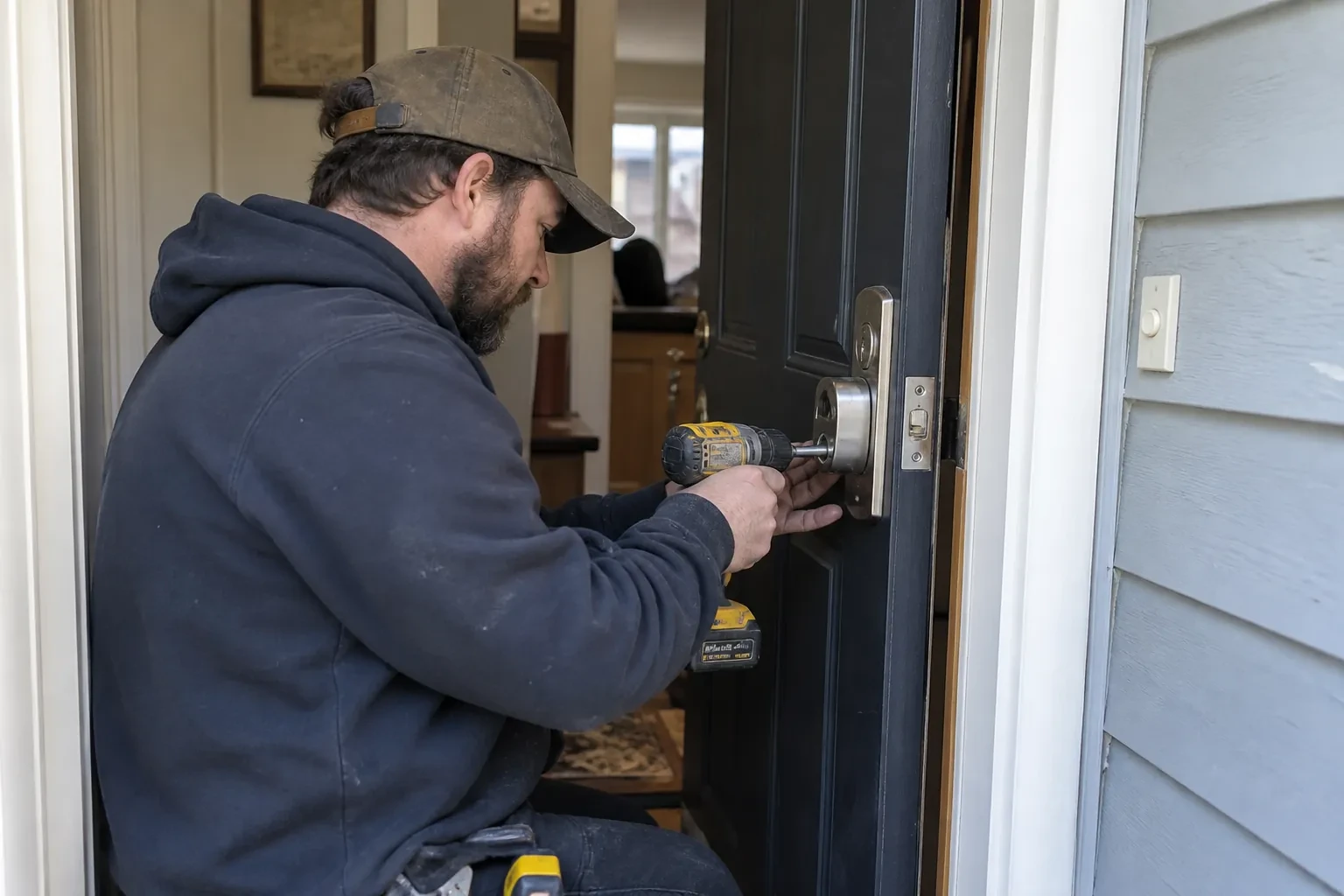
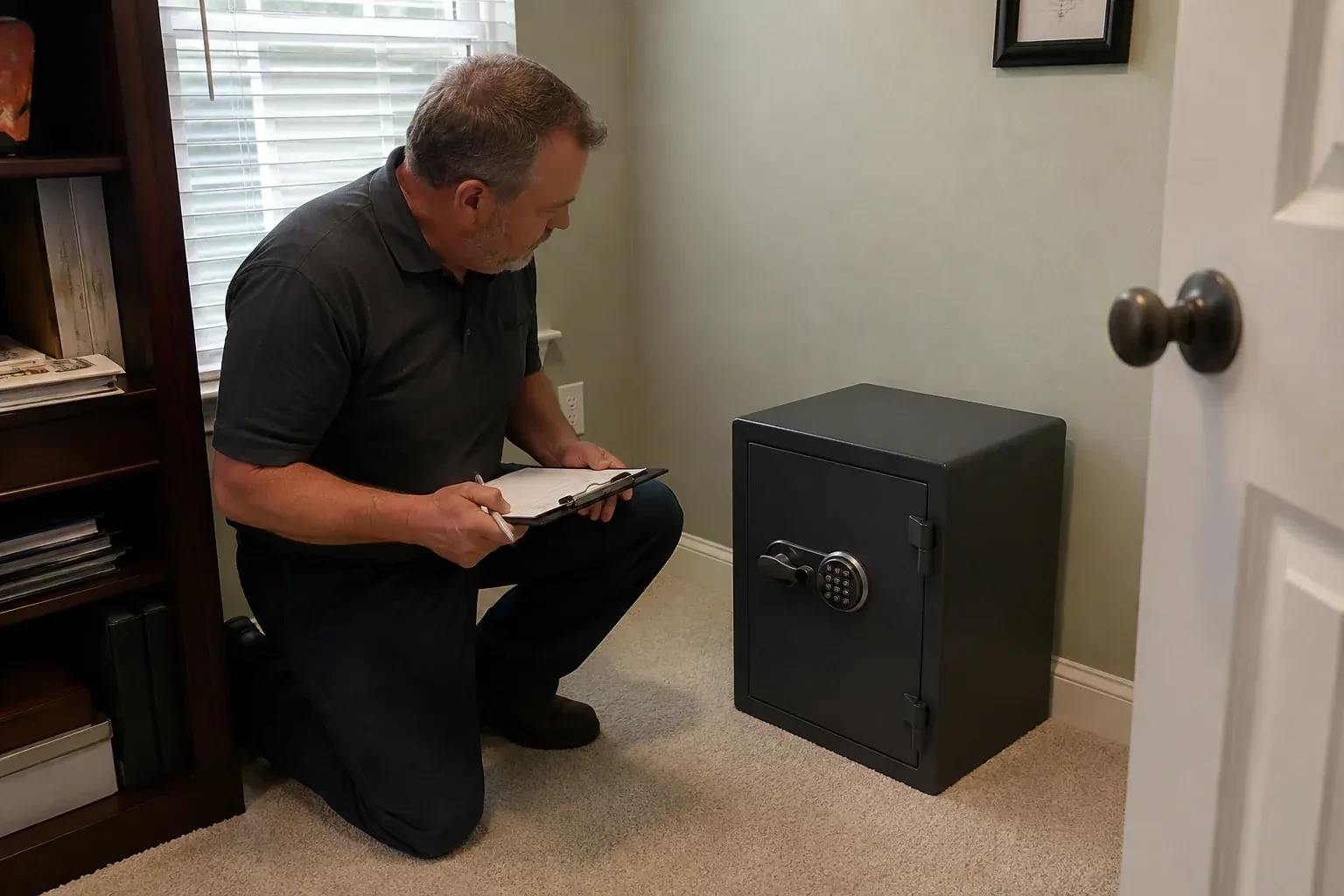
Safe installation and servicing starts with a plain question: what needs protecting, and from what. A till float and a box of paper contracts fail in completely different ways, so a burglary rating and a fire rating are chosen separately rather than assumed from one label. Once the right unit is picked, it is set in its final spot, leveled, and anchored into the floor or wall so it cannot be carried off. The lock, whether a dial or a keypad, is set to a combination or code only the owner holds, then cycled and tested before anyone signs off on the job.
How the visit goesA community group counts the weekend's raffle and bake-sale cash on a kitchen table, then carries it home in a tote bag until the bank opens Monday, because there has never been anywhere safer to leave it.
Safe Installation & Servicing
How the visit goes
The condition of a safe that is already in place
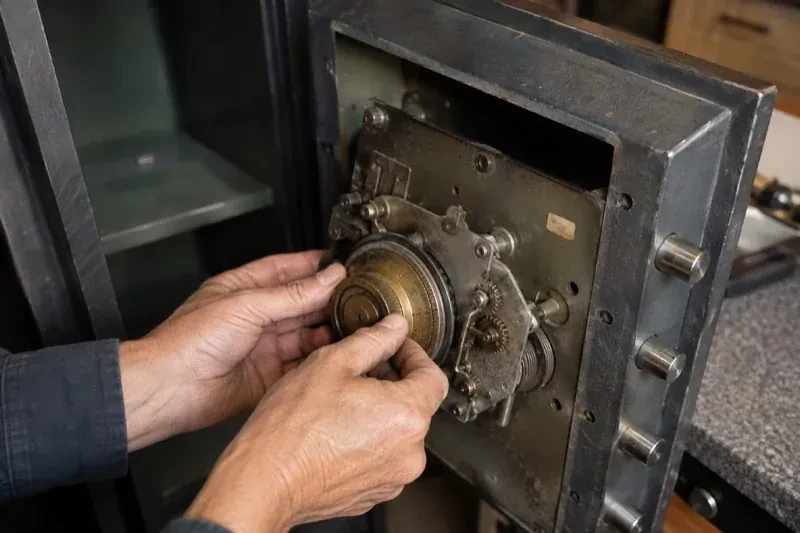
For a servicing visit, the first look is at what years of sitting quietly have done to the unit. Bolt-work is worked by hand to feel for stiffness, grinding, or a bolt that does not fully retract. Hinges and the door seal are checked for rust or a gap that lets in air. The locksmith also asks how long it has been since anyone changed the batteries or tested the lock, because a unit that has never had attention since it was installed usually needs more than a light check to bring it back to full working order.
Matching the safe to the two ratings
The visit begins by separating two decisions that people often blur together. Some burglary ratings come from an independent lab timing how long a trained attempt with real tools takes to force the door, expressed in minutes of net working time; others are construction classifications based on steel thickness and body design rather than a timed attack. A fire rating comes from a timed furnace test that measures how hot the interior gets, expressed as a temperature ceiling held for a set number of hours. A unit is chosen, or confirmed if it is already owned, against both numbers separately rather than a single vague idea of how secure a safe looks.
Batteries that get changed before they fail
An electronic lock gives some warning before it dies, usually a beep or a flashing light during normal use, and treating that warning as a job to do that same week rather than eventually is what keeps a dead battery from turning into a locked-out morning. Keeping a spare battery of the correct type near the safe, rather than searching for one after the warning starts, closes the loop. The mechanical override key behind the keypad is worth keeping somewhere separate from the safe itself, not taped underneath it.
Safe Installation & Servicing
In the van
Desiccant packets
Hammer drill and masonry bits
Level and floor shims
Rated safe (burglary and fire)
Moving dolly and floor protection
Safe Installation & Servicing
What affects the quote
Lock type and number of users
A mechanical dial lock with one combination is a simpler setup than an electronic keypad supporting several separate user codes for different staff members or household members.
Battery and accessory needs
An electronic lock needs a battery of the correct type on hand, and a fire-rated unit benefits from desiccant supplied at installation, both small additions to the visit.
Documentation requested
Some customers want photographs of the anchoring, a written note of the model and ratings, or both, usually to satisfy an insurer, and preparing that paperwork adds a little time to the visit.
What to have ready
- Has the safe ever been anchored to the floor or wall before?
- When were the batteries last changed, if it is electronic?
- Are there stairs or narrow doorways between the entrance and that spot?
Safe Installation & Servicing: questions
QuestionsCan the combination or code be changed after installation?
Yes, on both mechanical and electronic locks. A mechanical dial is reset to a new combination by working inside the lock body, while an electronic keypad is simply reprogrammed at the keypad or through its service menu. Changing it after a change in staff, a move, or simply out of caution is routine work rather than anything unusual, and it can be arranged as its own visit.
Can you install a safe I already bought somewhere else?
Yes. Bringing your own unit is common, and the installation itself does not depend on where the safe came from. The locksmith still needs to check its weight, its footprint, and its anchor points against the floor or wall it will sit on, and looks over the lock before calling the job complete, since a new-to-you safe occasionally arrives with a stiff mechanism or a combination still set from the factory.
Will you service a safe that another company installed?
Yes, servicing does not depend on who did the original installation. The locksmith opens the bolt-work, tests the lock through a full cycle, checks the anchoring underneath, and replaces batteries in an electronic lock as needed, regardless of the brand or who fitted it originally. Not knowing the history of the unit just means a slightly more thorough first look before any work begins.