Change or rekey · Vaughan
Lock Replacement & Upgrade in Vaughan
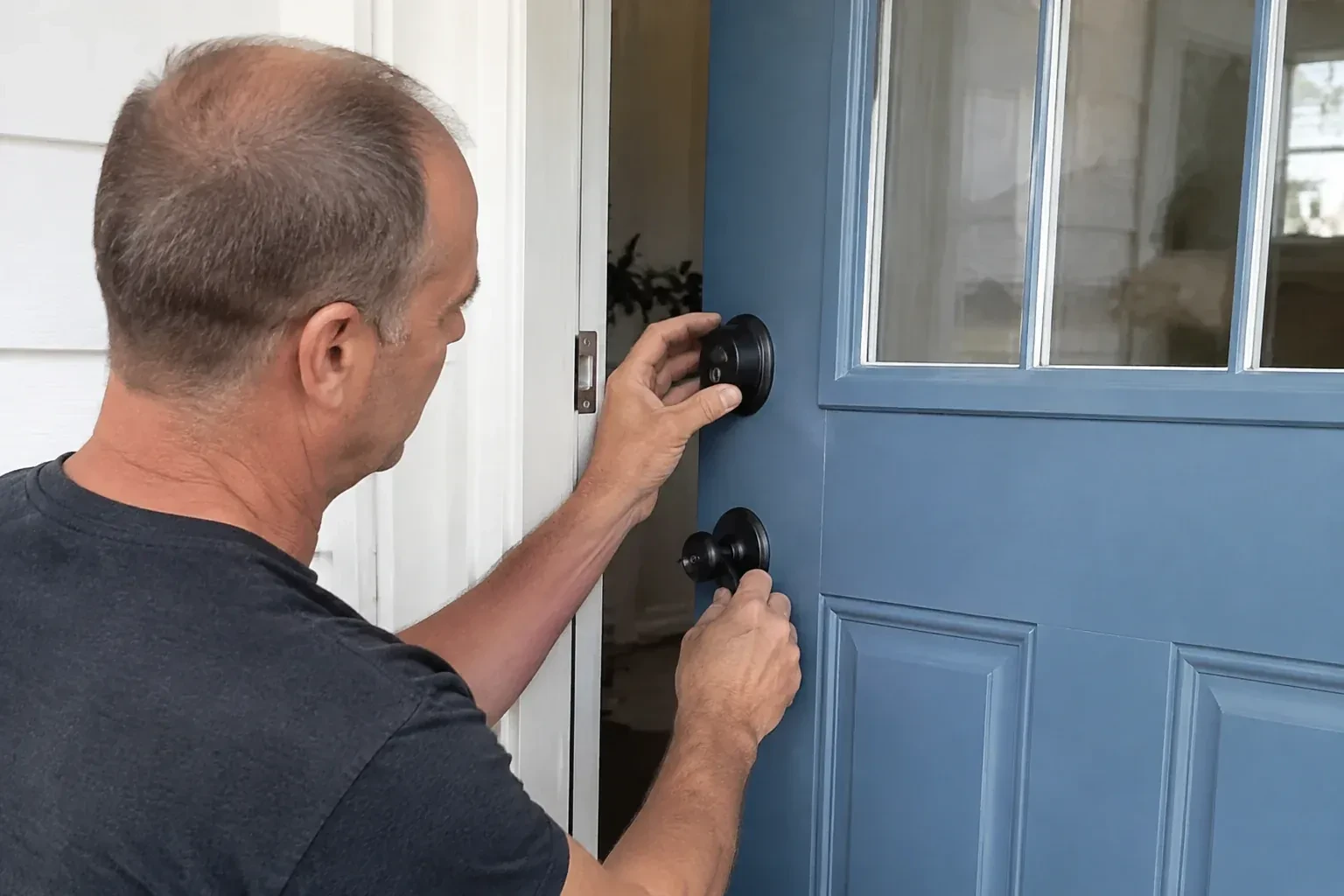
The house is fifteen years old and every exterior door still wears the light hardware the builder fitted: a short bolt, a thin strike held by two small screws, and a knob lock that never suited a street entrance.
In plain words
Sometimes the reason is simply that the hardware looks wrong or has weathered badly. Road salt, freeze-thaw and humid summers are hard on finishes, and a brass handleset can go blotchy while a lacquered knob peels. The locksmith helps you pick a finish that suits the exposure, whether matte black, satin nickel or a PVD brass that resists tarnish, and matches the deadbolt, handleset and interior levers so the entrance reads as one design. Function and grade are chosen alongside looks, so a door refreshed for appearance also comes out better protected.
How the visit goesThree teenagers, a dog walker, a cleaner and one house key that keeps going missing. You are tired of cutting copies and would rather give each person a code you can switch off, with a proper deadbolt behind it.
Lock Replacement & Upgrade
How the visit goes
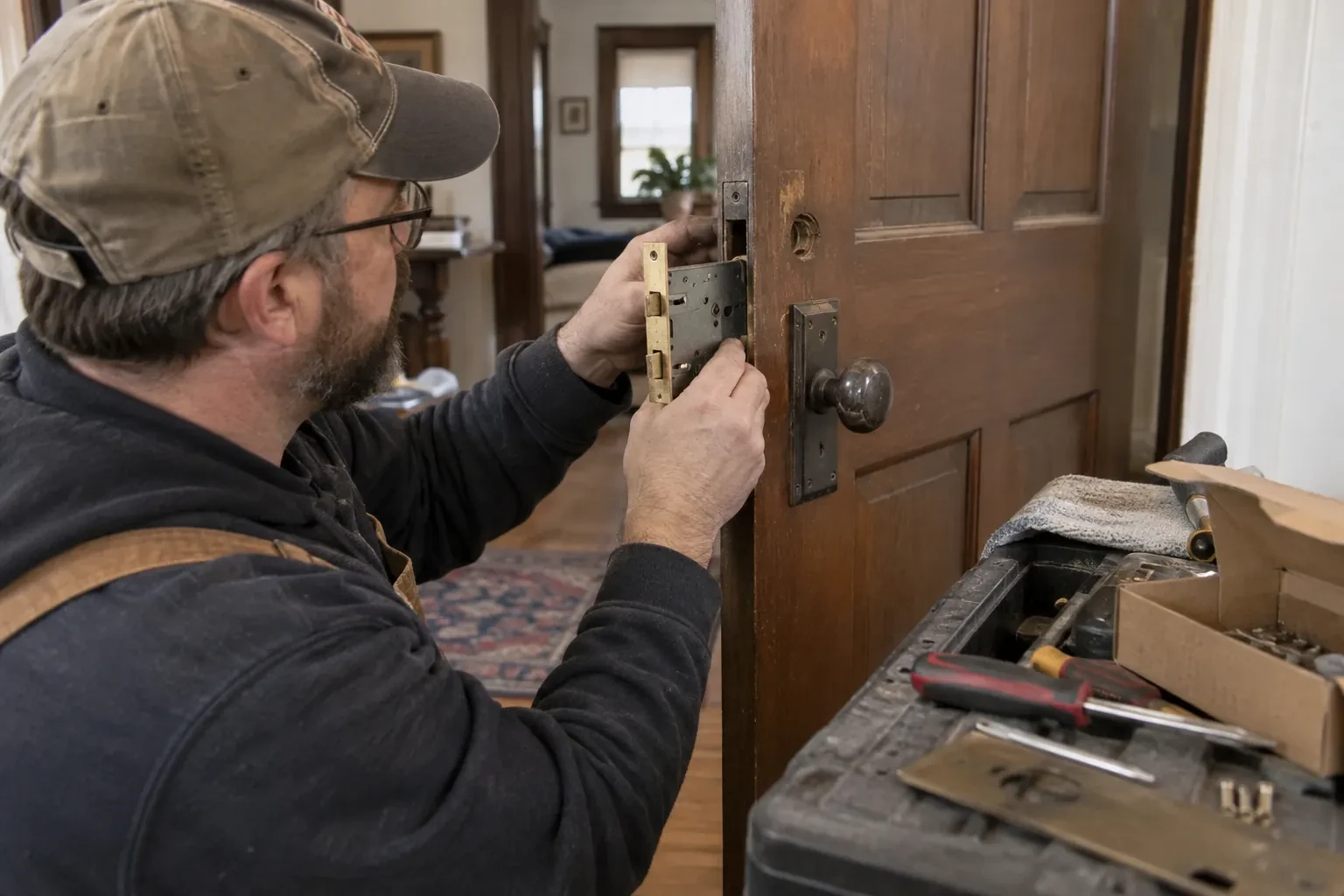
Function, and the way out
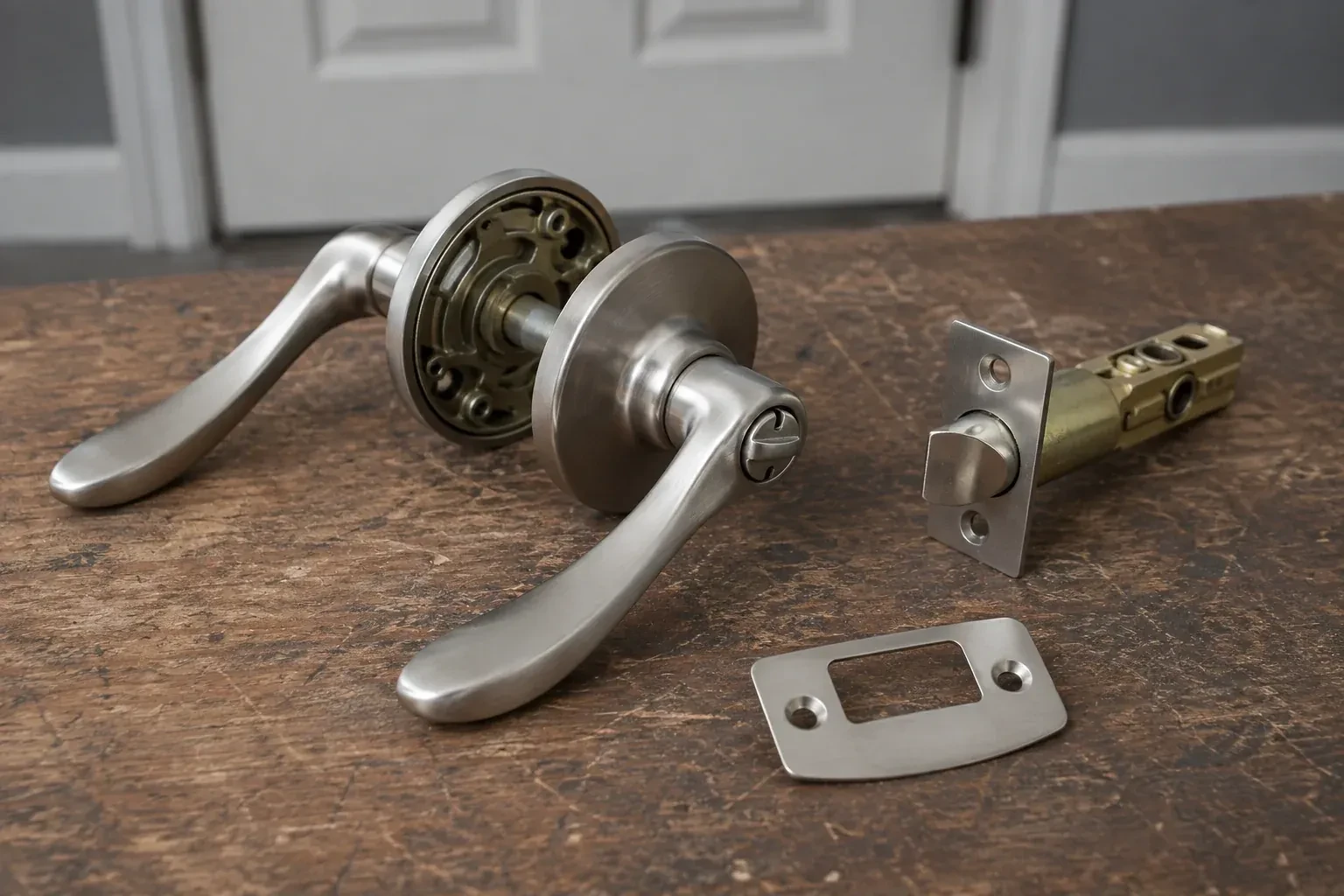
Each door has a job, and the hardware should match it. The main entrance needs a keyed deadbolt with an interior thumb-turn so anyone inside can leave without hunting for a key. A door with glass beside it is better served by a reinforced strike and glass protection than by a keyed cylinder on the inside. Interior doors may want passage, privacy or a keyed function, and a lever suits hands that find a knob awkward. Sorting function out first keeps looks from overriding how the door has to work.
Setting and reinforcing the strike
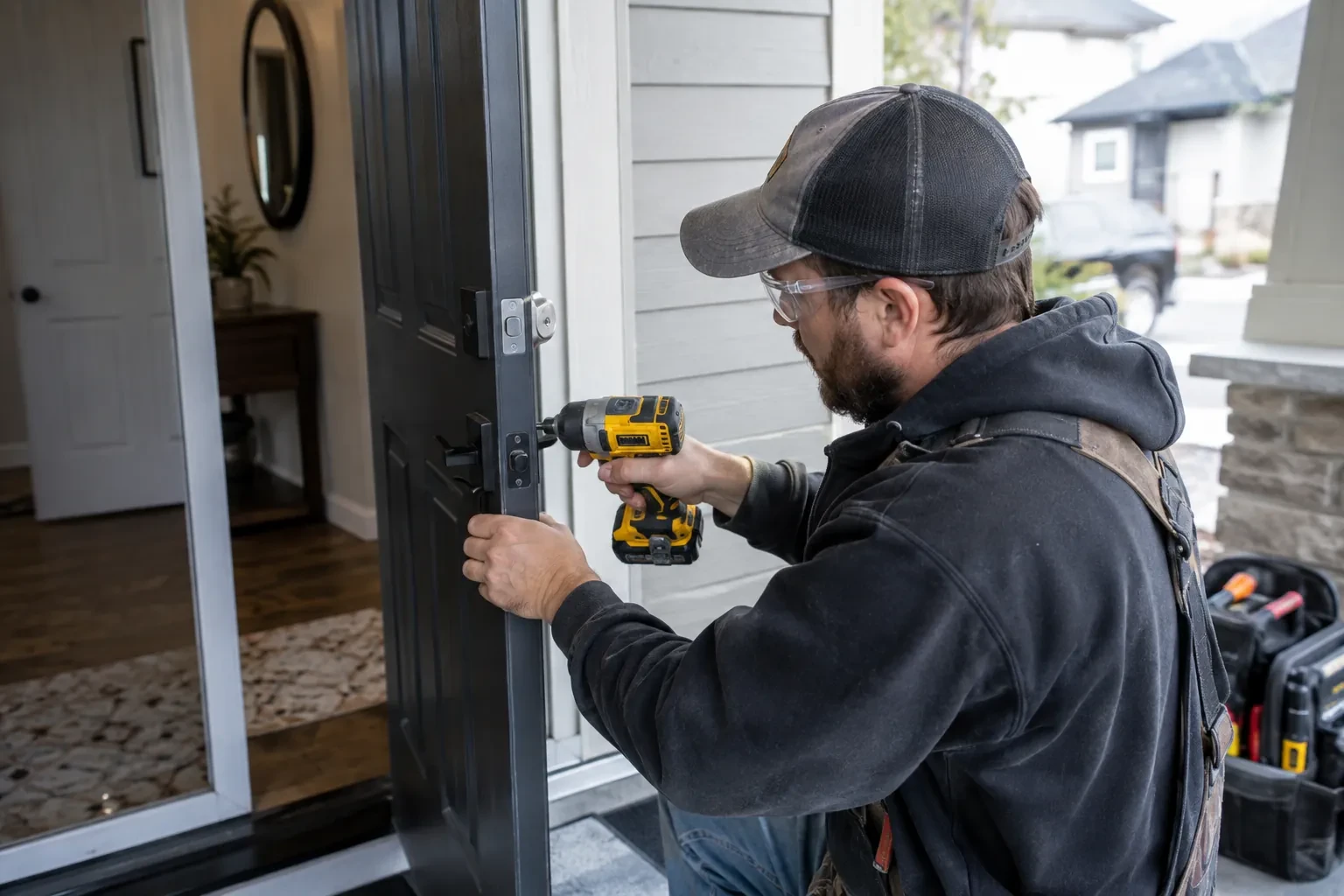
The strike side is where a replacement earns most of its value. With the door closed, the bolt is thrown and its mark checked against the pocket so the strike can be positioned to accept the full throw without rubbing. A shallow pocket is deepened until the bolt seats to its stop. Then a reinforced strike or a strike box is fitted using 75 millimetre screws that pass through the jamb and bite into the framing behind it, which is what stops a jamb splitting under a kick. Where an old forced entry has cracked the wood, it is glued and dowelled or a repair plate is fitted first.
Keys counted, named and planned
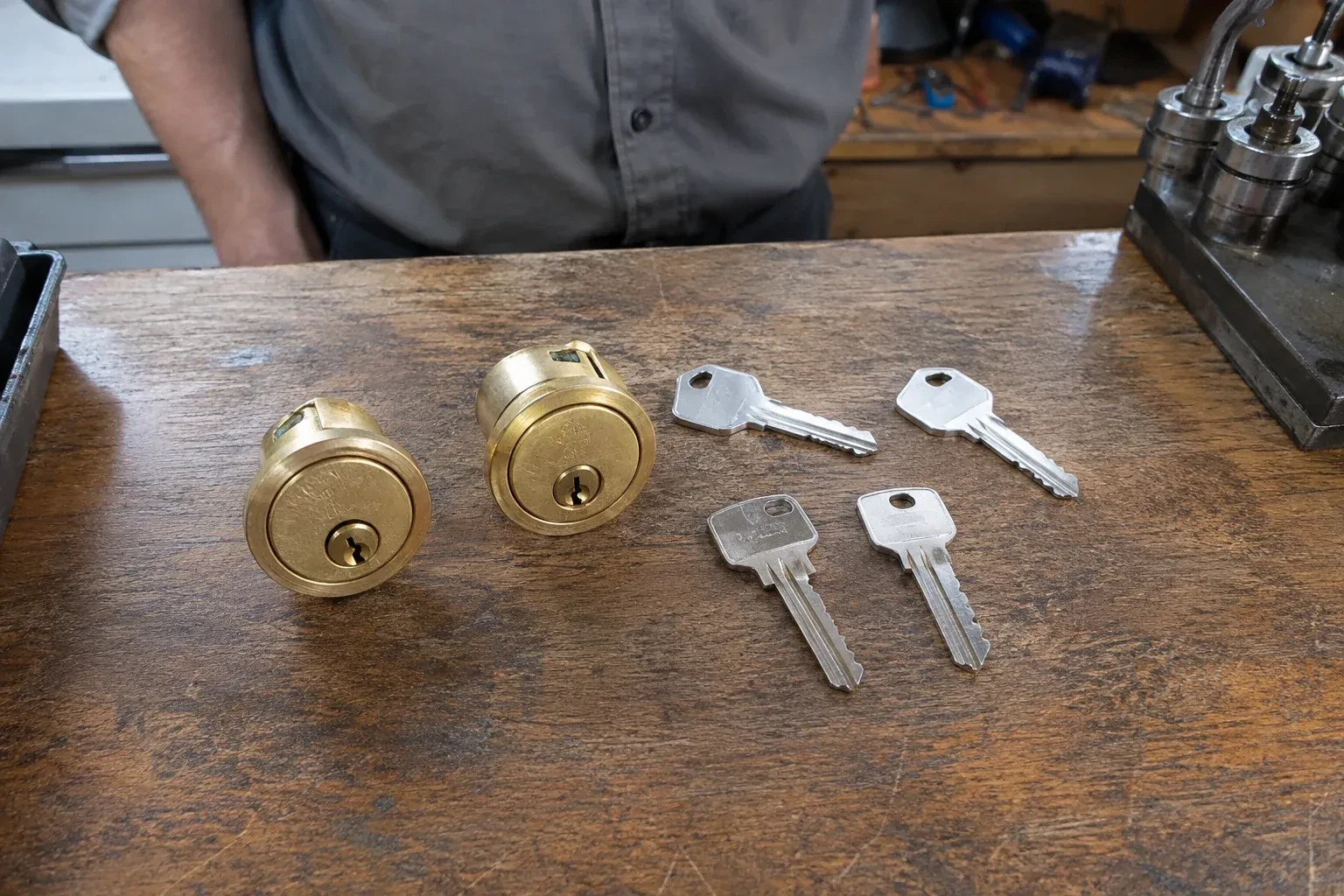
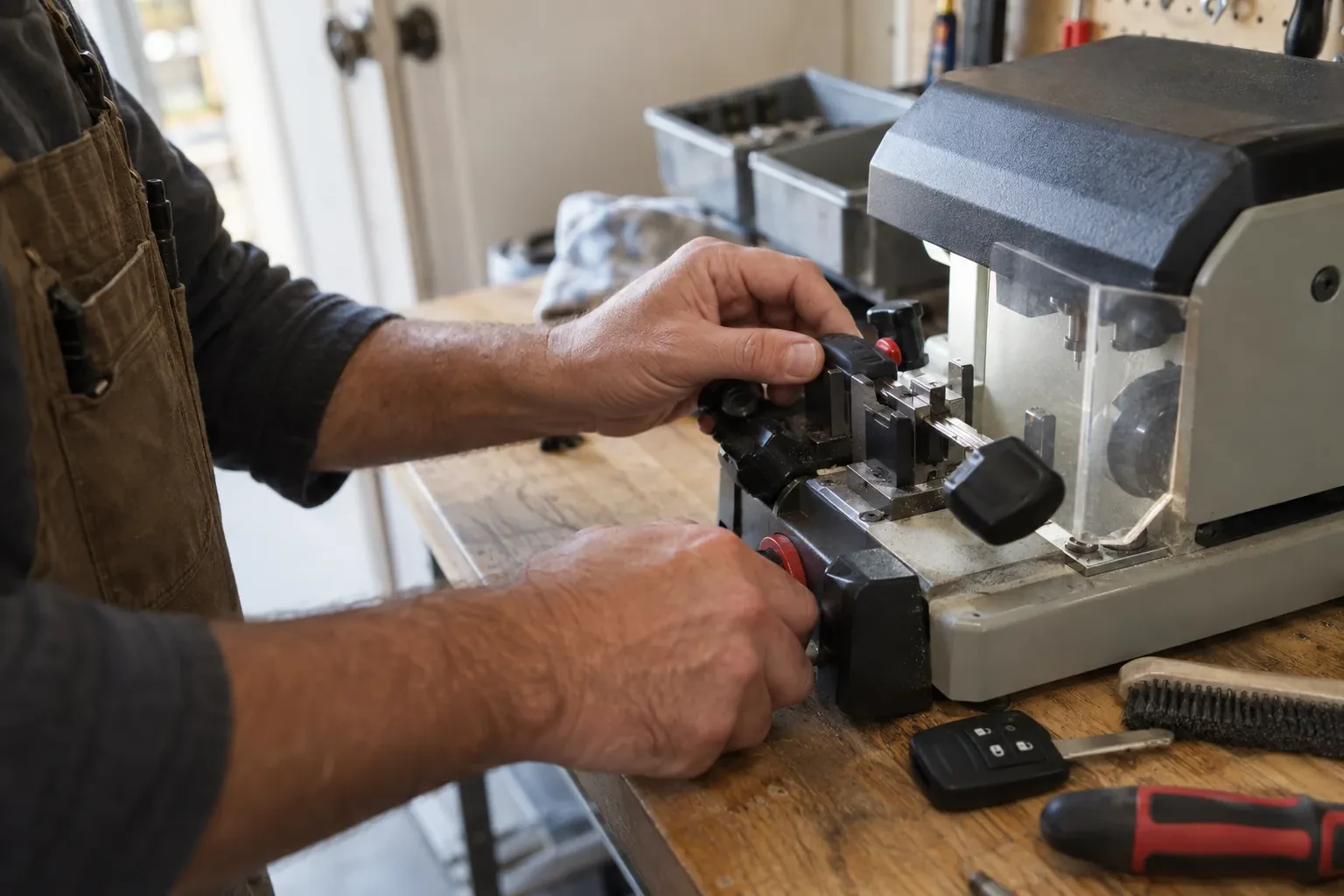
You receive the agreed number of keys, cut from the new pinning and tried in every door they should open, plus any code cards for a restricted system, which are what future copies are cut from. It is worth deciding on the spot who gets one and where the spare lives, ideally with a trusted neighbour or in a lockbox rather than in a drawer inside. If the house is now on a single key, retire every old key so none can be confused with the new one. A written list of which key does what goes in the home file.
Lock Replacement & Upgrade
In the van
Graded deadbolt
Handleset with matching deadbolt
Cylinders, plug follower and pinning kit
Manufacturer-approved cylinder lubricant
Adjustable latch or bolt
Lock Replacement & Upgrade
What affects the quote
Door material and thickness
Wood, steel and fibreglass doors are drilled and fitted differently, and a door thicker than the standard 45 millimetres needs extension parts, so the door itself shapes part of the quote.
Smart lock setup
Fitting a keypad or smart deadbolt includes programming codes, pairing to a phone or hub and calibrating the bolt, which is time on top of the mechanical installation and is named in the quote.
Grade of hardware
A light Grade 3 knob set, a residential deadbolt with a strong label rating and a Grade 1 commercial-style deadbolt are different products at different levels, and the quote follows the grade you choose for each door.
What to have ready
- Which finish should the new hardware match?
- Is the problem wear, damage, looks, a change of function or too many keys?
- Which doors are you thinking about, and what is on each one now?
Lock Replacement & Upgrade: questions
QuestionsCan you replace the lock on a sliding patio door or French doors?
Yes. Sliding doors take a replacement mortise hook lock sized to the rail, often with a keyed exterior, and benefit from a secondary foot bolt or a pin through the frames. French doors are secured by treating the inactive leaf properly with flush bolts into the head and sill, then fitting a deadbolt to the active leaf with a strike into that reinforced edge. Both are routine parts of a residential upgrade.
What happens to the old lock?
It is yours. Some people keep a sound old cylinder as a spare or move a decent deadbolt to a shed or garage door, and the locksmith can rekey it to the house key for that purpose. Worn or damaged hardware is taken away for recycling if you prefer. Either way, the old keys should be gathered up and discarded so nobody confuses them with the new set.
Should I rekey my locks or replace them?
Rekey when the hardware is sound and the problem is the key: a lost copy, a move, or too many keys for one house. Replace when the mechanism itself is worn, the housing or bolt is damaged, the grade was never suitable for the entrance, or you want a different function, finish or a keypad. Many visits do both, keeping good locks and rekeying them while replacing the tired ones, all to one key.