

Commercial · Vaughan
Master Key System Design in Vaughan
A self-storage operator wants the office, the tenant gate and the equipment shed on three different levels of access for staff, but every lock on the property currently answers to the same handful of interchangeable keys handed out over the years.
In plain words
Beyond convenience, master key system design is a security decision. It sets out who can duplicate a key, how many levels of access exist, and what scope the chart assigns to a lost key at each level, from one door up to the whole property for a top master. A restricted or patented keyway is often part of the answer, since it cuts down on copies being made anywhere other than through the record the owner controls. The result is a system where access matches role, duplication is tracked, and every missing key's designed scope is already known rather than guessed at afterward.
How the visit goesA new hire at the shop gets handed whatever spare key happens to be in the drawer, and it turns out to open the stockroom, the back office and the safe room all at once. The owner realizes nobody actually decided who should open what.
Master Key System Design
How the visit goes

Who needs to open what
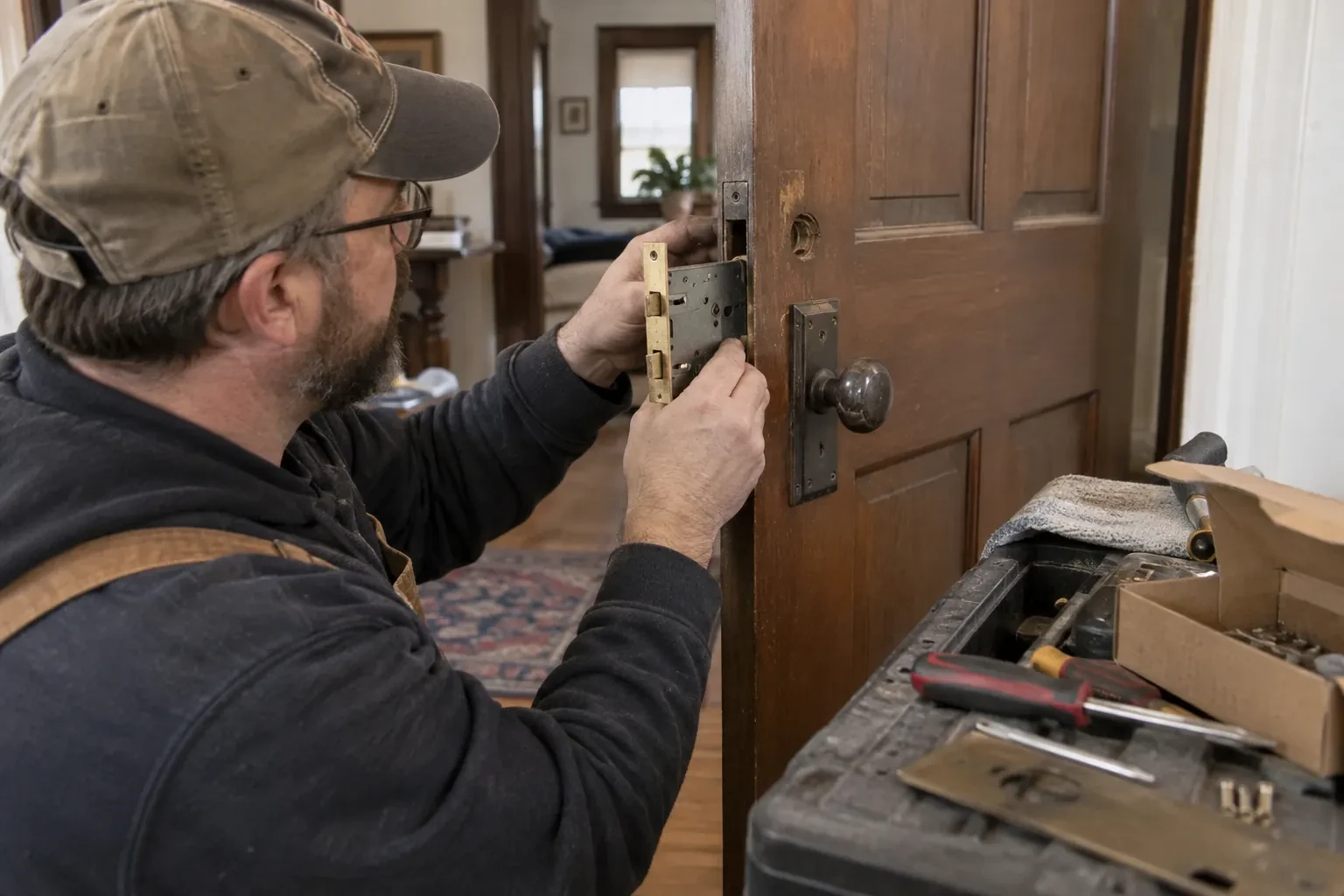
Before any hardware is chosen, the locksmith records the organization's actual shape: which roles, departments or shifts need access to which doors, including exceptions such as a bookkeeper who needs the records room but not the loading dock. This map is built with the owner or manager, not guessed from existing keys, since existing keys often reflect years of ad hoc copying rather than any real plan. The output is a plain list of who should open what, which becomes the target the rest of the design is measured against, well before a single cylinder is touched or a key is cut.
Choosing a platform with room in it
The keying platform and keyway are chosen to hold every level the design calls for, plus a margin for doors that are likely to join later. Each cylinder is then pinned chamber by chamber to the planned bittings, with bottom and master pins stacked together to create the shear lines every level needs to turn that one cylinder. Getting this stacking right is what prevents a common mistake: a change key that, through an overlooked shared pin, quietly opens more than the door or keyed-alike group it was meant for.
A plan for the next new hire or department
Adding someone to the system afterward is usually a matter of consulting the existing chart and issuing them a copy of the authorized key their role already calls for, rather than opening the whole hierarchy back up. A genuinely new combination is only usable on doors whose cylinders are pinned to accept it, so the same chart shows whether that means picking an existing bitting or scheduling a repin, keeping the decision informed rather than improvised.
Master Key System Design
In the van
Cylinder pinning kit
Cylinder decoders
Locking chart storage cabinet
Restricted or standard key blanks
Master pin kits

Master Key System Design
What affects the quote
Testing scope before handover
Testing every cylinder individually and then testing each master and sub-master across its full group takes time proportional to how many doors and levels exist. A larger hierarchy with more levels to verify against more doors adds to that testing time.
Collecting and retiring old keys
Gathering up old keys that are being replaced, confirming they no longer operate any cylinder, and retiring them from circulation is a small additional step some businesses want included, separate from the core design and cutting work.
Condition of the property's current keys
A property with a reasonably current, if informal, sense of who holds which key gives the assessment a shorter starting point than one where keys have been copied and reissued for years with no record at all. More reconstruction work at the start affects the overall quote.
What to have ready
- Do any doors already use keypad or card-based access?
- Do any existing keys already open more than one door?
- Are any doors part of a shared or condominium-controlled building system?
Master Key System Design: questions
QuestionsCan cleaners or contractors get limited access without a master key?
Yes. A change key or a narrow sub-master covering only the areas they service is the usual approach, rather than handing over a level that reaches further than the job requires. Where the property uses keypad or card access alongside mechanical keys, a time-limited or role-specific electronic credential can serve the same purpose without a physical key changing hands at all.
How is the key chart kept private?
The chart is handed to a named administrator rather than left as loose paperwork, and it is stored somewhere only that person can reach, separate from day-to-day office records. It is not published, circulated widely or kept alongside general building documents. When the administrator role changes hands, custody of the chart moves with a signed acknowledgement rather than being passed along informally.
What happens to the old keys once a new system is cut?
Once the new pinning is tested and confirmed working, the old keys no longer operate the cylinders they used to, whether or not they are physically collected back. Collecting them anyway is good practice, since it closes the loop on how many old copies were in circulation and lets the business retire them rather than wonder where they ended up.
Related services
- Access Control InstallationThe team has grown past the point where one shared key still makes sense.
- Panic & Exit HardwareThe new access-control reader at the staff entrance works fine going in, but nobody has sorted out the door's exit side, and right now a card reader and a pushbar exist as two separate ideas.
- Commercial-Grade Lock ReplacementAt closing time the hookbolt on the storefront door catches the keeper only on the second or third try, and one employee has started giving the door a shoulder to force it home.