Commercial · Maple
Panic & Exit Hardware in Maple
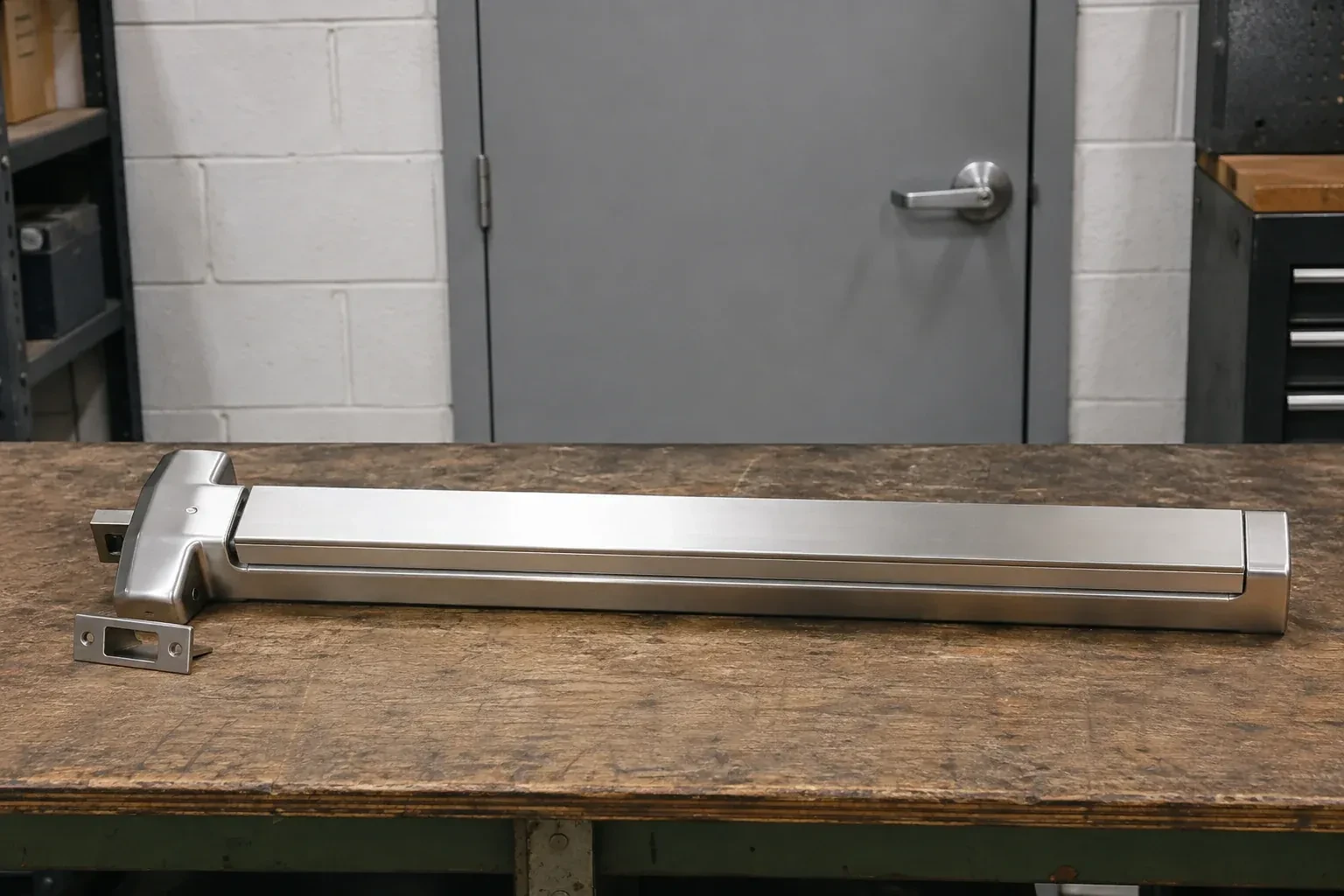
The new access-control reader at the staff entrance works fine going in, but nobody has sorted out the door's exit side, and right now a card reader and a pushbar exist as two separate ideas.
In plain words
A tenant fit-out is a common point to bring exit hardware into a space for the first time. As walls move and a room's intended use becomes clear, the doors serving it get measured against that use: occupancy, fire rating, width and whether the space now qualifies as an assembly occupancy. Specifying and fitting the hardware alongside the rest of the fit-out, rather than after an inspector flags it, keeps the schedule intact and gives the space a documented exit from the day it opens.
How the visit goesSomeone at the front counter always has to unlock the side door by hand before the lunch rush, because the round doorknob out there was never meant to be an exit for a room this size.
Panic & Exit Hardware
How the visit goes
Checking what is already fastened to the door
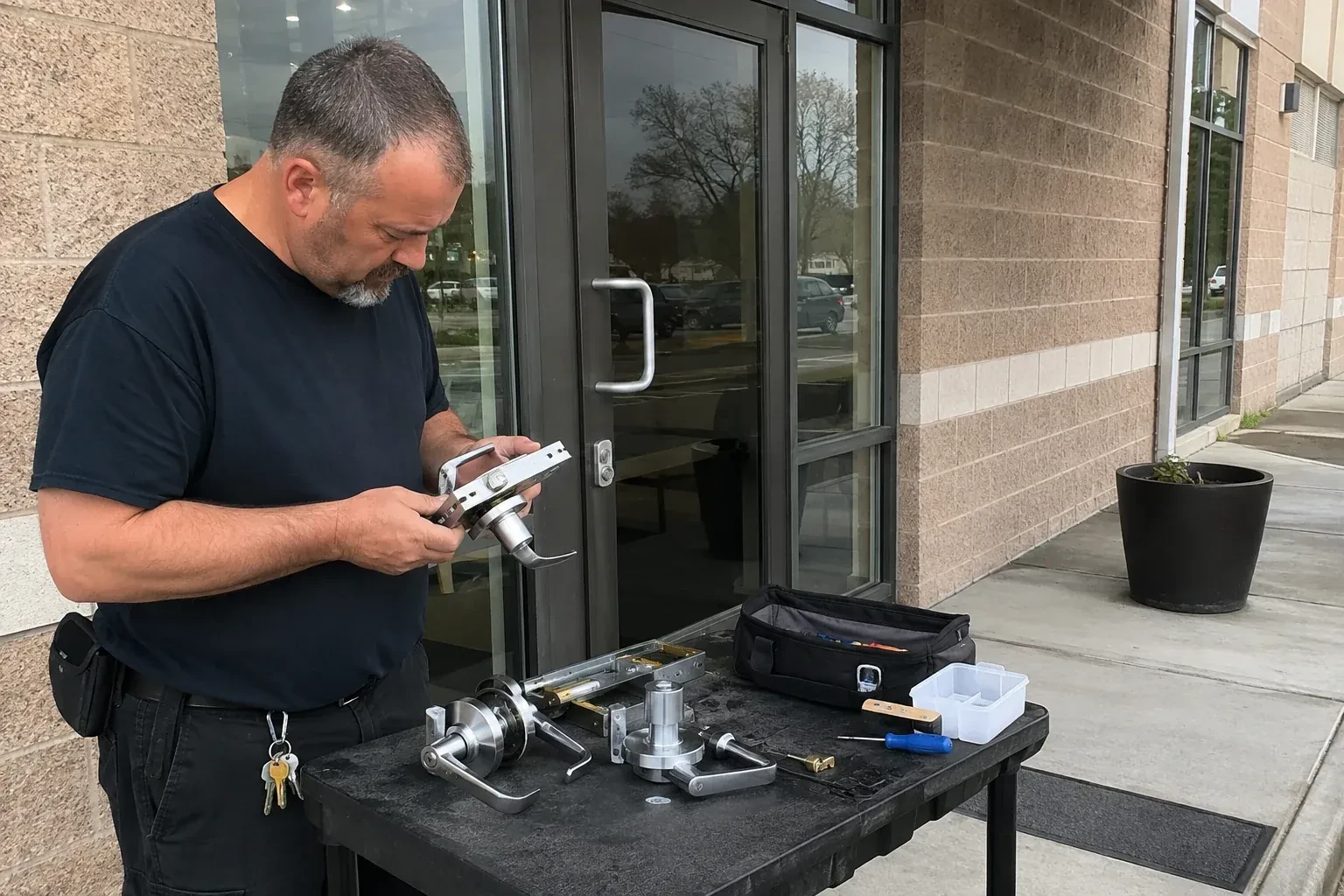
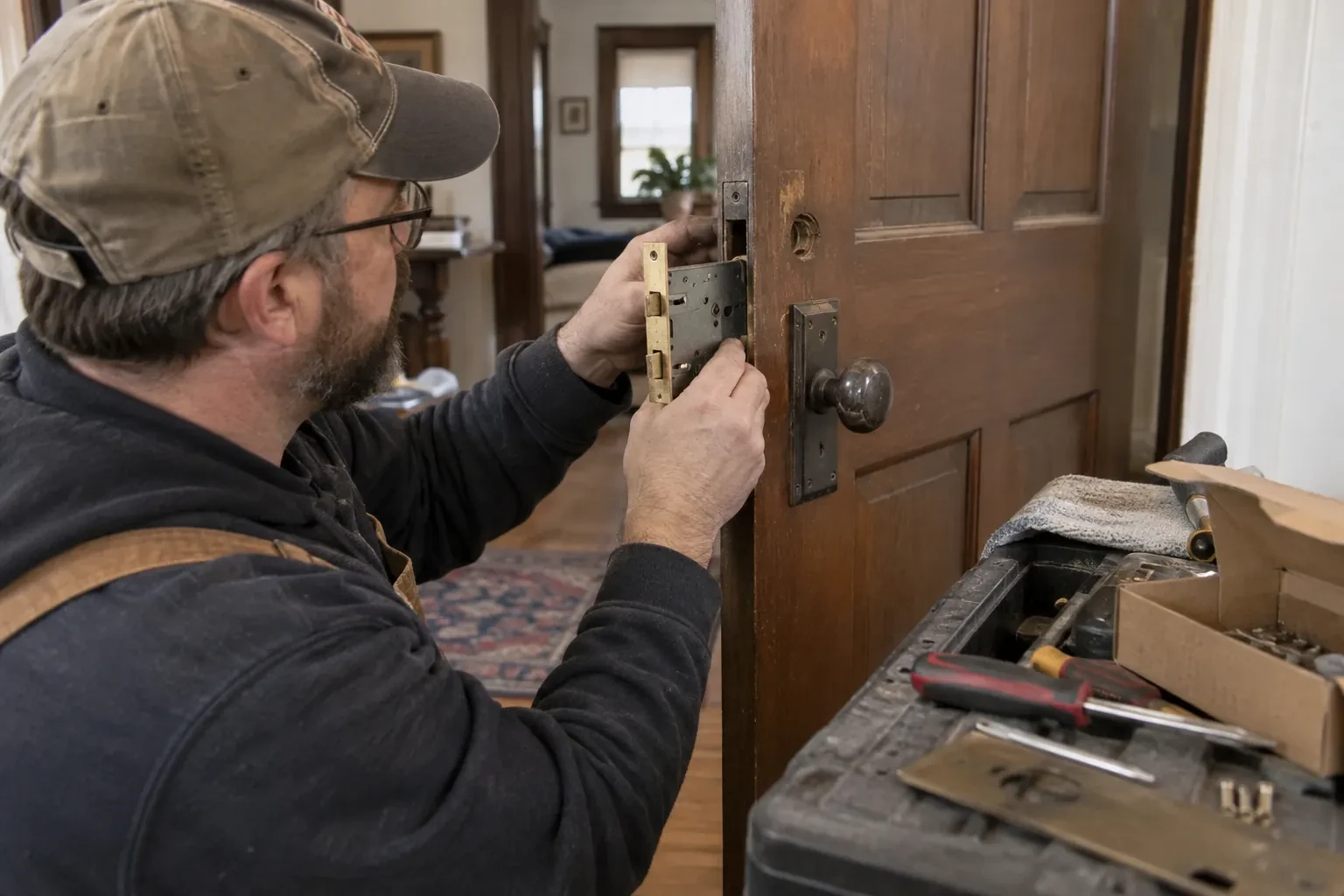
A surprising number of exit-hardware calls turn up a second lock nobody had mentioned: a hasp and padlock added for security, a slide bolt at the top of a rarely used door, or a deadbolt installed long after the original exit device. Each of these has to be understood before work starts, because an exit door can only be trusted to open under one motion if every fastening on it releases the same way. The locksmith notes what is there, explains what it means for the door's exit function, and works out with the owner what stays and what comes off.
Adding electrified functions
Where the plan includes access control or an alarm, the wiring is run and terminated to the device without touching its mechanical exit function: a request-to-exit switch reports that the pushpad or crossbar was actuated, electric latch retraction lets an authorized signal release the latch for entry, and an alarm module sounds locally when the crossbar is used. On a fire-rated opening, electric latch retraction is arranged to relatch automatically the instant a fire-alarm signal comes in, since a fire door has to keep its active latch and cannot rely on a mechanical dogging function to do that.
A door that opens under one motion, every time
What the space has afterward is straightforward: anyone inside can leave through that door with a single push on the crossbar or touchpad, no key, no second step, no need to remember which way a lock turns. Staff can be shown the motion once and it stays intuitive, because that is exactly what the hardware is built to do. Outside, entry still works the way it was set up to, through the trim chosen for that door, entirely separate from the exit function inside.
Panic & Exit Hardware
In the van
Through-fixings and mounting hardware
Signage and labels
Outside trim (pull, lever or cylinder)
Astragal and mullion hardware
Strike and reinforcement
Panic & Exit Hardware
What affects the quote
Removing hardware that should not remain
A padlock, hasp or extra deadbolt found on the door is removed and the resulting holes are filled or covered as part of the same visit, which is its own small task in the quote.
New preparation or existing cut-outs
A door with no prior hardware needs new holes cut and reinforced to the device's template. A door already prepared for a similar device, even an old one, is often a simpler fit with less new drilling.
Signage and labelling
Any exit signage or alarm labelling the opening needs is a small addition on its own, but it is named in the quote rather than assumed to already exist on the door.
What to have ready
- Who should hold the dogging key once the work is finished?
- Is any door part of a pair with a second leaf?
- Which doors are involved, and are any of them fire-rated?
Panic & Exit Hardware: questions
QuestionsIs delayed-egress hardware allowed here?
Delayed-egress locking has a defined place in the codes that cover it, generally paired with sprinkler protection and a fire alarm system, and it is not a way to lock a door indefinitely; a short delay still releases on its own once the push is held, and always releases as soon as a fire alarm signal arrives. Whether it suits a given opening depends on the occupancy and the authority having jurisdiction, so it is confirmed with them before it is specified.
Can I still lock the door from outside?
Yes. The releasing device only governs the inside of the door; the outside gets its own trim, a pull, a lever with a cylinder, or a keyed cylinder alone, chosen for how that door is entered. Locking or unlocking that outside trim has no effect on the inside crossbar, which always releases the latch under a push, so entry security and exit function are handled as two separate questions.
When does a door actually need this hardware rather than a regular lock?
It comes down to occupancy and occupant load rather than preference. Rooms used for assembly, such as banquet halls, places of worship or gyms, and doors serving a stairway in a busier building, are where this hardware becomes the standard choice instead of a keyed lock on the exit side. A fire inspector or building official is the practical way to confirm whether a specific room has crossed that line.
Related services

- Master Key System DesignA self-storage operator wants the office, the tenant gate and the equipment shed on three different levels of access for staff, but every lock on the property currently answers to the same handful of interchangeable keys handed out over the years.
- Access Control InstallationThe team has grown past the point where one shared key still makes sense.
- Commercial-Grade Lock ReplacementAt closing time the hookbolt on the storefront door catches the keeper only on the second or third try, and one employee has started giving the door a shoulder to force it home.