Car keys · Edgeley
Ignition Lock Repair in Edgeley
A scrape sits beside the ignition slot, left by whoever tried the vehicle overnight in the driveway.
In plain words
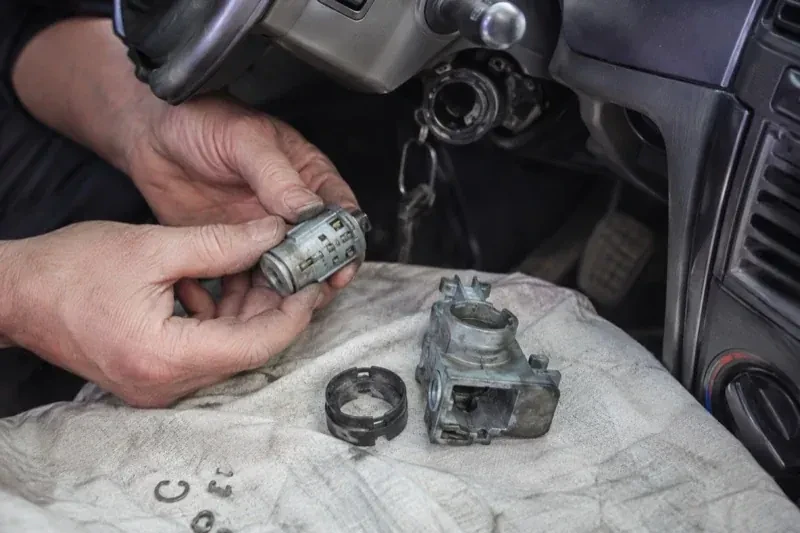
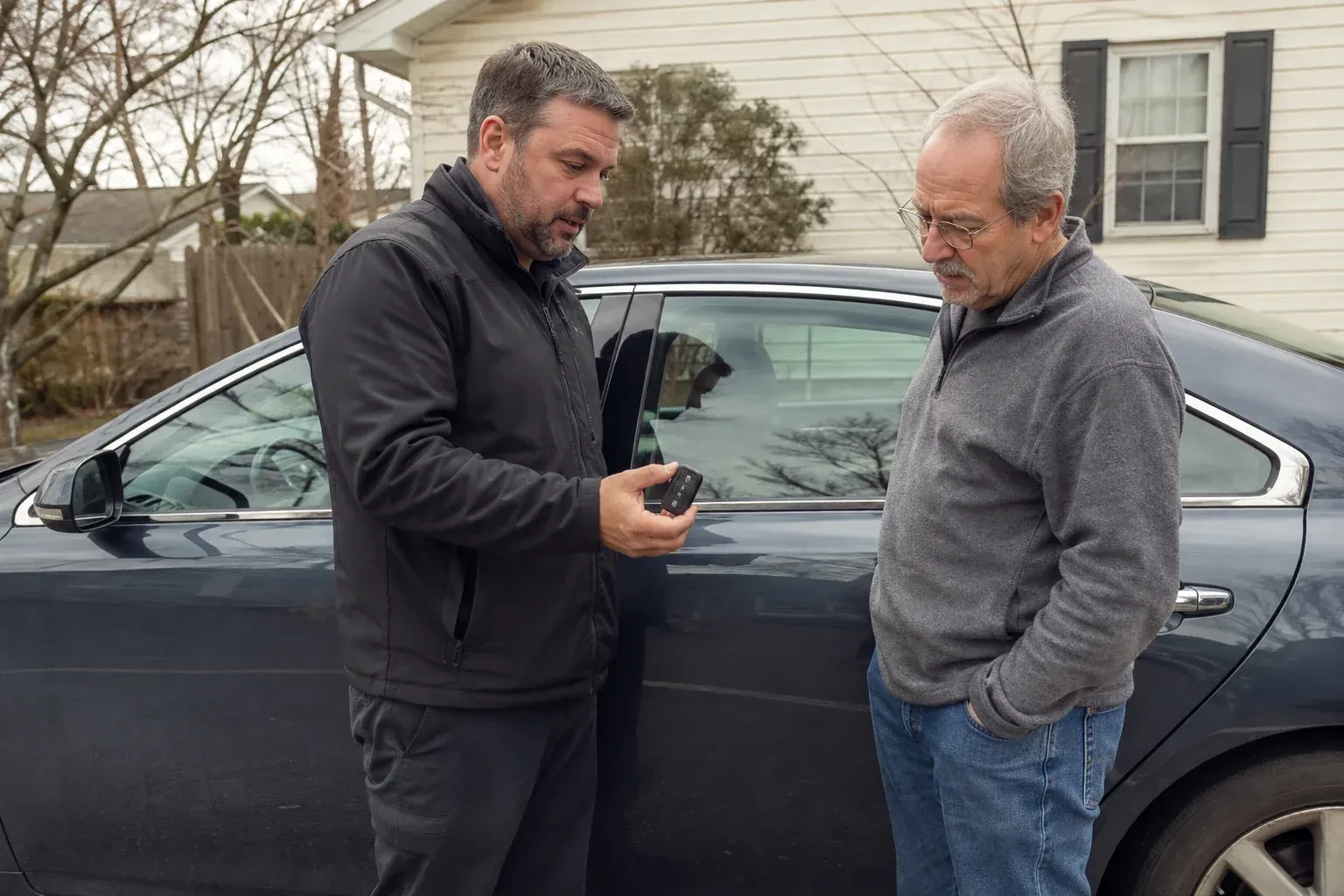
Whether the key won't insert, won't turn, turns without engaging anything, or is stuck and refuses to come back out, each version of the symptom points toward a different part of the mechanism. A key that spins loosely usually means something has disconnected inside; a key that won't insert usually means the barrel or the key itself is the obstacle. Naming the exact behaviour on the phone lets the locksmith bring the right tools before ever touching the vehicle.
How the visit goesThe key slides in fine and turns without any resistance at all, and the dash lights flicker, but nothing catches. No click, no crank, just a key spinning loosely in a slot that used to grab hold of it properly.
Ignition Lock Repair
How the visit goes
Looking for signs of an earlier attempt
Scratches around the slot, a loose-feeling housing, or a barrel that spins without any of the usual resistance can mean somebody already tried the lock before the locksmith arrived. Noting this before starting matters for two reasons: it changes the repair, since a lock that has been forced usually needs full replacement rather than a simple service, and it gives the owner an honest account of what was already there rather than what happened during this particular visit.
Clearing grit, moisture and old grease
A barrel that has gone stiff from road salt, winter grit or years of old grease is opened, cleaned and treated with whatever lubricant the vehicle's own service instructions call for. Water that has found its way into the keyway is dried out fully before the cylinder is reassembled, so trapped moisture is not left sitting against the wafers to start the same problem again next season.
A little care that keeps the barrel turning smoothly
A cylinder that has just been serviced benefits from the same light touch that kept it healthy in the first place: whatever lubricant the vehicle's own service information calls for worked into the keyway every so often, since some ignitions specify grease rather than a dry product. Wipe debris off the key itself before each use, and retire a key that has started to look rounded or thin, well before it becomes the reason for another visit.
Ignition Lock Repair
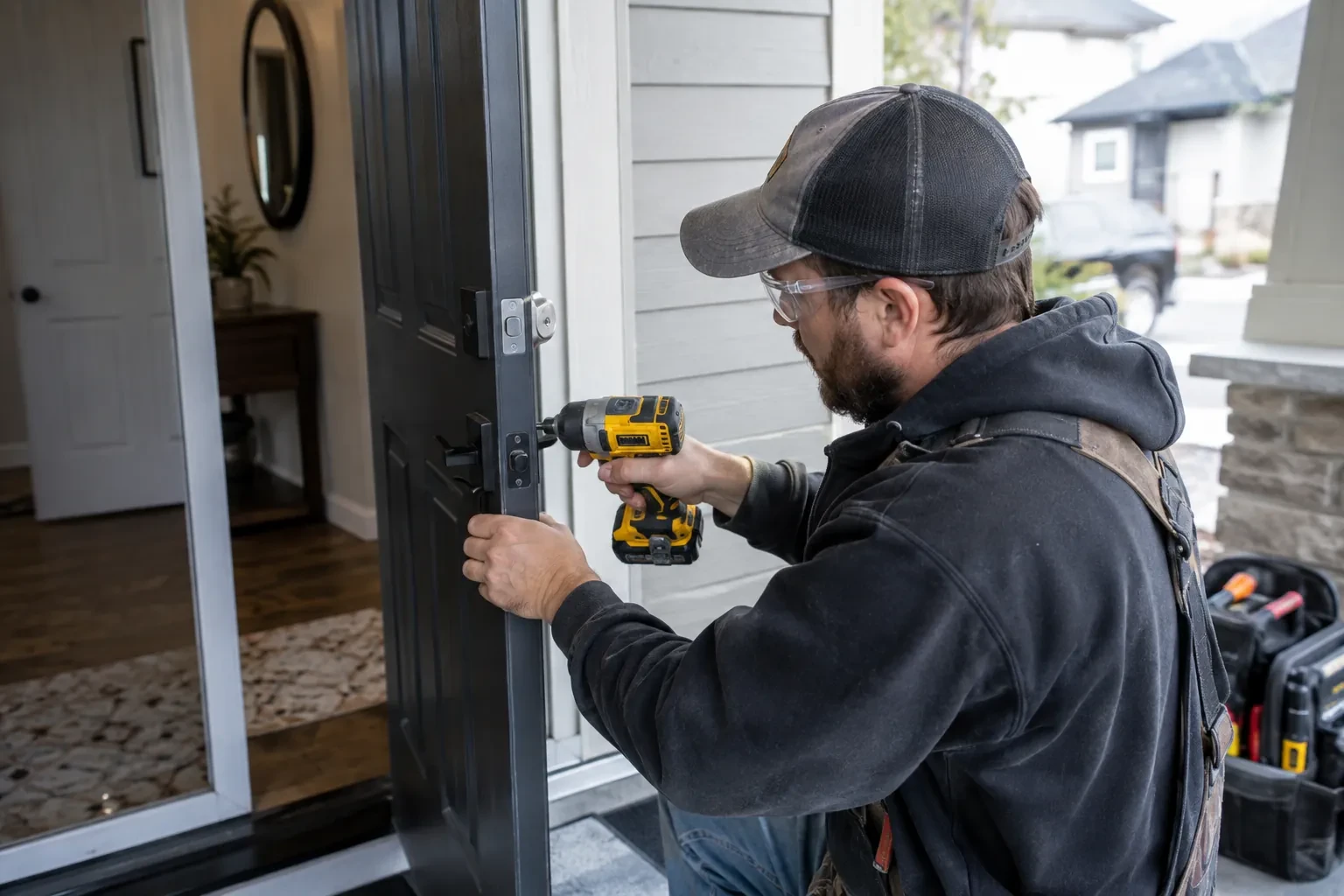
In the van
Cylinder decoder
Retaining pins and clips
Plug follower
Keyed-alike pinning kit
Dry graphite or PTFE lubricant
Ignition Lock Repair
What affects the quote
Distance to where the vehicle is
Travel is part of every visit, and a vehicle parked across town takes a different amount of driving time to reach than one nearby, which factors into how the visit gets arranged.
Age and history of the vehicle
An older vehicle may have hardware that is harder to source, or wear built up over many years of daily use, while a vehicle with a known repair history gives the locksmith a clearer starting point.
Weather and road conditions on the day
A barrel packed with road salt, grit or old grease from a rough season takes longer to clean and free than one that has simply worn with ordinary use over the years of driving.
What to have ready
- Is the key stuck and unable to be removed?
- Has anyone already tried to force the lock?
- Do you have the vehicle permit or proof of ownership handy?
Ignition Lock Repair: questions
QuestionsHow do you tell the cylinder apart from the switch behind it?
The cylinder is the part the key physically touches and turns; the switch is the electrical component behind it that responds to each position. The locksmith checks whether the barrel itself moves cleanly through every stop and whether the dash and starter respond at the right moments. When the barrel turns properly but the response is missing, the switch or wiring is a likely cause, though the battery, starter and park/neutral circuit are checked too before settling on it.
My car is older and uses a plain metal key. Can the ignition still be repaired?
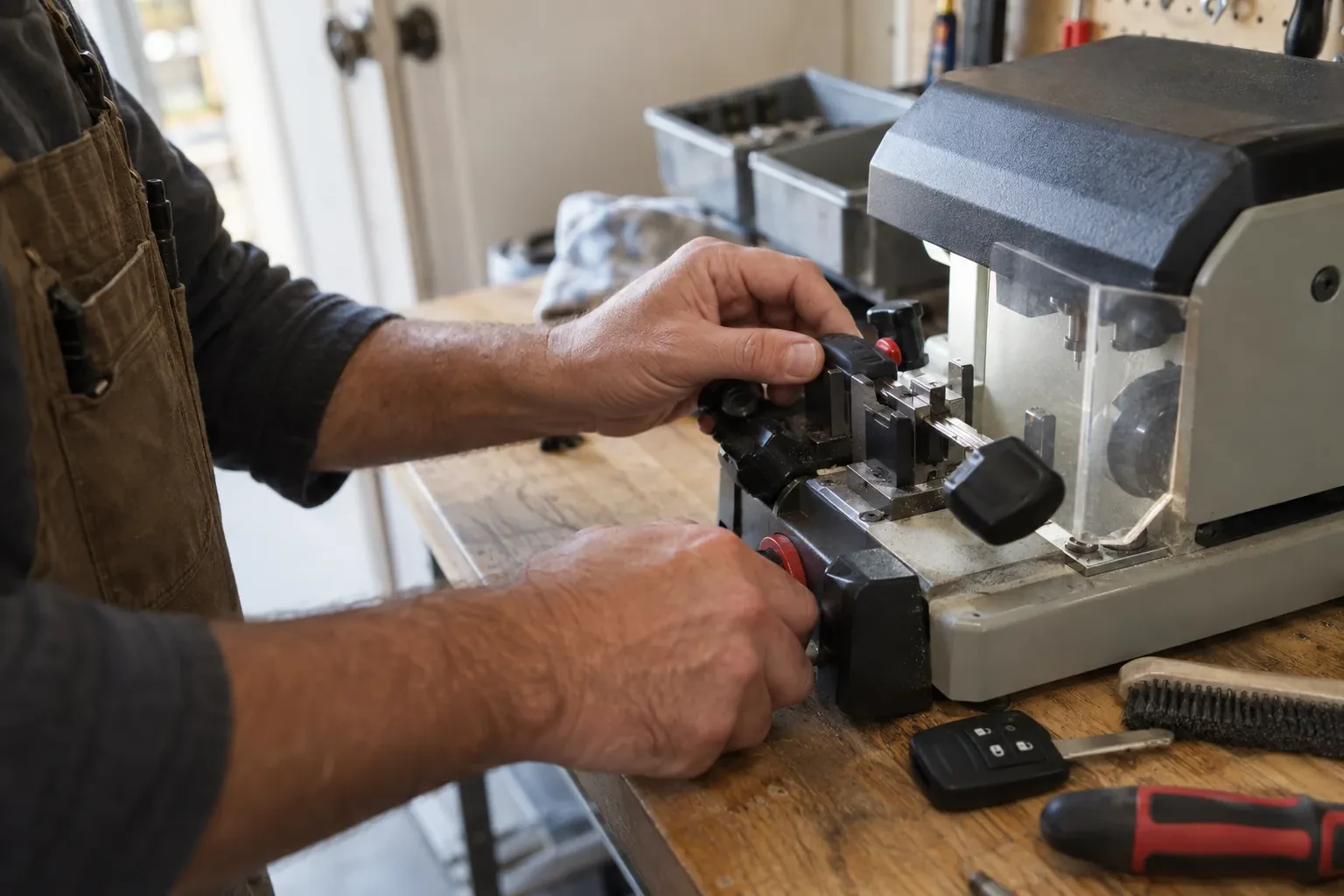
Yes, older mechanical ignitions are generally straightforward to service, since there is no transponder chip or immobilizer layer to work around. Worn wafers, a tired spring, or a housing that has loosened over the years are addressed directly, and a fresh key is cut from the current pinning or the vehicle's key code once the barrel itself has been sorted out.
My key is stuck in the ignition and won't come out. Is that a problem?
It is mostly inconvenient rather than urgent, though it is worth having looked at soon since a stuck key often means a wafer or the steering-lock mechanism is not releasing the way it should. Forcing it risks snapping the key or damaging the barrel further, so the safer route is to leave it be and have the mechanism assessed and freed properly.
Related services
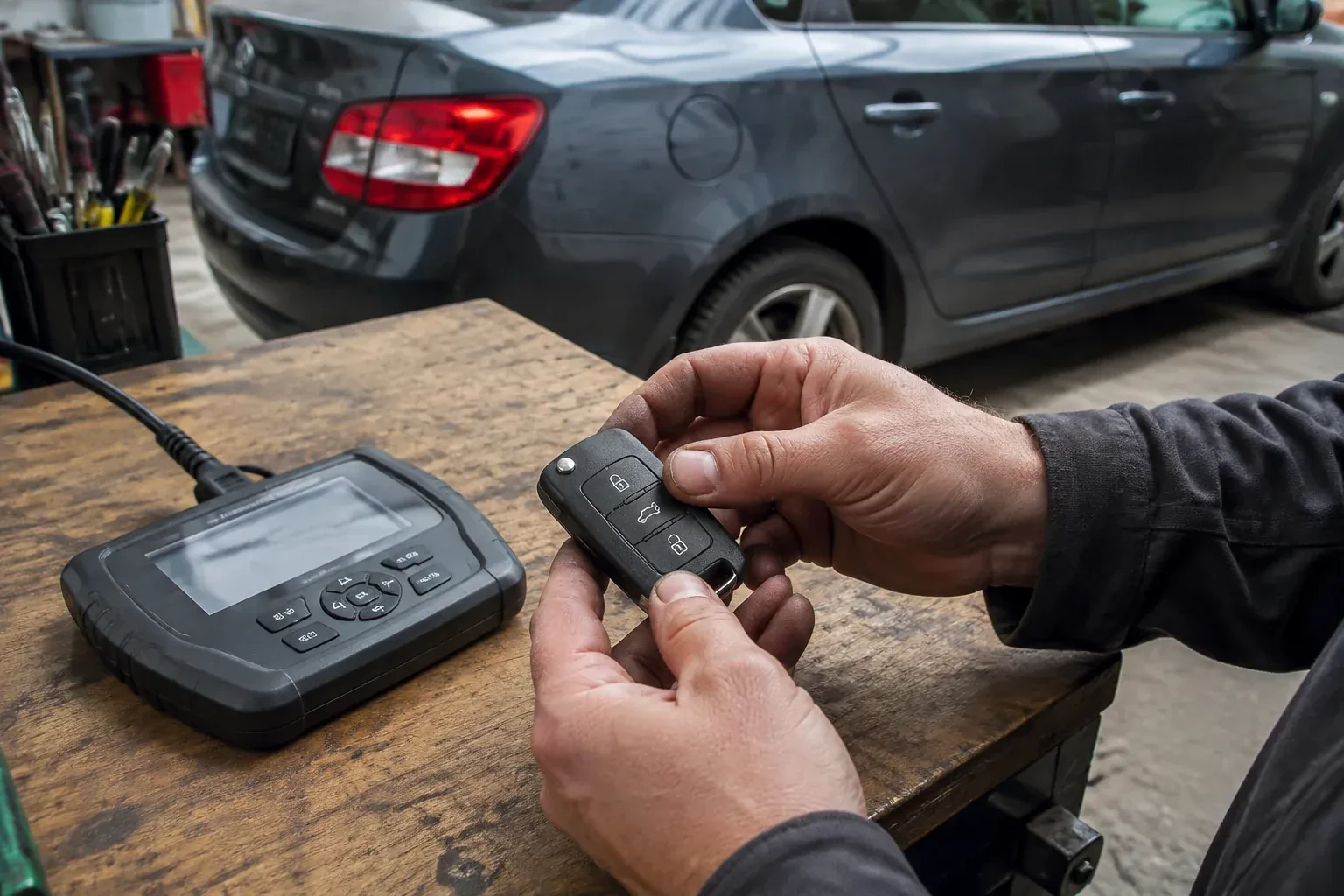
- Car Key ReplacementYou bought the car privately and it came with a single key on a shoelace.
- Spare Car Key DuplicationThe proximity fob has ridden in a pocket for years, the range feels shorter than it used to, and a dashboard warning mentioned a battery a while back.
- Key Fob ProgrammingThe car changed hands last week, and the paperwork included exactly one fob for a household with two drivers.