Change or rekey · Edgeley
Vintage Mortise Lock Service in Edgeley
The knob flops loose on its spindle and never springs back to level.
In plain words
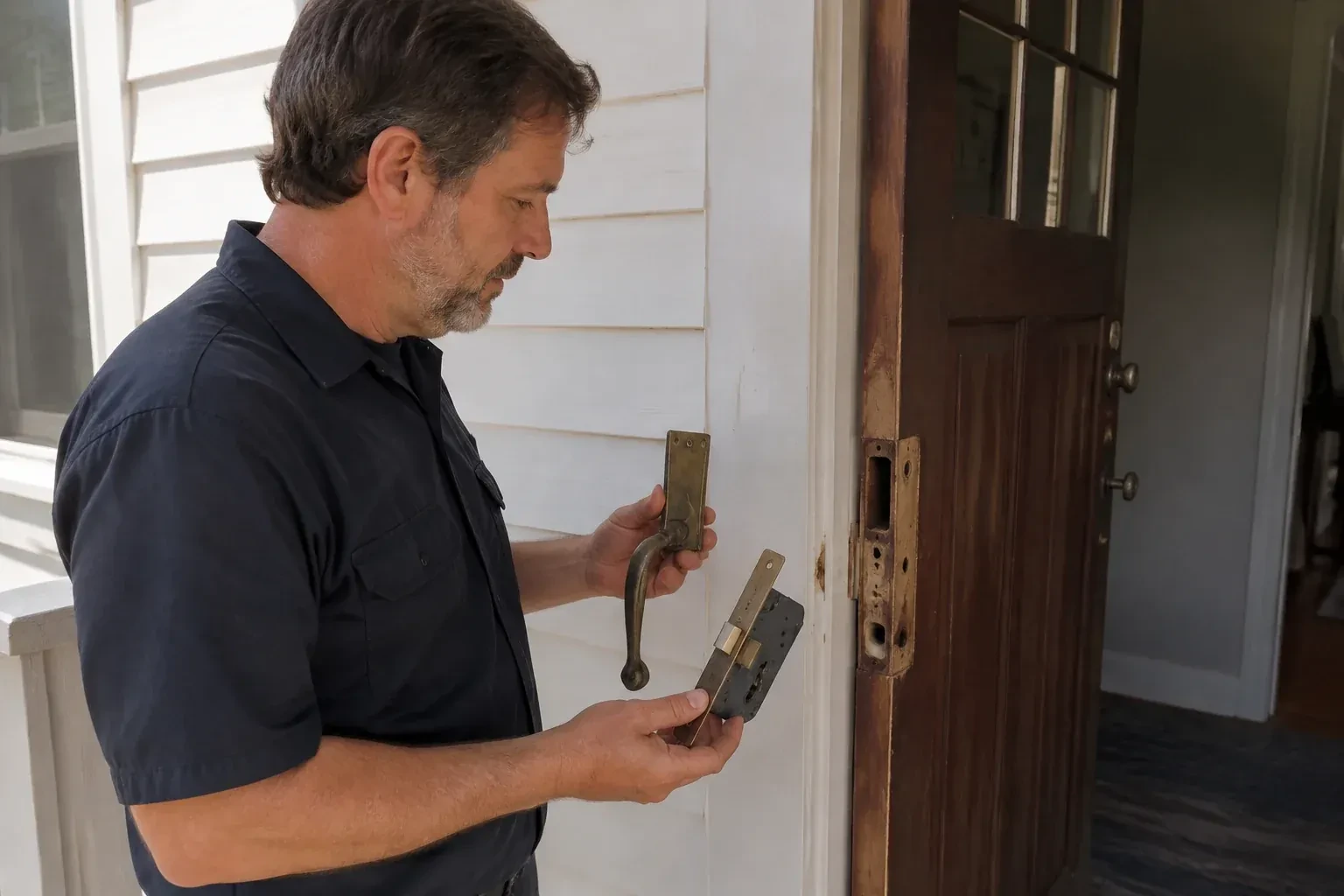
The trim on the door face is the other half of the lock. The knobs ride on a square spindle that passes through the hub of the case, held by small set screws, and the escutcheons cover the spindle and keyholes. Slack in a knob, a knob that pulls off in your hand, or a thumb-turn that spins without moving the bolt usually traces to a worn spindle, a stripped set screw or a hub whose square has rounded. The service replaces spindle and screws, matches a hub or lever from stock or makes one, and fits everything so there is no free play before the latch starts to move.
How the visit goesThe interior bedroom doors on the second floor have the original mortise latches, and none of them close any more. The doors drift open, the small brass turn buttons do nothing, and the keyholes have been empty for as long as anyone can remember.
Vintage Mortise Lock Service
How the visit goes
Condition of the wood around the pocket
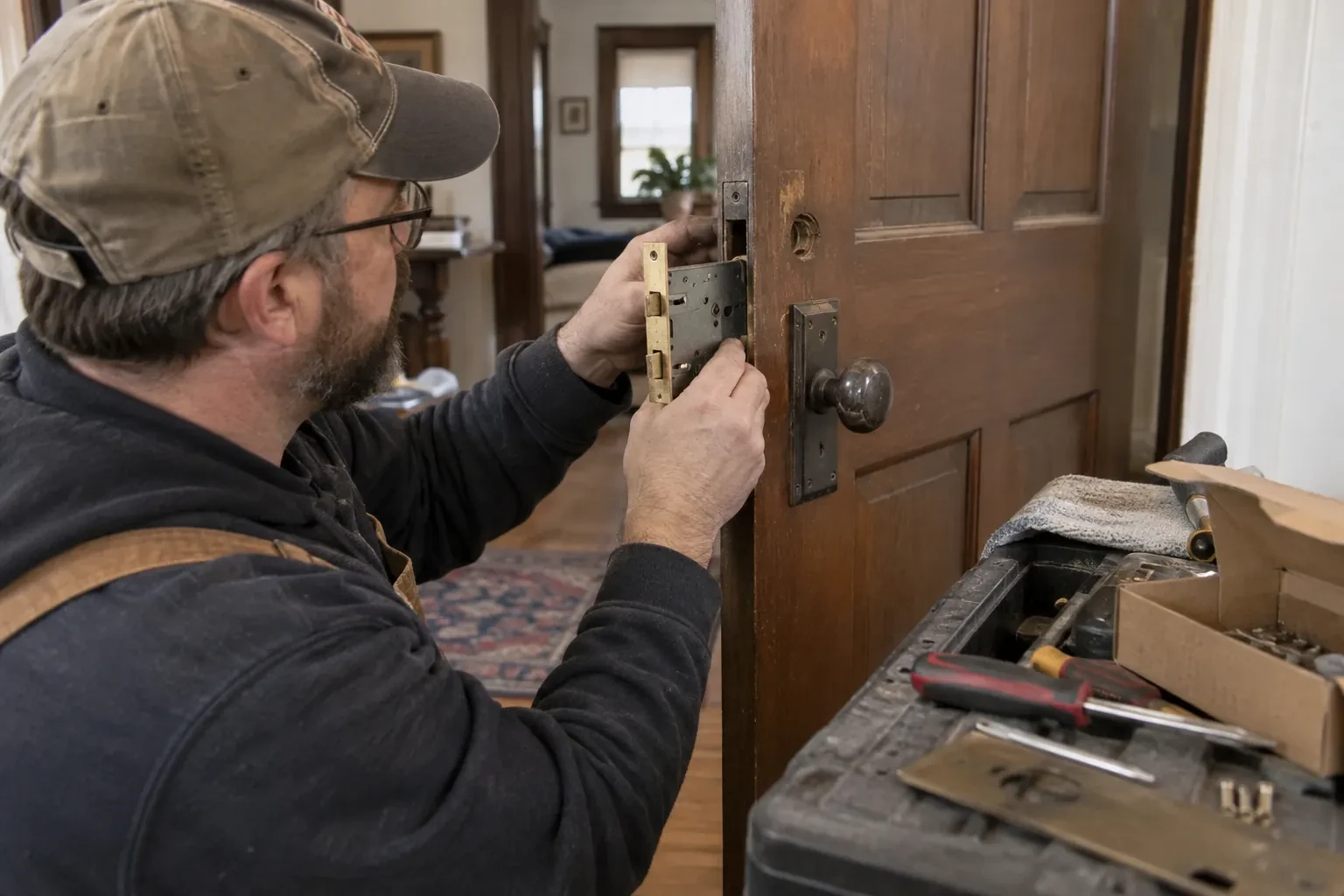
The mortise pocket and the screw holes in the door edge carry the whole lock, so their state is part of the assessment. The locksmith probes the faceplate screws for grip, looks for cracks running from the pocket into the stile, and checks whether an earlier repair enlarged the pocket or packed it with something soft. Stripped holes, a split edge or a case that shifts when the knob is turned change the plan: dowelling and re-drilling, a hardwood filler, or longer screws may be needed before the rebuilt case can be trusted. Finding this now avoids surprises once the lock is back in the door.
Taking the lock out without marking the door
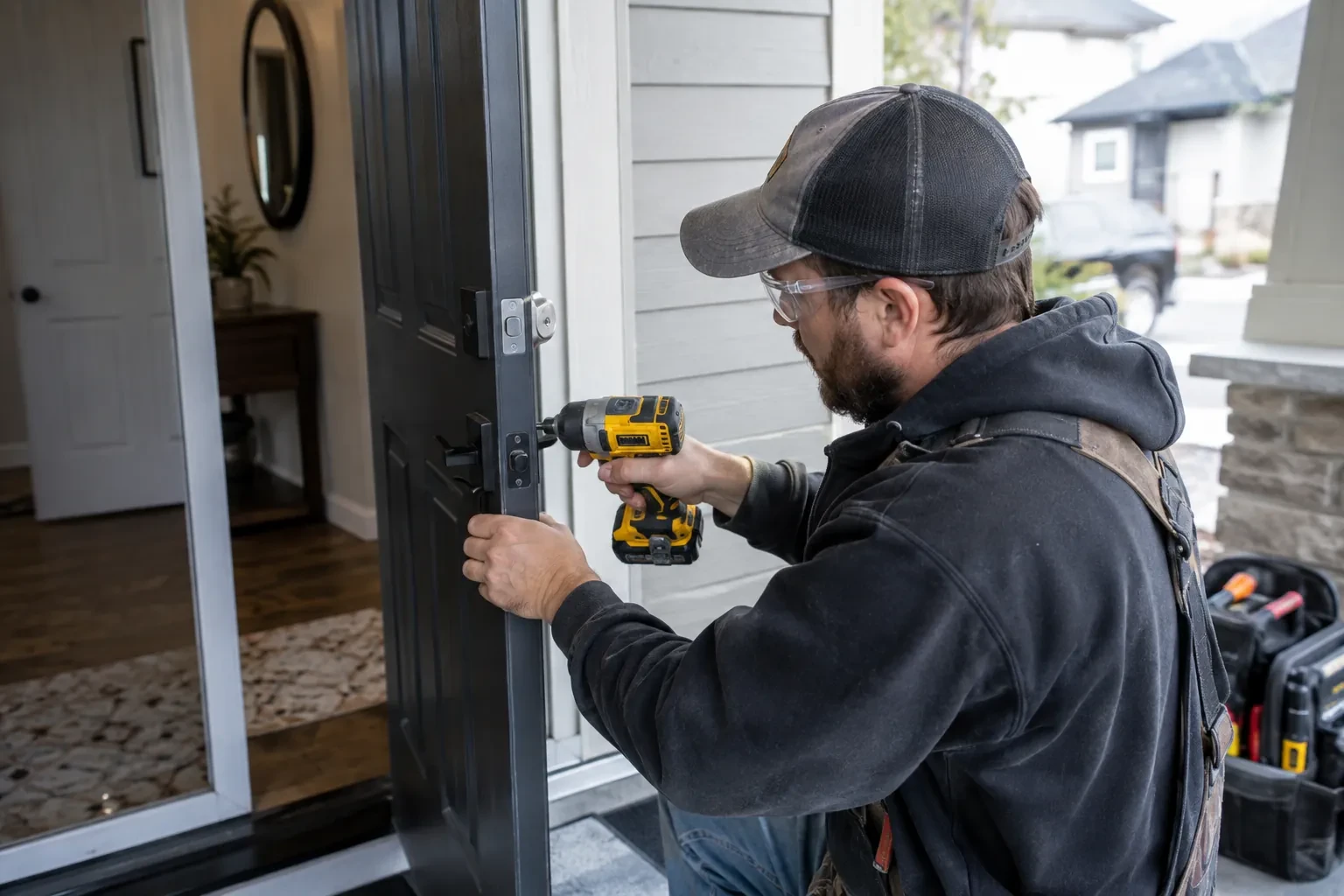
Removal is done in a set order so nothing is forced. The knob set screws are backed off and the knobs and spindle drawn out, then the escutcheons are lifted away, their screw positions photographed for reassembly. On a cylinder lock, the small set screw in the faceplate is released and the cylinder is unthreaded from the case. The faceplate screws come out, and the case is eased from its pocket with a gentle rock, never a pry bar, because the wood at the edge of an old door is thin. Everything that comes off is bagged and labelled, and the pocket is looked at while it is empty.
Keys that fit the lock, and a spare
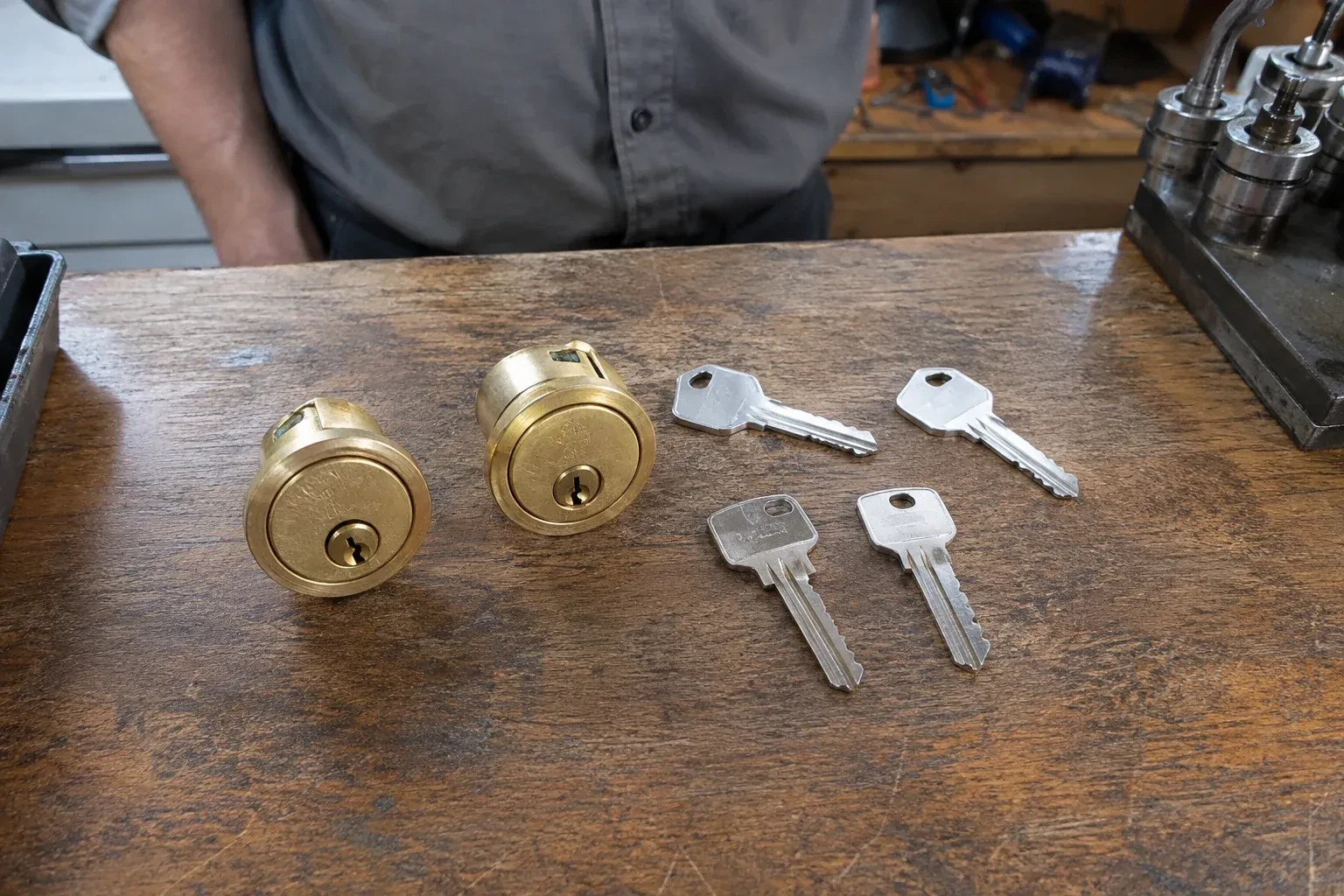
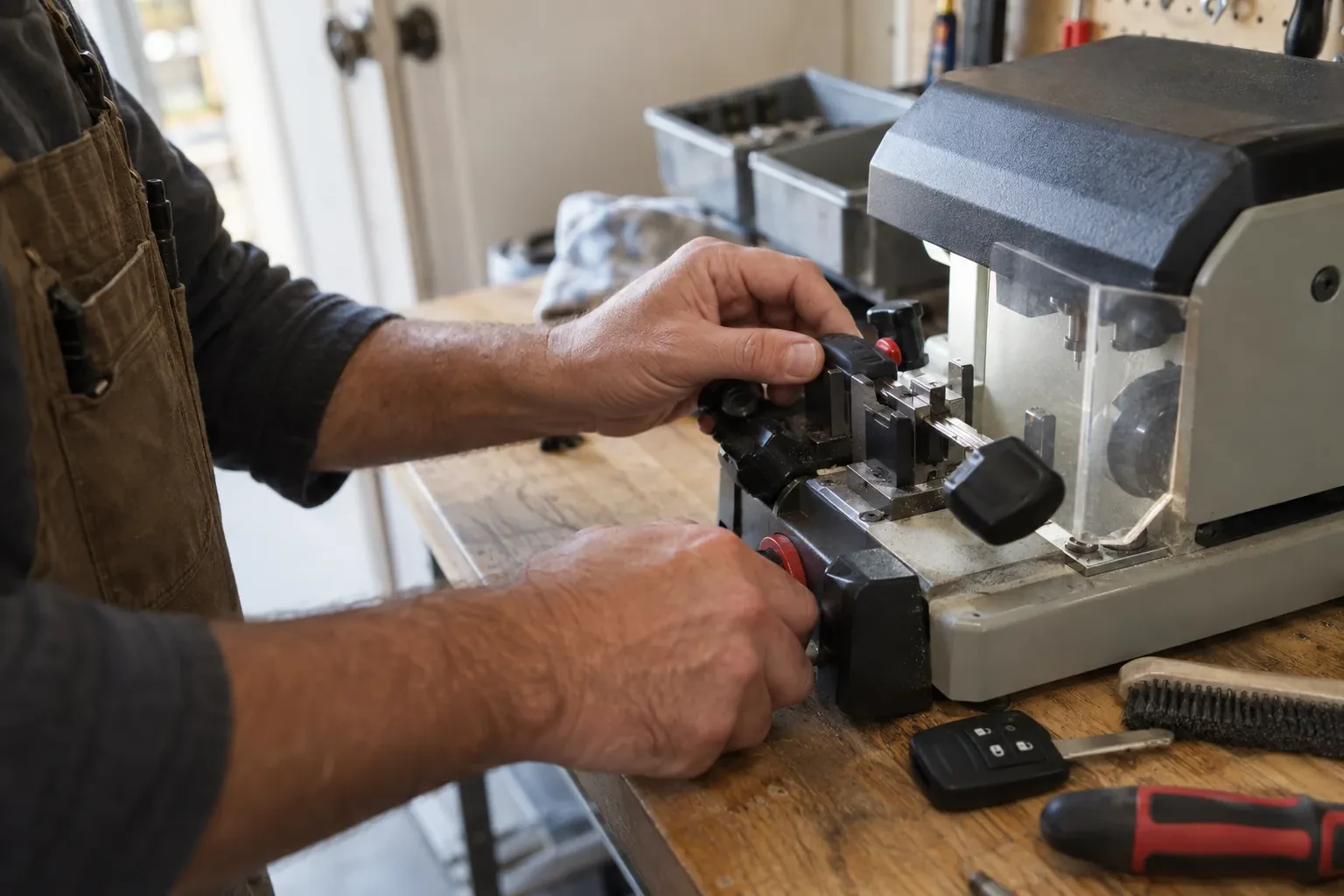
You are handed keys made to the restored lock, counted into your hand, and each one is tried in the door before the locksmith drives away. For a bit-key lock that means keys filed to your case; copying one needs the right blanks and equipment, which most hardware counters do not stock, so the locksmith keeps the record needed to make more. For a cylinder lock it means keys cut to the new combination, with any old keys now useless. Keep one spare somewhere other than the door, ideally with a neighbour or in a lockbox, and treat bit keys gently: they bend in a pocket and a bent key is how most of these locks become stiff again.
Vintage Mortise Lock Service
In the van
Cylinder set screw
Reproduction mortise case
Spindle and knob set screws
Latch and hub springs
Light lock oil
Vintage Mortise Lock Service
What affects the quote
Parts that must be ordered
A reproduction case or an unusual cylinder size may have to be ordered to measurement, which means a second visit to fit it. The quote separates the first visit from the return.
What is actually broken inside
A clean and new springs is the lightest job. A worn hub, a cracked lever or a part that has to be fabricated to match the original adds bench time, and the assessment names which applies before any of it starts.
Keying doors alike
Bringing several interior locks onto one bit key, or several cylinders onto one flat key, is extra bench work per lock and is simplest to arrange while all the cases are out on the same visit.
What to have ready
- Is the property designated as a heritage building?
- How many keys do you have, and do any of them work?
- What does the knob do when you turn it: return, sag, or not come back?
Vintage Mortise Lock Service: questions
QuestionsDoes a rented home need the landlord involved for this work?
Repairing a lock so it works as before is ordinary maintenance, but anything that changes who can open the door, such as a rekeyed cylinder or new keys, is something a tenant and landlord are expected to agree on and share keys for. The locksmith asks up front who should receive keys and can leave a note of what was done for the property manager, so both sides know what is on the door.
What information helps before you come out?
Whether the door takes a skeleton-style bit key or a flat key in a round cylinder, roughly when the house was built, what the knob and bolt are doing, and whether the trouble is worse with the door closed. A photo of the faceplate in the door edge and one of the keyhole side is worth a great deal. Mention how many doors are involved and how many keys you would like afterwards.
Do I need to prove I own the house before you work on the lock?
Yes, and it is a normal part of any lock or key work. Photo identification together with something that ties you to the address is enough. If you rent, the locksmith will ask who should receive the keys, because landlords and tenants in this province are expected to agree on lock changes and share keys. This check takes a moment and it protects every household the locksmith is asked to work for.
Related services
- Deadbolt InstallationThe bolt on the front door is keyed on both sides.
- Lock Replacement & UpgradeThe house is fifteen years old and every exterior door still wears the light hardware the builder fitted: a short bolt, a thin strike held by two small screws, and a knob lock that never suited a street entrance.
- Smart Lock InstallationArthritis has made the small house key hard to grip and turn, especially with gloves on in January.